Zuleger Cindy L, Kang Chulhi, Ranheim Erik A, Kurzman Ilene D, Macklin Michael D, Newton Michael A, Wolchok Jedd D, Vail David M, Eriksson Elof, Albertini Mark R
University of Wisconsin Carbone Cancer CenterMadisonWisconsinUSA.
Department of MedicineUniversity of Wisconsin School of Medicine and Public HealthMadisonWisconsinUSA.
Vet Med Sci. 2017 May 22;3(3):134-145. doi: 10.1002/vms3.65. eCollection 2017 Aug.
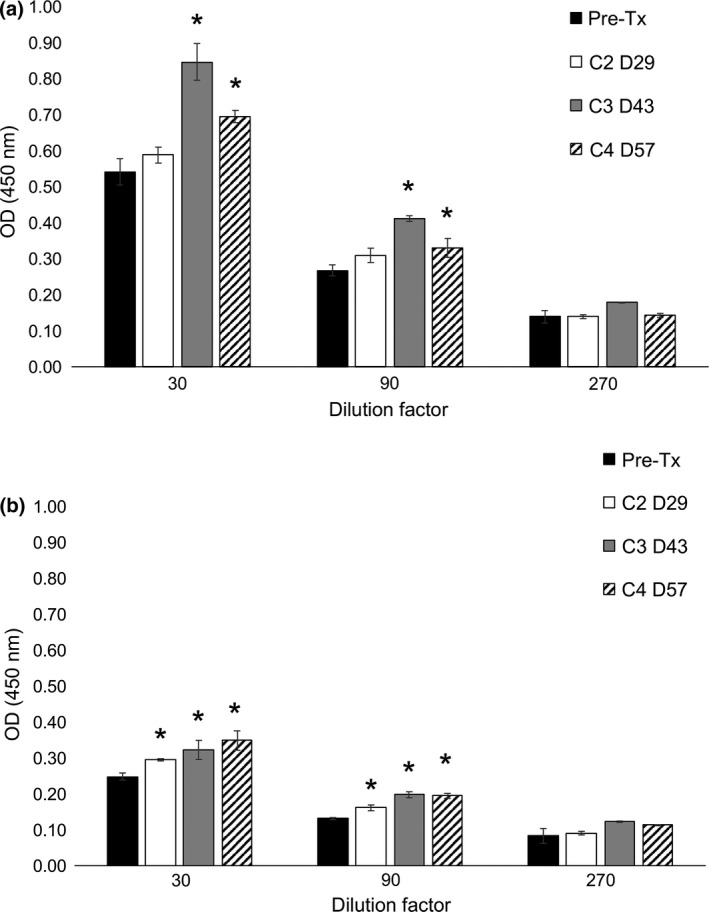
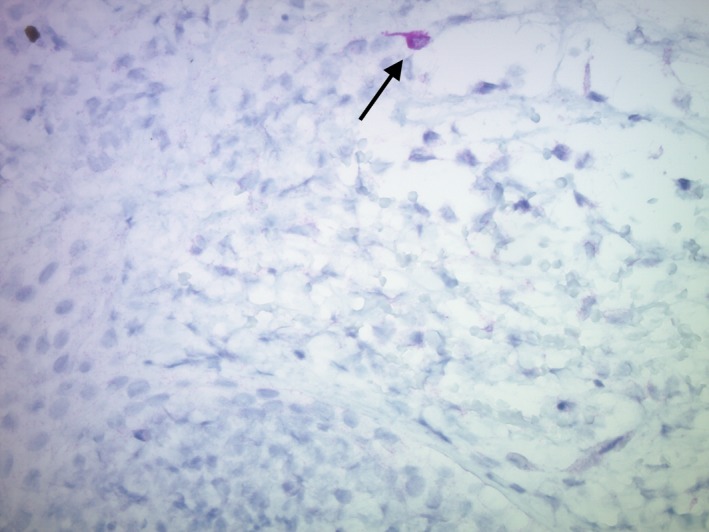
Spontaneous canine malignant melanoma provides an excellent pre-clinical model to study DNA vaccines for melanoma immunotherapy. A USDA-approved xenogeneic human tyrosinase (huTYR) plasmid DNA vaccine delivered intramuscularly induces detectable immune responses and has clinical activity in some dogs with melanoma. The objective of this pilot study was to evaluate the feasibility, safety and immunogenicity of huTYR plasmid DNA administered to the skin via microseeding in dogs with spontaneous melanoma. DNA microseeding utilizes a modified tattooing device as an alternate and potentially more potent delivery method for DNA immunization. DNA was delivered to shaved inner thigh skin of six companion dogs with melanoma approximately every 14 days for a planned total of four vaccination time points. An anti-huTYR ELISA was used to test pre- and post-treatment sera. Biopsies of treated skin were obtained for detection of huTYR transgene expression. DNA microseeding was well tolerated with no significant toxicity detected beyond local site irritation, and there were no signs of autoimmunity. huTYR-expressing cells were observed in biopsies of huTYR DNA microseeding sites. Increased humoral anti-huTYR antibodies were seen in two of five evaluable dogs following microseeding compared to baseline. DNA microseeding is well tolerated in companion dogs with melanoma. Further investigation is needed to determine if combining DNA microseeding with other immunotherapy regimens potentiates this delivery platform for cancer immunotherapy.
自发性犬恶性黑色素瘤为研究用于黑色素瘤免疫治疗的DNA疫苗提供了一个出色的临床前模型。一种经美国农业部批准的异基因人酪氨酸酶(huTYR)质粒DNA疫苗通过肌肉注射可诱导可检测到的免疫反应,并且在一些患有黑色素瘤的犬中具有临床活性。这项初步研究的目的是评估通过微接种将huTYR质粒DNA施用于患有自发性黑色素瘤的犬皮肤的可行性、安全性和免疫原性。DNA微接种利用一种改良的纹身装置作为DNA免疫的另一种且可能更有效的递送方法。将DNA大约每14天施用于六只患有黑色素瘤的伴侣犬剃毛的大腿内侧皮肤,计划总共进行四个疫苗接种时间点。使用抗huTYR ELISA检测治疗前和治疗后的血清。获取治疗皮肤的活检样本以检测huTYR转基因表达。DNA微接种耐受性良好,除局部部位刺激外未检测到明显毒性,也没有自身免疫迹象。在huTYR DNA微接种部位的活检样本中观察到表达huTYR的细胞。与基线相比,在五只可评估犬中的两只犬微接种后观察到体液抗huTYR抗体增加。患有黑色素瘤的伴侣犬对DNA微接种耐受性良好。需要进一步研究以确定将DNA微接种与其他免疫治疗方案相结合是否能增强这种用于癌症免疫治疗的递送平台。