Department of Molecular Biology, University of Texas Southwestern Medical Center, Dallas, Texas, 75390, USA.
Department of Histology and Cell Biology, Faculty of Medicine, Assiut University, Assiut, Egypt.
Sci Rep. 2017 Oct 25;7(1):14065. doi: 10.1038/s41598-017-14450-5.
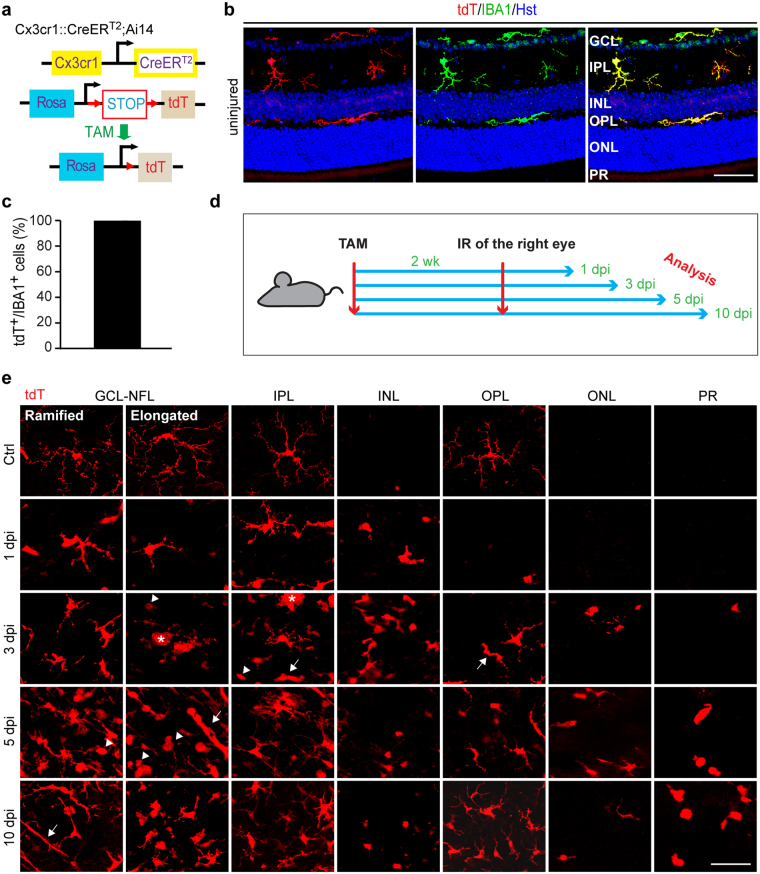
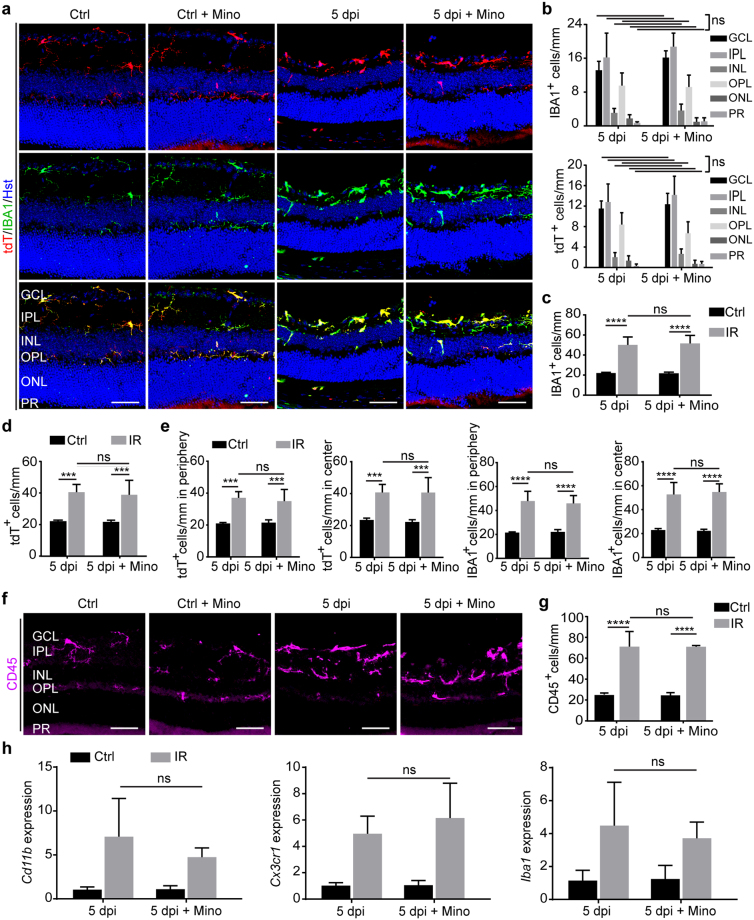
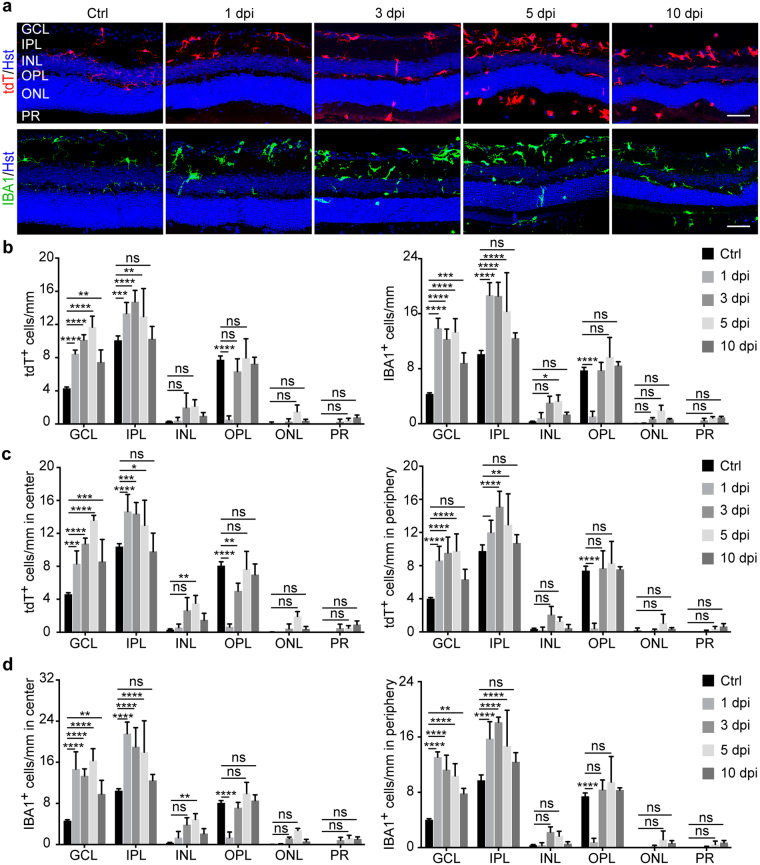
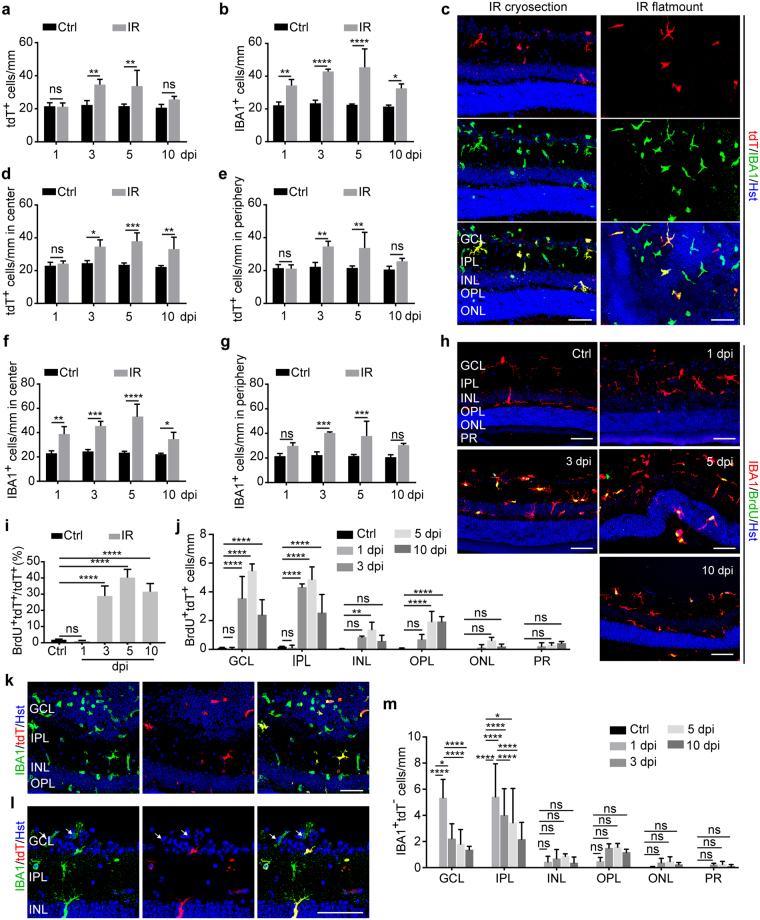
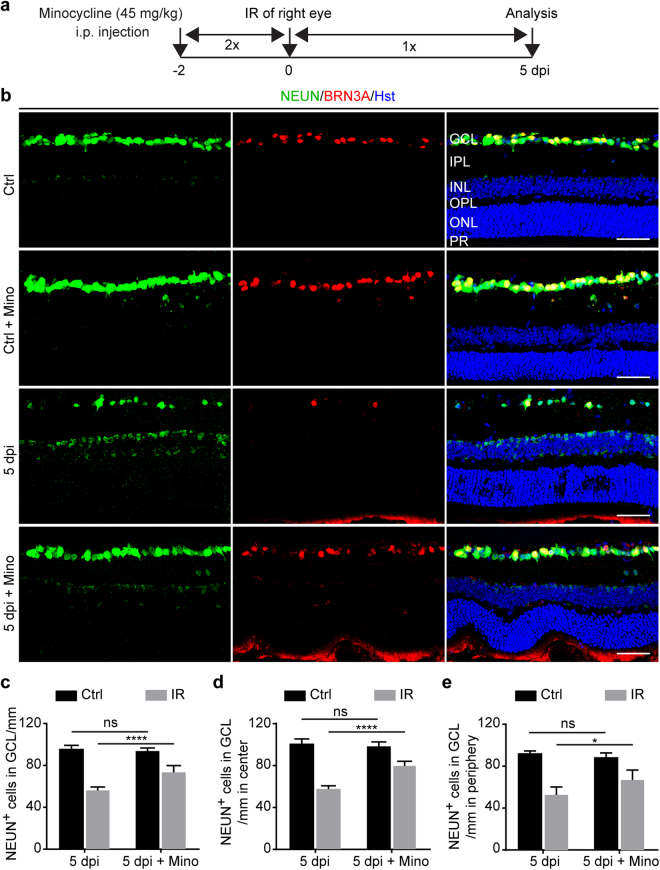
Retinal ischemia-reperfusion (IR) injury causes irreversible loss of neurons and ultimately leads to permanent visual impairment and blindness. The cellular response under this pathological retinal condition is less clear. Using genetically modified mice, we systematically examined the behavior of microglia/macrophages after injury. We show that IR leads to activation of microglia/macrophages indicated by migration and proliferation of resident microglia and recruitment of circulating monocytes. IR-induced microglia/macrophages associate with apoptotic retinal neurons. Very interestingly, neuron loss can be mitigated by minocycline treatment. Minocycline induces Il4 expression and M2 polarization of microglia/macrophages. IL4 neutralization dampens minocycline-induced M2 polarization and neuroprotection. Given a well-established safety profile as an antibiotic, our results provide a rationale for using minocycline as a therapeutic agent for treating ischemic retinal degeneration.
视网膜缺血再灌注 (IR) 损伤会导致神经元不可逆转的丧失,最终导致永久性视力损害和失明。在这种病理性视网膜条件下,细胞反应还不太清楚。我们使用基因修饰小鼠,系统地研究了损伤后小胶质细胞/巨噬细胞的行为。结果表明,IR 导致了小胶质细胞/巨噬细胞的激活,表现为驻留小胶质细胞的迁移和增殖以及循环单核细胞的募集。IR 诱导的小胶质细胞/巨噬细胞与凋亡的视网膜神经元相关。非常有趣的是,米诺环素治疗可以减轻神经元的丢失。米诺环素诱导小胶质细胞/巨噬细胞表达 Il4 并向 M2 极化。IL4 中和抑制了米诺环素诱导的 M2 极化和神经保护作用。鉴于其作为抗生素的良好安全性,我们的研究结果为使用米诺环素作为治疗缺血性视网膜变性的治疗剂提供了依据。