Kumar Dinesh, Hassan Md Khurshidul, Pattnaik Niharika, Mohapatra Nachiketa, Dixit Manjusha
School of Biological Sciences, National Institute of Science Education and Research, HBNI, Odisha, India.
SRL Diagnostics Ltd, Odisha, India.
PLoS One. 2017 Oct 26;12(10):e0186977. doi: 10.1371/journal.pone.0186977. eCollection 2017.
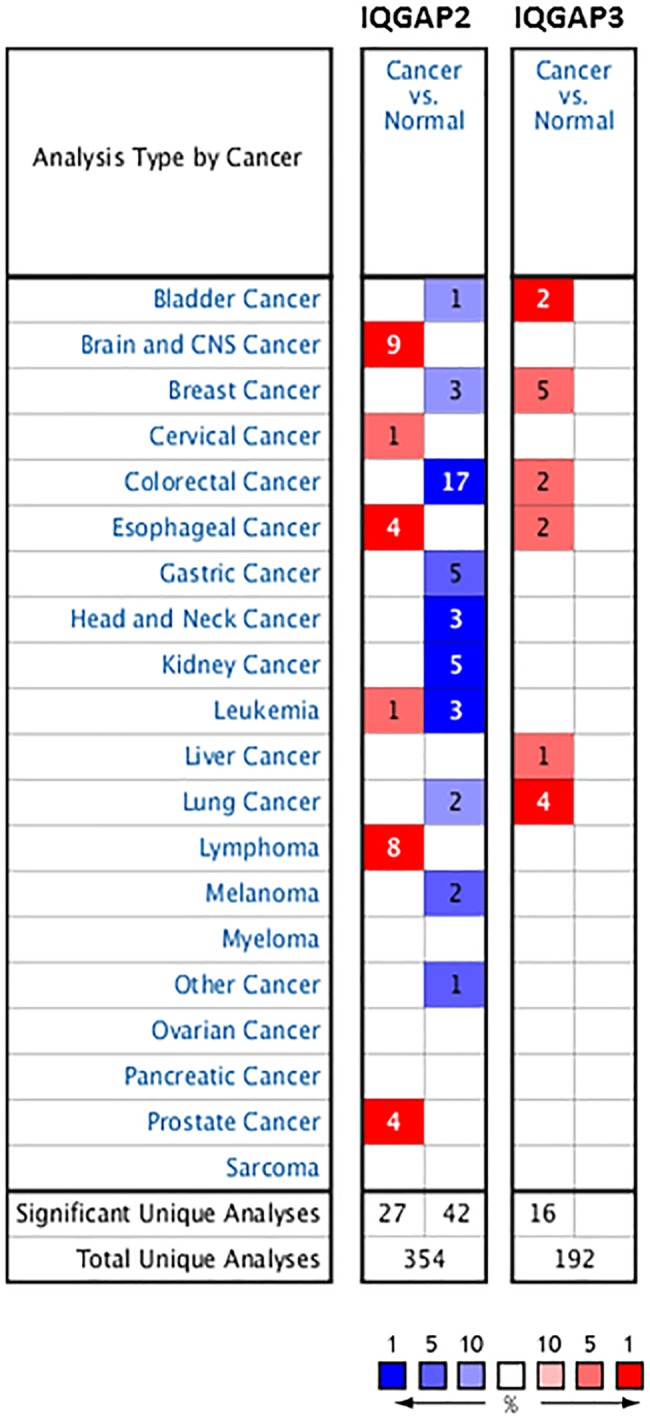
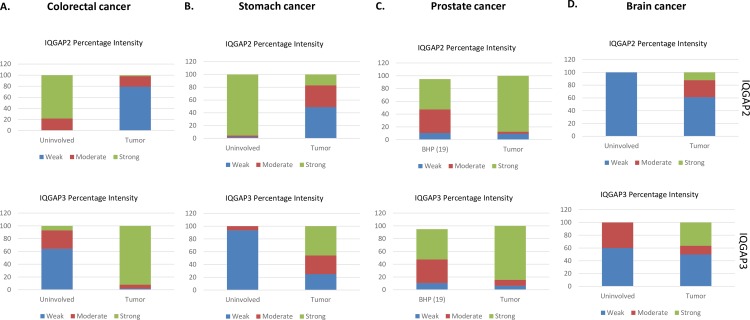
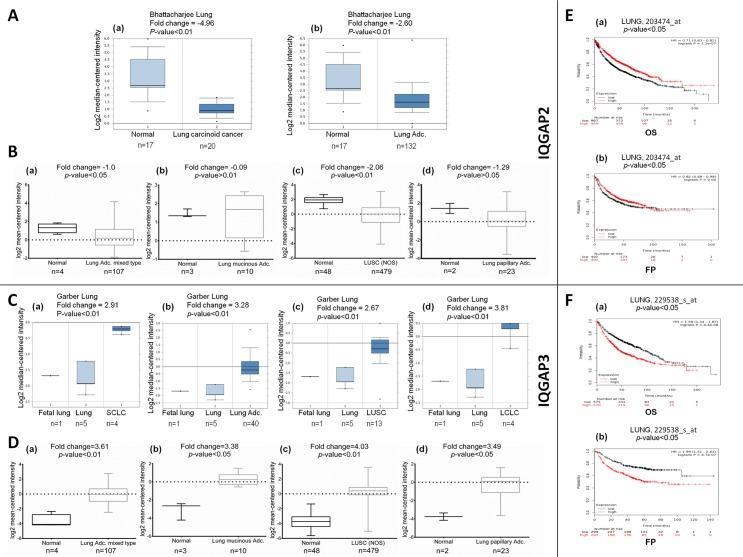
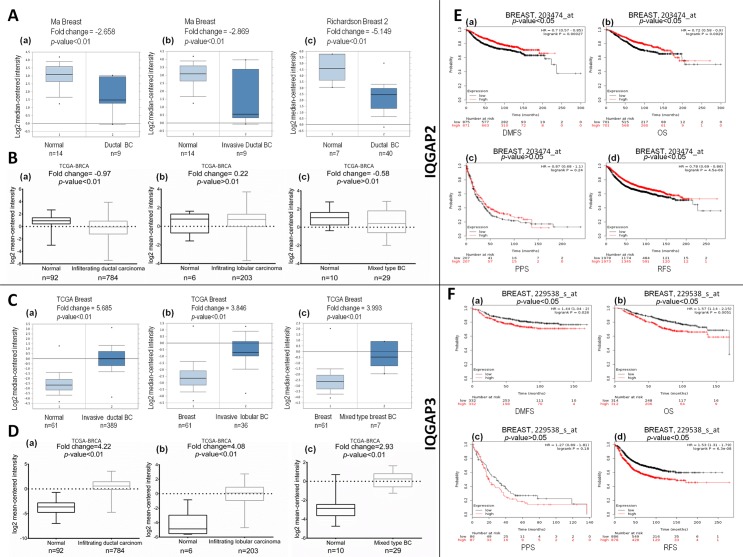
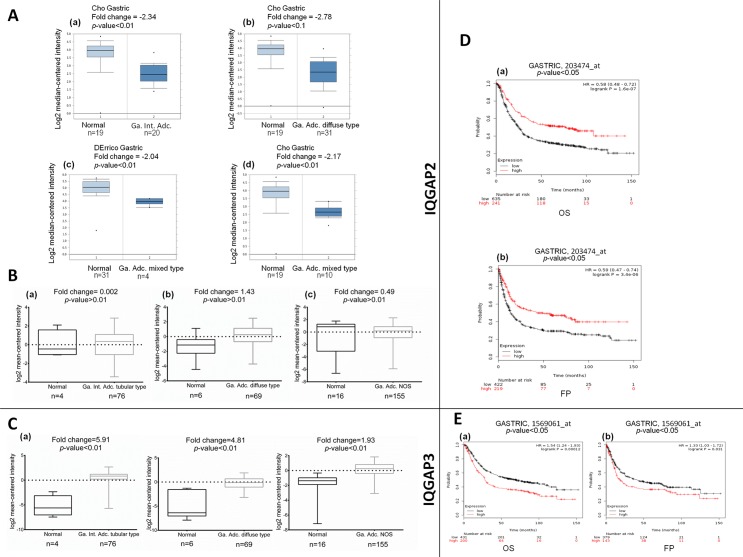
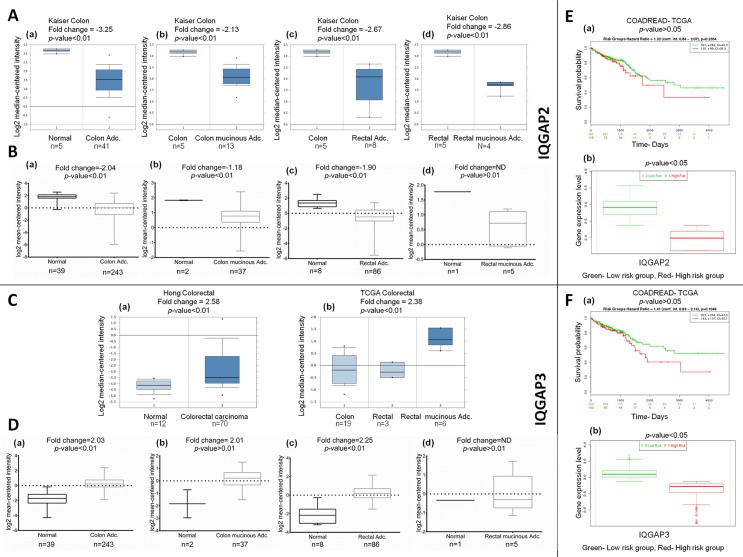
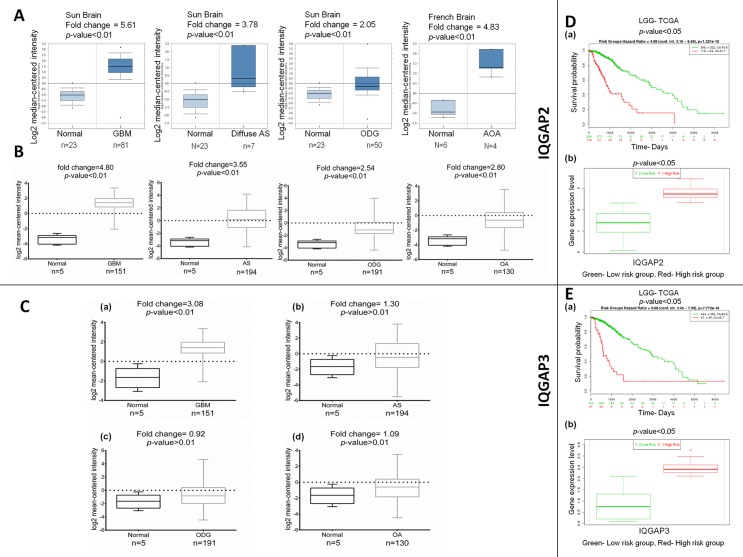
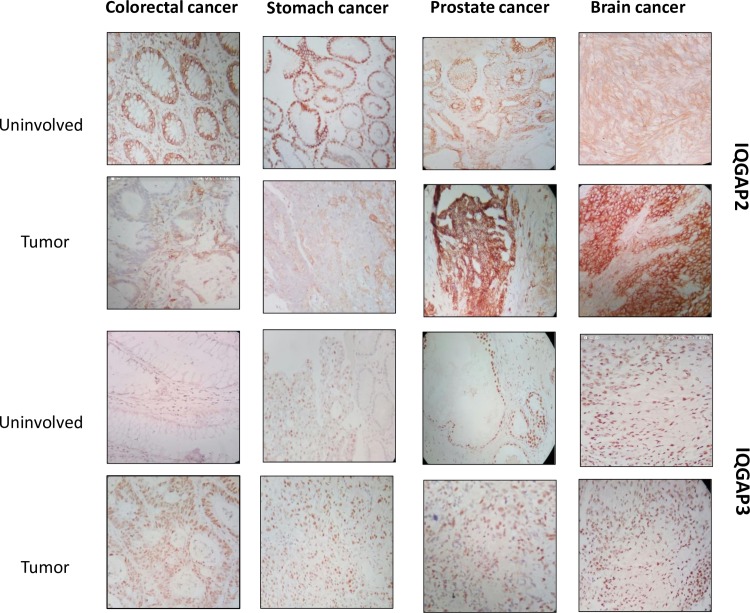
IQGAPs is a family of proteins which comprises three members, in humans. The expression pattern and role of IQGAP1 has been well established in many cancers, whereas those of IQGAP2 and IQGAP3, have mostly remained unexplored. We used available large datasets, to explore the pan-cancer status of these two genes in-silico. Here we have analysed their mRNA expression and correlation with survivability in eight different cancers, including lung, breast, gastric, brain, colorectal, prostate, liver and kidney cancers and, their subtypes. The mRNA expression of IQGAP2 and IQGAP3 in individual cancers were analysed in two different publicly available databases viz. Oncomine and TCGA. The prognostic value of these genes in lung, breast and gastric cancer was analysed using Kaplan-Meier Plotter database, whereas for brain, colorectal, liver, prostate and kidney cancers, SurvExpress database was used. These results were validated by immunohistochemistry in cancer tissues (stomach, prostate, brain, colorectal). Moreover, we did IQGAP2 and IQGAP3 genomic alteration and, promoter methylation analysis using cBioportal and Wanderer web tool, respectively. Most of the cancer types (lung, breast, prostate, brain, gastric, liver, kidney and colorectal) showed increased IQGAP3 mRNA expression. In contrast, the IQGAP2 transcript levels were reduced across different cancers viz. lung, breast, gastric, liver, kidney and colorectal cancer. IQGAP2 expression correlated positively with survivability, on the contrary, IQGAP3 expression levels correlated inversely with survivability, in most of the cancers. Collectively, enhanced IQGAP3 and reduced IQGAP2 levels were frequently observed in multiple cancers with the former predicting poor survivability and the later opposite. Methylation pattern was significantly altered in most of the cancer types. We found copy no. variation and mutations in specific cancers, for IQGAP2 and IQGAP3. Our in-vivo (IHC) data confirmed the in-silico findings completely. Hence, IQGAP2 and IQGAP3 have potential to be used as prognostic markers or therapeutic targets in specific cancers.
IQGAPs是一类蛋白质家族,在人类中包含三个成员。IQGAP1的表达模式和作用在许多癌症中已得到充分证实,而IQGAP2和IQGAP3的表达模式和作用大多仍未被探索。我们利用现有的大型数据集,在计算机上探索这两个基因的泛癌状态。在这里,我们分析了它们在八种不同癌症(包括肺癌、乳腺癌、胃癌、脑癌、结直肠癌、前列腺癌、肝癌和肾癌)及其亚型中的mRNA表达以及与生存率的相关性。在两个不同的公开数据库即Oncomine和TCGA中分析了IQGAP2和IQGAP3在个体癌症中的mRNA表达。使用Kaplan-Meier Plotter数据库分析了这些基因在肺癌、乳腺癌和胃癌中的预后价值,而对于脑癌、结直肠癌、肝癌、前列腺癌和肾癌,则使用SurvExpress数据库。这些结果在癌症组织(胃、前列腺、脑、结直肠)中通过免疫组织化学得到了验证。此外,我们分别使用cBioportal和Wanderer网络工具进行了IQGAP2和IQGAP3的基因组改变以及启动子甲基化分析。大多数癌症类型(肺癌、乳腺癌、前列腺癌、脑癌、胃癌、肝癌、肾癌和结直肠癌)显示IQGAP3 mRNA表达增加。相反,IQGAP2转录水平在不同癌症(即肺癌、乳腺癌、胃癌、肝癌、肾癌和结直肠癌)中降低。在大多数癌症中,IQGAP2表达与生存率呈正相关,相反,IQGAP3表达水平与生存率呈负相关。总体而言,在多种癌症中经常观察到IQGAP3增强和IQGAP2水平降低,前者预示着生存率低,而后者则相反。大多数癌症类型的甲基化模式发生了显著改变。我们发现IQGAP2和IQGAP3在特定癌症中有拷贝数变异和突变。我们的体内(免疫组织化学)数据完全证实了计算机分析的结果。因此,IQGAP2和IQGAP3有潜力在特定癌症中用作预后标志物或治疗靶点。