Phillips Andrew J K, Klerman Elizabeth B, Butler James P
Division of Sleep Medicine, Departments of Medicine and Neurology, Harvard Medical School, and Division of Sleep and Circadian Disorders, Brigham and Women's Hospital, Boston, MA, United States of America.
Division of Pulmonary and Critical Care Medicine, Brigham and Women's Hospital, and Department of Medicine, Harvard Medical School, Boston, MA, United States of America.
PLoS Comput Biol. 2017 Oct 26;13(10):e1005759. doi: 10.1371/journal.pcbi.1005759. eCollection 2017 Oct.
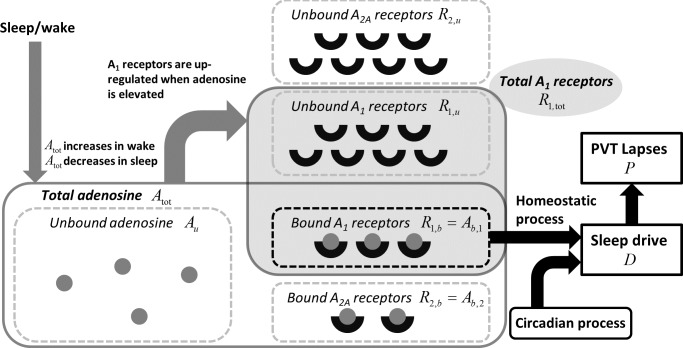
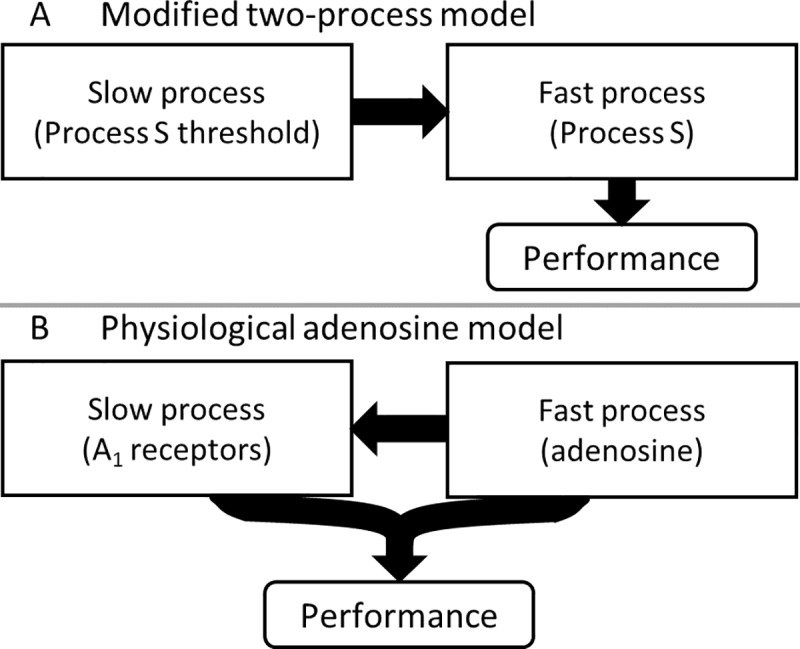
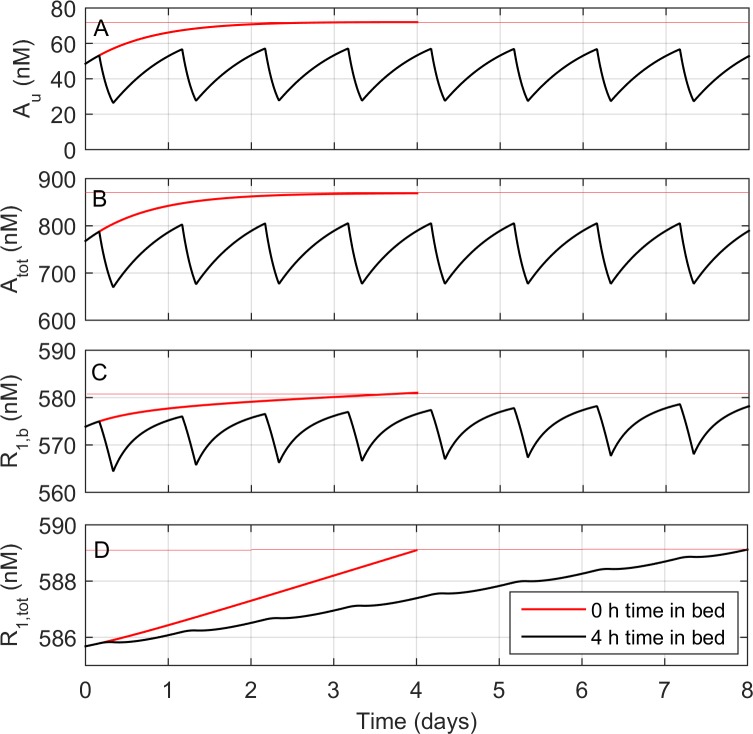
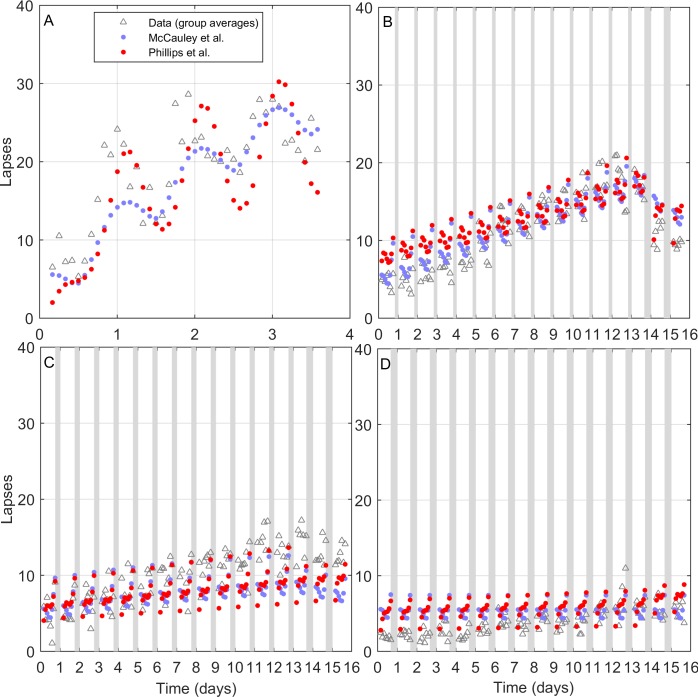
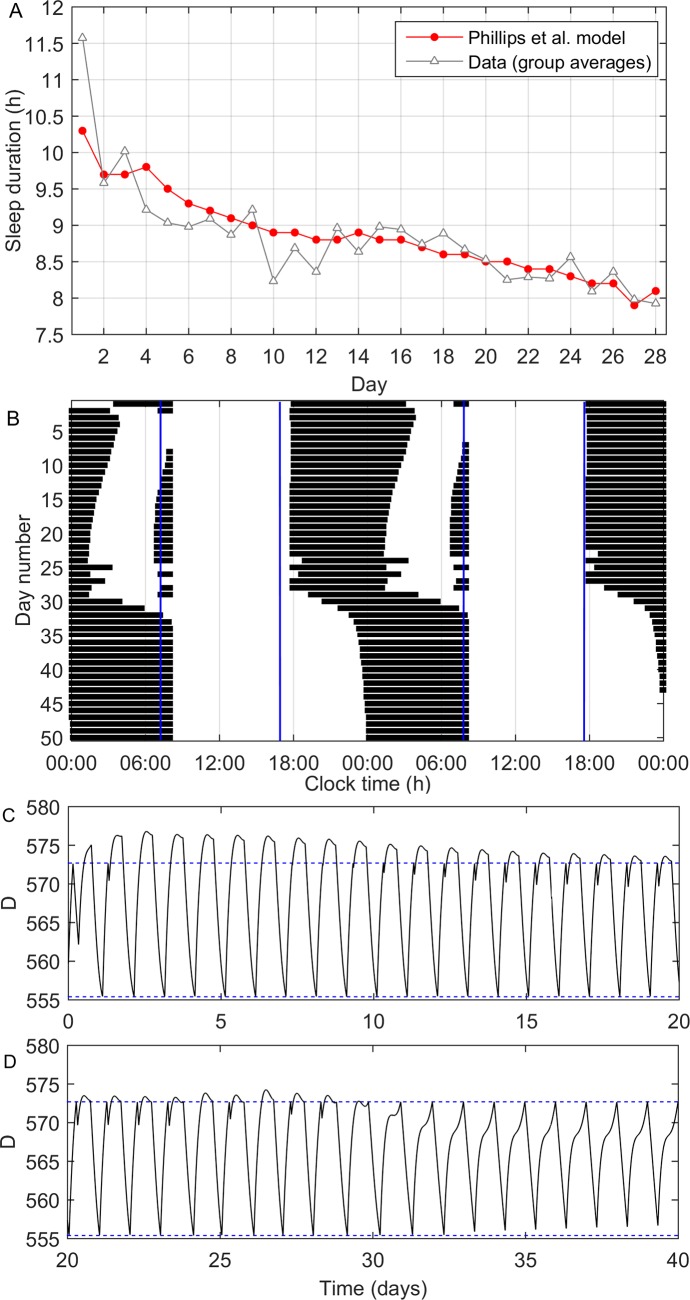
Sleep loss causes profound cognitive impairments and increases the concentrations of adenosine and adenosine A1 receptors in specific regions of the brain. Time courses for performance impairment and recovery differ between acute and chronic sleep loss, but the physiological basis for these time courses is unknown. Adenosine has been implicated in pathways that generate sleepiness and cognitive impairments, but existing mathematical models of sleep and cognitive performance do not explicitly include adenosine. Here, we developed a novel receptor-ligand model of the adenosine system to test the hypothesis that changes in both adenosine and A1 receptor concentrations can capture changes in cognitive performance during acute sleep deprivation (one prolonged wake episode), chronic sleep restriction (multiple nights with insufficient sleep), and subsequent recovery. Parameter values were estimated using biochemical data and reaction time performance on the psychomotor vigilance test (PVT). The model closely fit group-average PVT data during acute sleep deprivation, chronic sleep restriction, and recovery. We tested the model's ability to reproduce timing and duration of sleep in a separate experiment where individuals were permitted to sleep for up to 14 hours per day for 28 days. The model accurately reproduced these data, and also correctly predicted the possible emergence of a split sleep pattern (two distinct sleep episodes) under these experimental conditions. Our findings provide a physiologically plausible explanation for observed changes in cognitive performance and sleep during sleep loss and recovery, as well as a new approach for predicting sleep and cognitive performance under planned schedules.
睡眠不足会导致严重的认知障碍,并增加大脑特定区域中腺苷和腺苷A1受体的浓度。急性和慢性睡眠不足导致的性能损害和恢复的时间进程有所不同,但这些时间进程的生理基础尚不清楚。腺苷与产生困倦和认知障碍的途径有关,但现有的睡眠和认知表现数学模型并未明确纳入腺苷。在此,我们开发了一种新型的腺苷系统受体-配体模型,以检验以下假设:腺苷和A1受体浓度的变化能够反映急性睡眠剥夺(一次长时间清醒)、慢性睡眠限制(多个睡眠不足的夜晚)以及随后恢复过程中的认知表现变化。使用生化数据和心理运动警觉测试(PVT)中的反应时间表现来估计参数值。该模型与急性睡眠剥夺、慢性睡眠限制和恢复期间的组平均PVT数据紧密拟合。在一个单独的实验中,我们测试了该模型重现睡眠时间和持续时间的能力,在这个实验中,个体被允许每天睡眠长达14小时,持续28天。该模型准确地重现了这些数据,并且还正确预测了在这些实验条件下可能出现的分裂睡眠模式(两个不同的睡眠阶段)。我们的研究结果为睡眠不足和恢复期间观察到的认知表现和睡眠变化提供了一个生理上合理的解释,同时也为预测计划时间表下的睡眠和认知表现提供了一种新方法。