Rodriguez-Paras Carolina, Tippey Kathryn, Brown Elaine, Sasangohar Farzan, Creech Suzannah, Kum Hye-Chung, Lawley Mark, Benzer Justin K
Department of Industrial and Systems Engineering, Texas A&M University, College Station, TX, United States.
Center for Research and Innovation in Systems Safety, Department of Anesthesiology, Vanderbilt University Medical Center, Nashville, TN, United States.
JMIR Mhealth Uhealth. 2017 Oct 26;5(10):e156. doi: 10.2196/mhealth.7318.
Posttraumatic stress disorder (PTSD) is a prevalent mental health issue among veterans. Access to PTSD treatment is influenced by geographic (ie, travel distance to facilities), temporal (ie, time delay between services), financial (ie, eligibility and cost of services), and cultural (ie, social stigma) barriers.
The emergence of mobile health (mHealth) apps has the potential to bridge many of these access gaps by providing remote resources and monitoring that can offer discrete assistance to trauma survivors with PTSD and enhance patient-clinician relationships. In this study, we investigate the current mHealth capabilities relevant to PTSD.
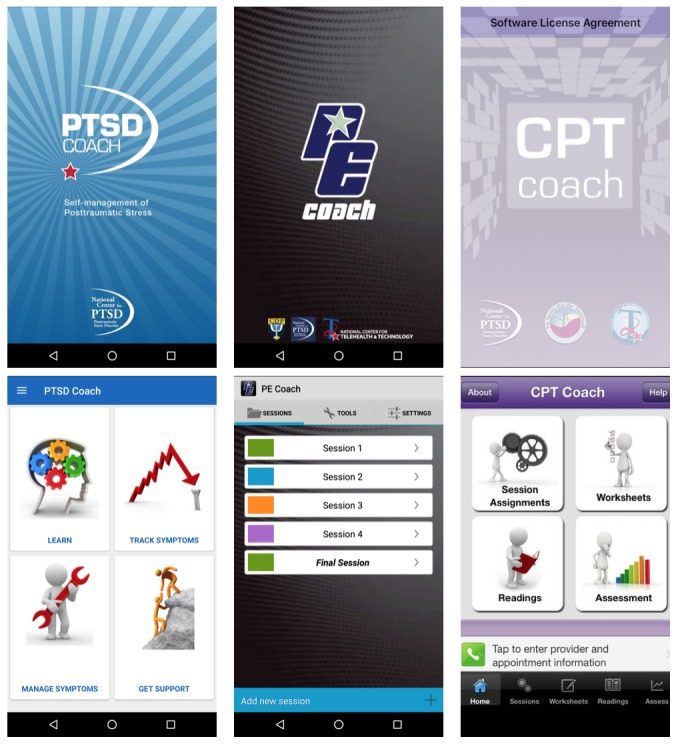
This study consists of two parts: (1) a review of publicly available PTSD apps designed to determine the availability of PTSD apps, which includes more detailed information about three dominant apps and (2) a scoping literature review performed using a systematic method to determine app usage and efforts toward validation of such mHealth apps. App usage relates to how the end users (eg, clinicians and patients) are interacting with the app, whereas validation is testing performed to ensure the app's purpose and specifications are met.
The results suggest that though numerous apps have been developed to aid in the diagnosis and treatment of PTSD symptoms, few apps were designed to be integrated with clinical PTSD treatment, and minimal efforts have been made toward enhancing the usability and validation of PTSD apps.
These findings expose the need for studies relating to the human factors evaluation of such tools, with the ultimate goal of increasing access to treatment and widening the app adoption rate for patients with PTSD.
创伤后应激障碍(PTSD)是退伍军人中普遍存在的心理健康问题。获得PTSD治疗受到地理(即到医疗机构的旅行距离)、时间(即服务之间的时间延迟)、财务(即服务的资格和成本)和文化(即社会耻辱感)障碍的影响。
移动健康(mHealth)应用程序的出现有可能通过提供远程资源和监测来弥合许多此类获取差距,这些资源和监测可以为患有PTSD的创伤幸存者提供具体帮助,并加强患者与临床医生的关系。在本研究中,我们调查了当前与PTSD相关的移动健康功能。
本研究包括两个部分:(1)对公开可用的PTSD应用程序进行审查,以确定PTSD应用程序的可用性,其中包括有关三款主要应用程序的更详细信息;(2)使用系统方法进行范围文献综述,以确定应用程序的使用情况以及对此类移动健康应用程序进行验证的努力。应用程序的使用涉及最终用户(如临床医生和患者)与应用程序的交互方式,而验证是为确保应用程序符合其目的和规格而进行的测试。
结果表明,尽管已经开发了许多应用程序来帮助诊断和治疗PTSD症状,但很少有应用程序设计为与临床PTSD治疗相结合使用,并且在提高PTSD应用程序的可用性和验证方面所做的努力很少。
这些发现表明需要开展与此类工具的人为因素评估相关的研究,最终目标是增加治疗机会并提高PTSD患者对应用程序的采用率。