Department of Industrial and / Systems Engineering, Texas A&M University, College Station, Texas, United States of America.
PLoS One. 2022 May 18;17(5):e0267749. doi: 10.1371/journal.pone.0267749. eCollection 2022.
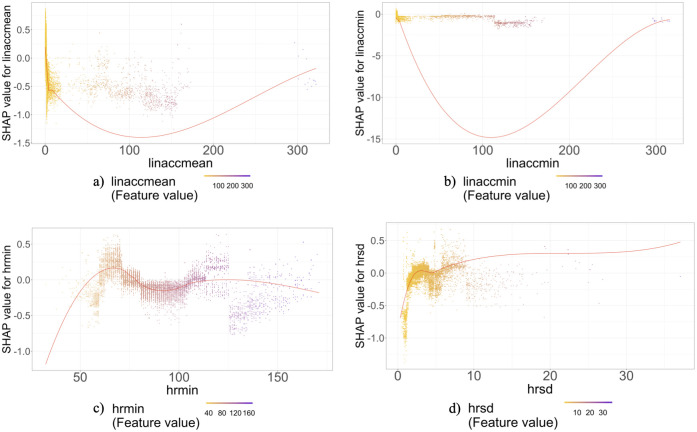
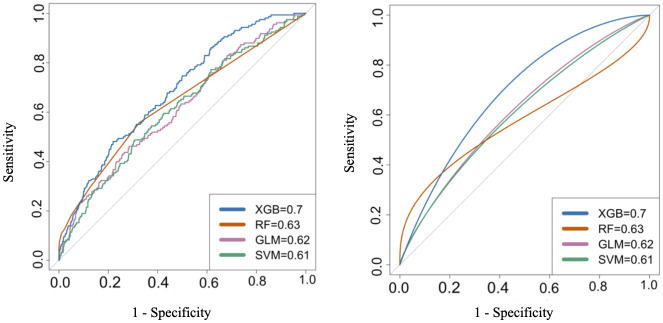
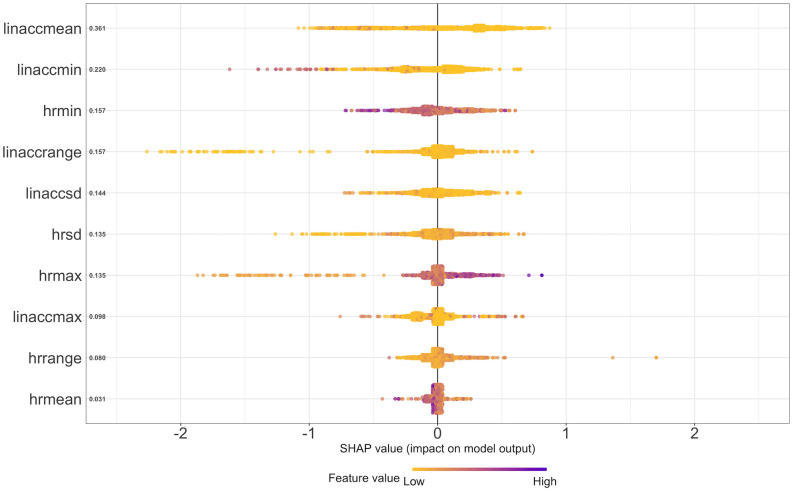
Posttraumatic Stress Disorder (PTSD) is a psychiatric condition affecting nearly a quarter of the United States war veterans who return from war zones. Treatment for PTSD typically consists of a combination of in-session therapy and medication. However; patients often experience their most severe PTSD symptoms outside of therapy sessions. Mobile health applications may address this gap, but their effectiveness is limited by the current gap in continuous monitoring and detection capabilities enabling timely intervention. The goal of this article is to develop a novel method to detect hyperarousal events using physiological and activity-based machine learning algorithms. Physiological data including heart rate and body acceleration as well as self-reported hyperarousal events were collected using a tool developed for commercial off-the-shelf wearable devices from 99 United States veterans diagnosed with PTSD over several days. The data were used to develop four machine learning algorithms: Random Forest, Support Vector Machine, Logistic Regression and XGBoost. The XGBoost model had the best performance in detecting onset of PTSD symptoms with over 83% accuracy and an AUC of 0.70. Post-hoc SHapley Additive exPlanations (SHAP) additive explanation analysis showed that algorithm predictions were correlated with average heart rate, minimum heart rate and average body acceleration. Findings show promise in detecting onset of PTSD symptoms which could be the basis for developing remote and continuous monitoring systems for PTSD. Such systems may address a vital gap in just-in-time interventions for PTSD self-management outside of scheduled clinical appointments.
创伤后应激障碍(PTSD)是一种影响近四分之一从战区返回的美国退伍军人的精神疾病。PTSD 的治疗通常包括会谈治疗和药物治疗的结合。然而,患者在会谈治疗之外经常会经历到最严重的 PTSD 症状。移动健康应用程序可能会解决这一差距,但它们的有效性受到目前连续监测和检测能力的限制,无法实现及时干预。本文的目的是开发一种使用生理和基于活动的机器学习算法来检测过度唤醒事件的新方法。使用为商业现货可穿戴设备开发的工具,从 99 名被诊断患有 PTSD 的美国退伍军人那里收集了包括心率和身体加速度在内的生理数据以及自我报告的过度唤醒事件。这些数据用于开发四种机器学习算法:随机森林、支持向量机、逻辑回归和 XGBoost。XGBoost 模型在检测 PTSD 症状发作方面表现最佳,准确率超过 83%,AUC 为 0.70。事后 SHapley Additive exPlanations (SHAP) 加法解释分析表明,算法预测与平均心率、最小心率和平均身体加速度相关。研究结果表明,该方法在检测 PTSD 症状发作方面具有很大的潜力,这可能是为 PTSD 远程和连续监测系统开发的基础,从而可以解决 PTSD 自我管理在预约临床治疗之外的及时干预的重要差距。