Hallenbeck Haijing Wu, Jaworski Beth K, Wielgosz Joseph, Kuhn Eric, Ramsey Kelly M, Taylor Katherine, Juhasz Katherine, McGee-Vincent Pearl, Mackintosh Margaret-Anne, Owen Jason E
Dissemination and Training Division, National Center for Posttraumatic Stress Disorder, Veterans Affairs Palo Alto Health Care System, Menlo Park, CA, United States.
Department of Psychiatry and Behavioral Sciences, Stanford University School of Medicine, Stanford, CA, United States.
JMIR Ment Health. 2022 Mar 29;9(3):e34744. doi: 10.2196/34744.
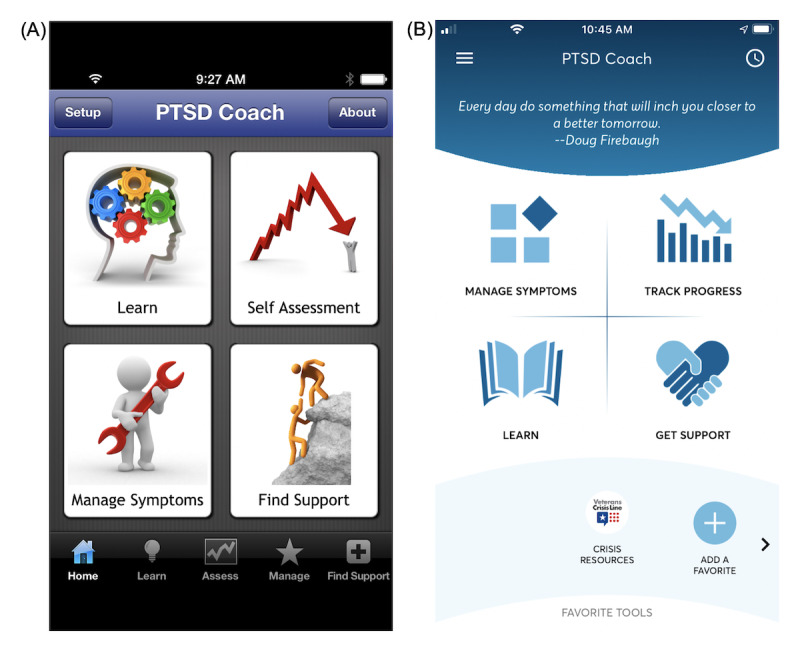
With widespread smartphone ownership, mobile health apps (mHealth) can expand access to evidence-based interventions for mental health conditions, including posttraumatic stress disorder (PTSD). Research to evaluate new features and capabilities in these apps is critical but lags behind app development. The initial release of PTSD Coach, a free self-management app developed by the US Departments of Veterans Affairs and Defense, was found to have a positive public health impact. However, major stakeholder-driven updates to the app have yet to be evaluated.
We aimed to characterize the reach, use, and potential impact of PTSD Coach Version 3.1 in the general public. As part of characterizing use, we investigated the use of specific app features, which extended previous work on PTSD Coach.
We examined the naturalistic use of PTSD Coach during a 1-year observation period between April 20, 2020, and April 19, 2021, using anonymous in-app event data to generate summary metrics for users.
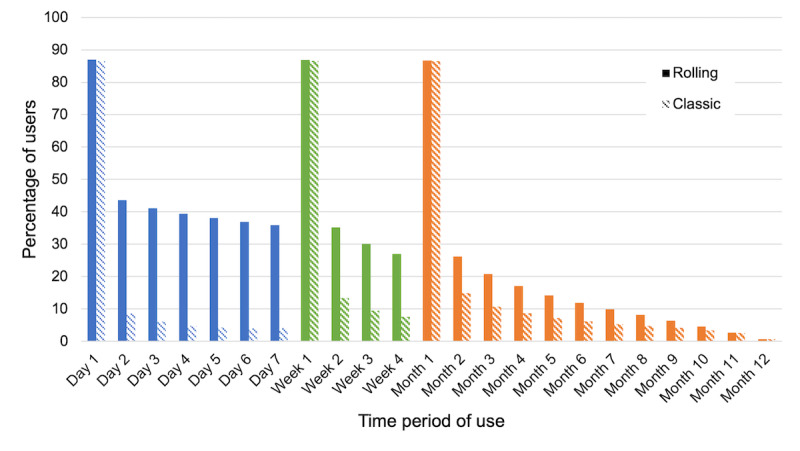
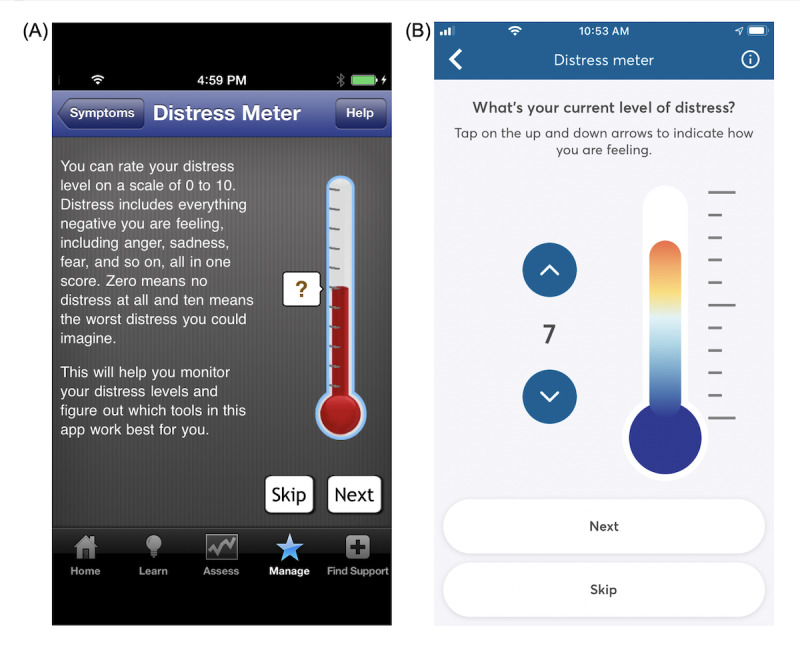
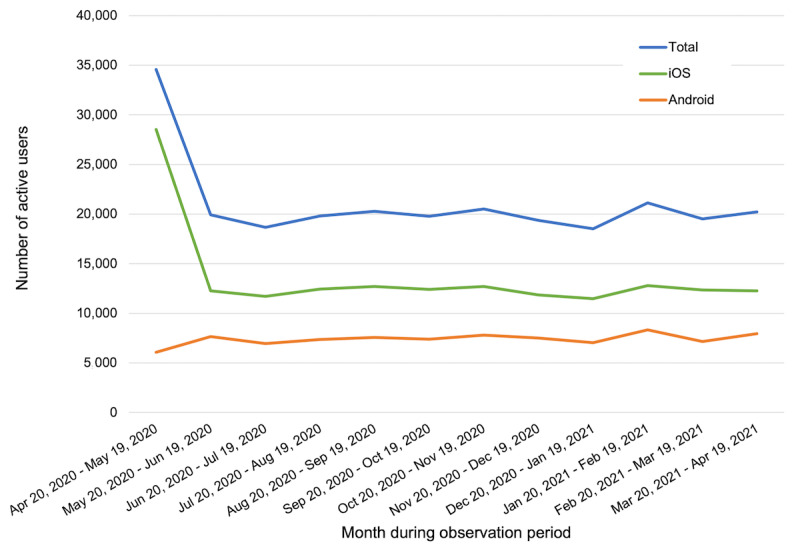
During the observation period, PTSD Coach was broadly disseminated to the public, reaching approximately 150,000 total users and 20,000 users per month. On average, users used the app 3 times across 3 separate days for 18 minutes in total, with steep drop-offs in use over time; a subset of users, however, demonstrated high or sustained engagement. More than half of users (79,099/128,691, 61.46%) accessed one or more main content areas of the app (ie, Manage Symptoms, Track Progress, Learn, or Get Support). Among content areas, features under Manage Symptoms (including coping tools) were accessed most frequently, by over 40% of users (53,314/128,691, 41.43% to 56,971/128,691, 44.27%, depending on the feature). Users who provided initial distress ratings (56,971/128,691, 44.27%) reported relatively high momentary distress (mean 6.03, SD 2.52, on a scale of 0-10), and the use of a coping tool modestly improved momentary distress (mean -1.38, SD 1.70). Among users who completed at least one PTSD Checklist for DSM-5 (PCL-5) assessment (17,589/128,691, 13.67%), PTSD symptoms were largely above the clinical threshold (mean 49.80, SD 16.36). Among users who completed at least two PCL-5 assessments (4989/128,691, 3.88%), PTSD symptoms decreased from the first to last assessment (mean -4.35, SD 15.29), with approximately one-third (1585/4989, 31.77%) of these users experiencing clinically significant improvements.
PTSD Coach continues to fulfill its mission as a public health resource. Version 3.1 compares favorably with version 1 on most metrics related to reach, use, and potential impact. Although benefits appear modest on an individual basis, the app provides these benefits to a large population. For mHealth apps to reach their full potential in supporting trauma recovery, future research should aim to understand the utility of individual app features and identify strategies to maximize overall effectiveness and engagement.
随着智能手机的广泛普及,移动健康应用程序(mHealth)可以扩大获得基于证据的心理健康干预措施的机会,包括创伤后应激障碍(PTSD)。评估这些应用程序新功能和能力的研究至关重要,但落后于应用程序的开发。由美国退伍军人事务部和国防部开发的免费自我管理应用程序PTSD Coach的初始版本被发现具有积极的公共卫生影响。然而,由主要利益相关者推动的该应用程序更新尚未得到评估。
我们旨在描述PTSD Coach 3.1版本在普通公众中的覆盖范围、使用情况和潜在影响。作为描述使用情况的一部分,我们调查了特定应用程序功能的使用情况,这扩展了之前关于PTSD Coach的研究。
我们在2020年4月20日至2021年4月19日的1年观察期内检查了PTSD Coach的自然使用情况,使用应用程序内匿名事件数据为用户生成汇总指标。
在观察期内,PTSD Coach广泛传播给公众,总用户数约为150,000人,每月有20,000名用户。平均而言,用户在3个不同的日子里使用该应用程序3次,总共使用18分钟,随着时间的推移使用量急剧下降;然而,一部分用户表现出高参与度或持续参与度。超过一半的用户(79,099/128,691,61.46%)访问了该应用程序的一个或多个主要内容区域(即管理症状、跟踪进展、学习或获得支持)。在各内容区域中,管理症状(包括应对工具)下的功能访问最为频繁,超过40%的用户(53,314/128,691,41.43%至56,971/128,691,44.27%,取决于功能)。提供初始痛苦评分的用户(56,971/128,691,44.27%)报告的瞬间痛苦程度相对较高(平均6.03,标准差2.52,范围为从0至10),使用应对工具可适度改善瞬间痛苦(平均 -1.38,标准差1.70)。在至少完成一次《精神疾病诊断与统计手册》第5版创伤后应激障碍检查表(PCL - 5)评估的用户中(17,589/128,691,13.67%),创伤后应激障碍症状大多高于临床阈值(平均49.80,标准差16.36)。在至少完成两次PCL - 5评估的用户中(4,989/128,691,3.88%),创伤后应激障碍症状从第一次评估到最后一次评估有所下降(平均 -4.35,标准差15.29),其中约三分之一(1,585/4,989,31.77%)的用户经历了临床上的显著改善。
PTSD Coach继续履行其作为公共卫生资源的使命。3.1版本在与覆盖范围、使用情况和潜在影响相关的大多数指标上优于第1版。尽管从个体角度来看益处似乎不大,但该应用程序为大量人群提供了这些益处。为了使移动健康应用程序在支持创伤恢复方面充分发挥潜力,未来的研究应旨在了解各个应用程序功能的效用,并确定使整体有效性和参与度最大化的策略。