Lenzi Jacopo, Anichini Giulio, Landi Alessandro, Piciocchi Alfonso, Passacantilli Emiliano, Pedace Francesca, Delfini Roberto, Santoro Antonio
Department of Neurological Sciences, Neurosurgery, University of Rome "Sapienza", Rome, Italy.
Imperial College London, Imperial College Healthcare NHS Trust, Charing Cross Hospital, Department of Neuroscience, Neurosurgery, London, UK.
Neurol Res Int. 2017;2017:3568359. doi: 10.1155/2017/3568359. Epub 2017 Sep 18.
Spinal schwannomas are common benign spinal tumors. Their treatment has significantly evolved over the years, and preserving neurological functions has become one of the main treatment goals together with tumor resection.
Retrospective review focused on clinical assessment, treatment techniques, and outcomes.
A retrospective study on our surgical series was performed. Clinical and operative data were analyzed. In regard to neurophysiologic monitoring, patients were retrospectively divided into two groups comparing the outcomes before and after introduction of routine intraoperative neurophysiology tests.
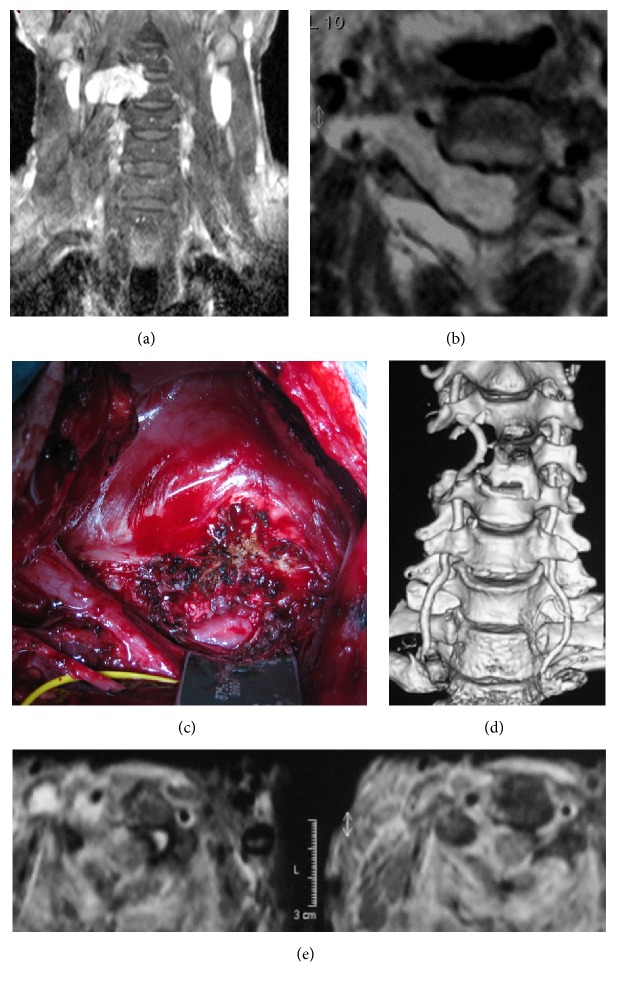
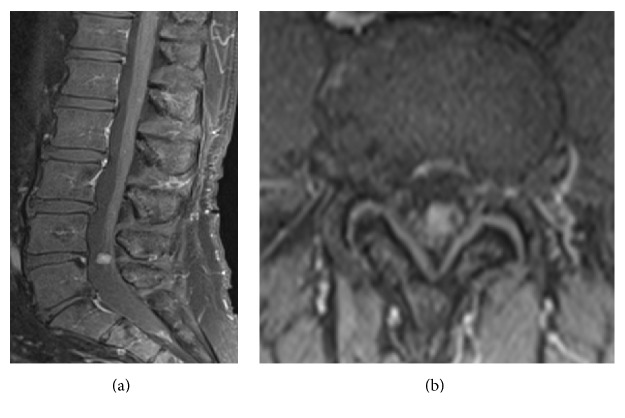
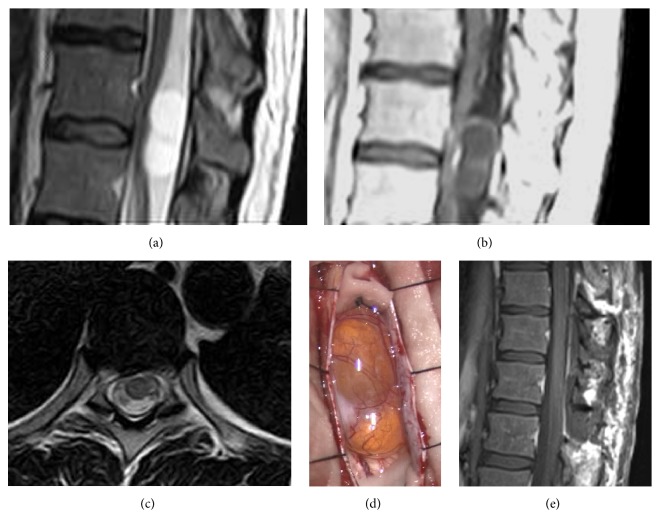
From 1951 to 2010, 367 patients overall were treated. Diagnosis was obtained using angiography and/or myelography (pre-CT era), MRI, or CT scan. A posterior spinal approach was used for most patients; complex approaches were adopted for treatment of giant/dumbbell tumors. A trend of neurophysiology monitoring decreasing the rate of post-op neurological deficits was observed but was not statistically significant enough to draft evidence-based conclusions.
Clinical and radiological assessment of spinal schwannomas has markedly changed over the course of 50 years. Diagnostic tools have improved, and detection of recurrence has become way more sensitive. Neurophysiologic monitoring has become a useful intraoperative tool to guide resection and prevent post-op neurological impairment.
脊髓神经鞘瘤是常见的脊髓良性肿瘤。多年来其治疗方法有了显著发展,保留神经功能已与肿瘤切除一同成为主要治疗目标之一。
回顾性研究聚焦于临床评估、治疗技术及结果。
对我们的手术系列进行回顾性研究。分析临床和手术数据。关于神经生理监测,将患者回顾性分为两组,比较常规术中神经生理学检查引入前后的结果。
1951年至2010年,共治疗367例患者。诊断采用血管造影和/或脊髓造影(CT时代之前)、MRI或CT扫描。大多数患者采用后路脊柱入路;复杂入路用于治疗巨大/哑铃形肿瘤。观察到神经生理监测有降低术后神经功能缺损发生率的趋势,但统计学意义不足,无法得出循证结论。
50年间脊髓神经鞘瘤的临床和影像学评估有显著变化。诊断工具得到改进,复发检测变得更加敏感。神经生理监测已成为指导切除和预防术后神经损伤的有用术中工具。