Department of Obstetrics and Gynecology, Tohoku University School of Medicine, Tohoku University, Sendai, Japan.
Tohoku Medical Megabank Organization, Tohoku University, Sendai, Japan.
Mol Cancer Ther. 2018 Jan;17(1):50-59. doi: 10.1158/1535-7163.MCT-17-0173. Epub 2017 Oct 27.
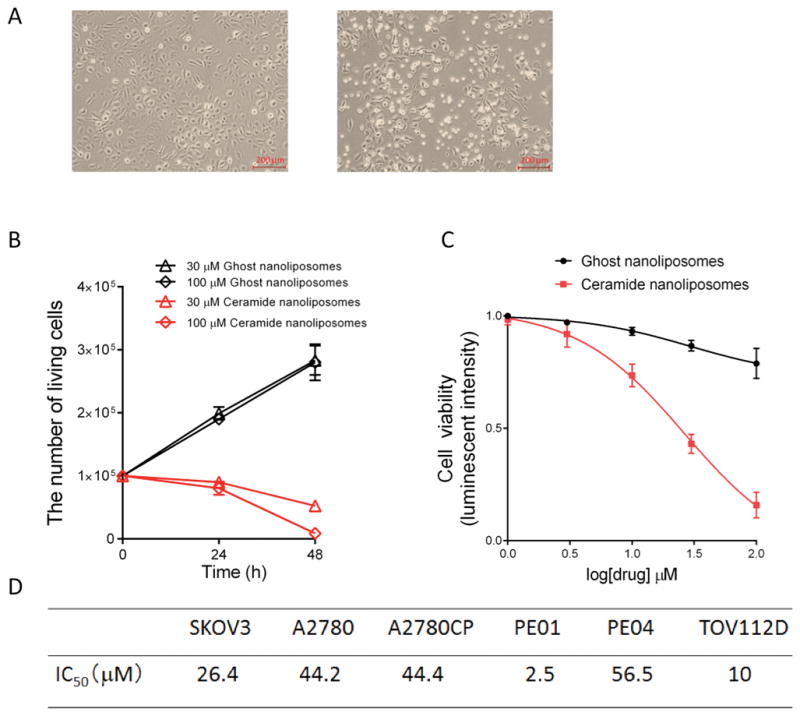
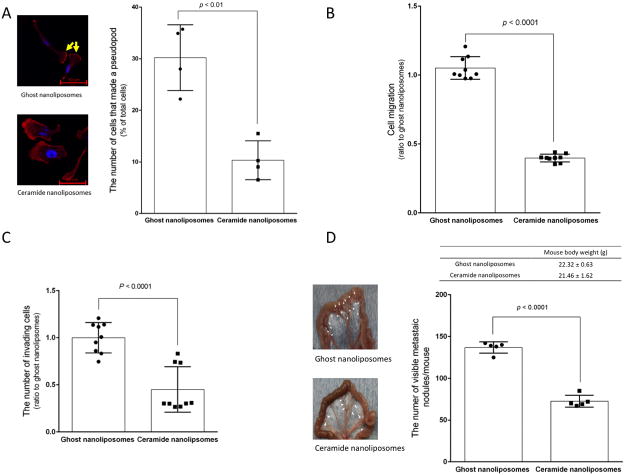
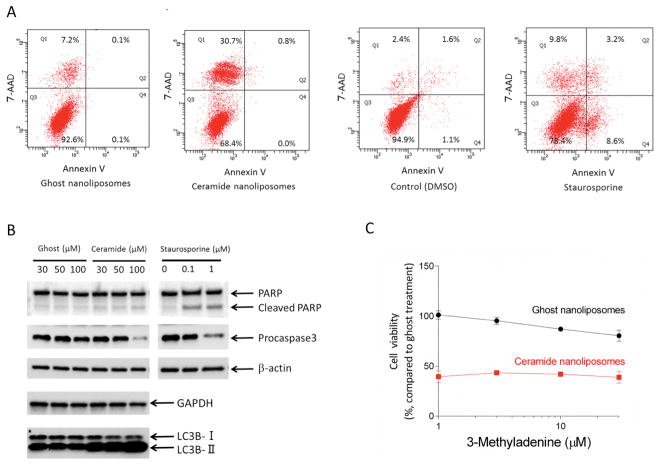
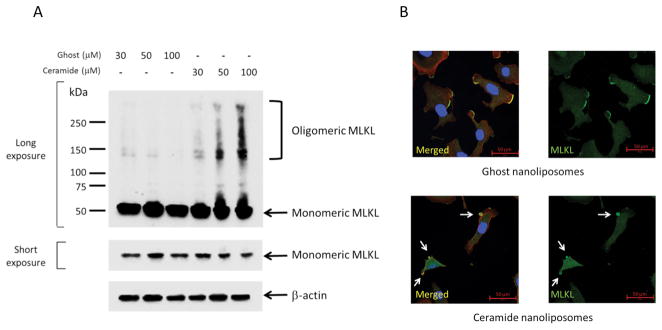
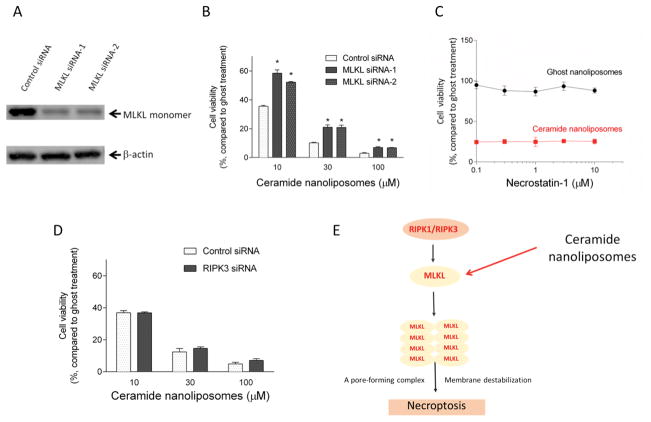
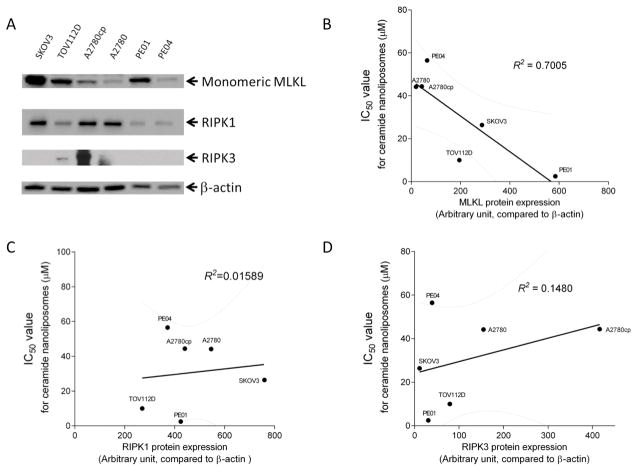
Ceramides are bioactive lipids that mediate cell death in cancer cells, and ceramide-based therapy is now being tested in dose-escalating phase I clinical trials as a cancer treatment. Multiple nanoscale delivery systems for ceramide have been proposed to overcome the inherent toxicities, poor pharmacokinetics, and difficult biophysics associated with ceramide. Using the ceramide nanoliposomes (CNL), we now investigate the therapeutic efficacy and signaling mechanisms of this nanoscale delivery platform in refractory ovarian cancer. Treatment of ovarian cancer cells with CNL decreased the number of living cells through necroptosis but not apoptosis. Mechanistically, dying SKOV3 ovarian cancer cells exhibit activation of pseudokinase mixed lineage kinase domain-like (MLKL) as evidenced by oligomerization and relocalization to the blebbing membranes, showing necroptotic characteristics. Knockdown of MLKL, but not its upstream protein kinases such as receptor-interacting protein kinases, with siRNA significantly abolished CNL-induced cell death. Monomeric MLKL protein expression inversely correlated with the IC values of CNL in distinct ovarian cancer cell lines, suggesting MLKL as a possible determinant for CNL-induced cell death. Finally, systemic CNL administration suppressed metastatic growth in an ovarian cancer cell xenograft model. Taken together, these results suggest that MLKL is a novel pronecroptotic target for ceramide in ovarian cancer models. .
神经酰胺是一种具有生物活性的脂质,可介导癌细胞死亡,基于神经酰胺的疗法目前正在进行递增剂量的 I 期临床试验,作为癌症治疗方法。已经提出了多种神经酰胺的纳米级递药系统,以克服与神经酰胺相关的固有毒性、差的药代动力学和困难的生物物理学。使用神经酰胺纳米脂质体(CNL),我们现在研究了这种纳米递药平台在难治性卵巢癌中的治疗效果和信号机制。CNL 处理卵巢癌细胞会通过坏死细胞死亡而不是凋亡来减少活细胞的数量。从机制上讲,垂死的 SKOV3 卵巢癌细胞表现出假激酶混合谱系激酶结构域样(MLKL)的激活,这表现在寡聚化和重新定位到起泡膜上,显示出坏死细胞死亡的特征。用 siRNA 敲低 MLKL,但不是其上游蛋白激酶(如受体相互作用蛋白激酶),可显著抑制 CNL 诱导的细胞死亡。单体 MLKL 蛋白表达与 CNL 在不同卵巢癌细胞系中的 IC 值呈反比,表明 MLKL 可能是 CNL 诱导细胞死亡的一个可能决定因素。最后,全身给予 CNL 可抑制卵巢癌细胞异种移植模型中的转移性生长。总之,这些结果表明,在卵巢癌模型中,MLKL 是神经酰胺的一种新型促坏死细胞死亡的靶标。