Centre for Organismal Studies (COS), University of Heidelberg, Im Neuenheimer Feld 360, 69120, Heidelberg, Germany.
Graduate School of Pharmaceutical Sciences, Chiba University, Chiba, 260-8675, Japan.
Nat Commun. 2017 Oct 27;8(1):1174. doi: 10.1038/s41467-017-01224-w.
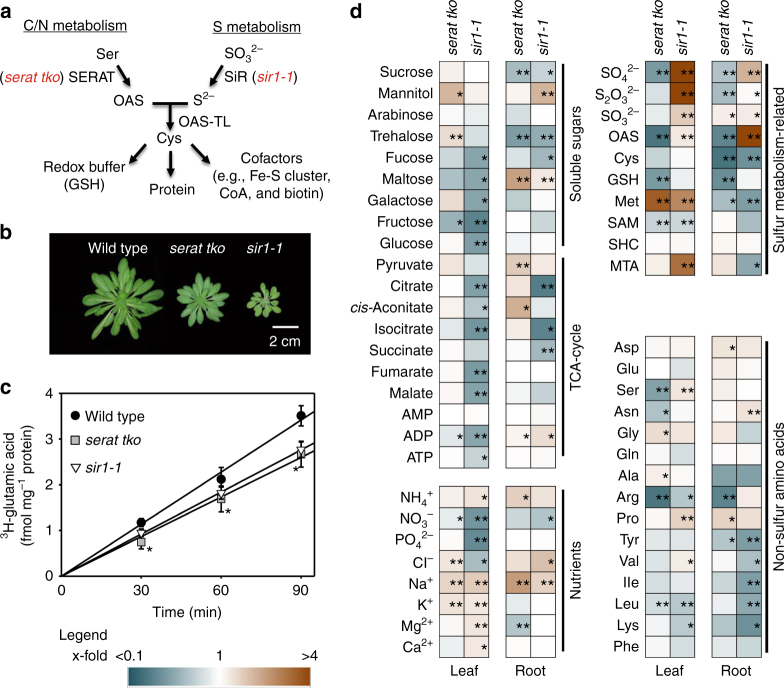
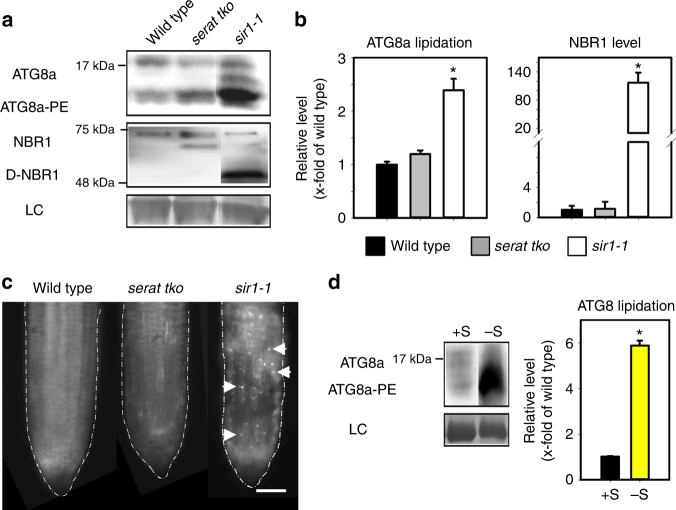
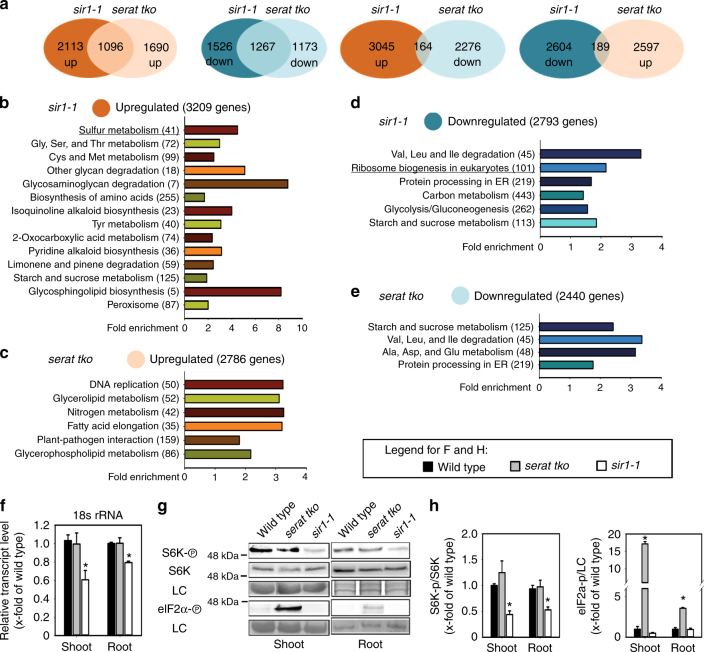
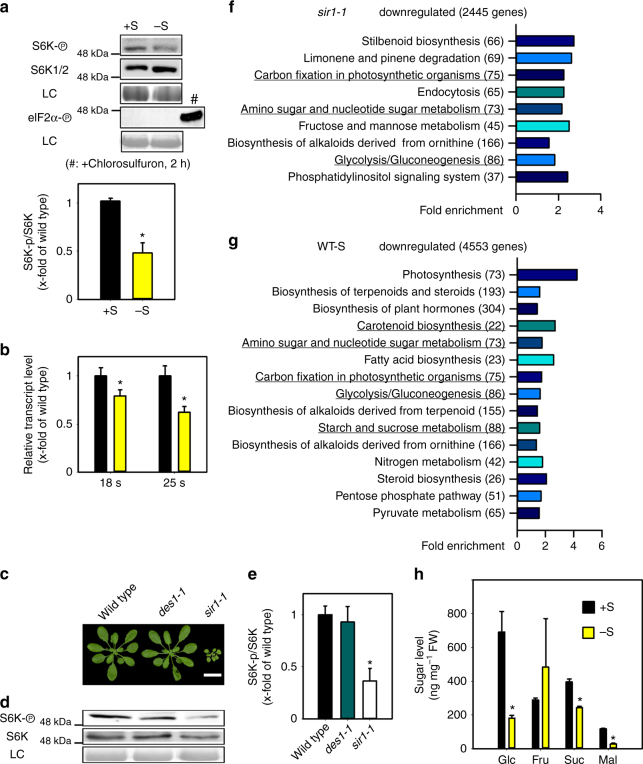
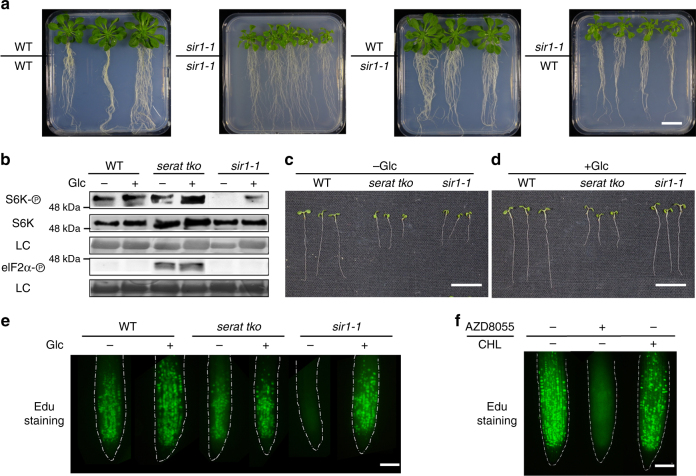
Growth of eukaryotic cells is regulated by the target of rapamycin (TOR). The strongest activator of TOR in metazoa is amino acid availability. The established transducers of amino acid sensing to TOR in metazoa are absent in plants. Hence, a fundamental question is how amino acid sensing is achieved in photo-autotrophic organisms. Here we demonstrate that the plant Arabidopsis does not sense the sulfur-containing amino acid cysteine itself, but its biosynthetic precursors. We identify the kinase GCN2 as a sensor of the carbon/nitrogen precursor availability, whereas limitation of the sulfur precursor is transduced to TOR by downregulation of glucose metabolism. The downregulated TOR activity caused decreased translation, lowered meristematic activity, and elevated autophagy. Our results uncover a plant-specific adaptation of TOR function. In concert with GCN2, TOR allows photo-autotrophic eukaryotes to coordinate the fluxes of carbon, nitrogen, and sulfur for efficient cysteine biosynthesis under varying external nutrient supply.
真核细胞的生长受雷帕霉素靶蛋白(TOR)的调控。在后生动物中,激活 TOR 的最强因子是氨基酸的可利用性。在植物中,氨基酸感应到 TOR 的已确立的转导物是不存在的。因此,一个基本的问题是氨基酸感应是如何在光合自养生物中实现的。在这里,我们证明植物拟南芥本身并不感知含硫氨基酸半胱氨酸,而是感知其生物合成前体。我们确定激酶 GCN2 是碳/氮前体可用性的传感器,而当硫前体受到限制时,通过下调葡萄糖代谢将其传递到 TOR。下调的 TOR 活性导致翻译减少、分生组织活性降低和自噬增加。我们的结果揭示了 TOR 功能的一种植物特异性适应。与 GCN2 协同作用,TOR 允许光合自养真核生物在不同的外部营养供应下,协调碳、氮和硫的通量,以有效合成半胱氨酸。