Amanulla Baishnisha, Palanisamy Selvakumar, Chen Shen-Ming, Chiu Te-Wei, Velusamy Vijayalakshmi, Hall James M, Chen Tse-Wei, Ramaraj Sayee Kannan
PG & Research department of Chemistry, Thiagarajar College, Madurai-09, Tamilnadu, India.
Electroanalysis and Bioelectrochemistry Lab, Department of Chemical Engineering and Biotechnology, National Taipei University of Technology, No. 1, Section 3, Chung-Hsiao East Road, Taipei 106, Taiwan, ROC.
Sci Rep. 2017 Oct 27;7(1):14182. doi: 10.1038/s41598-017-14584-6.
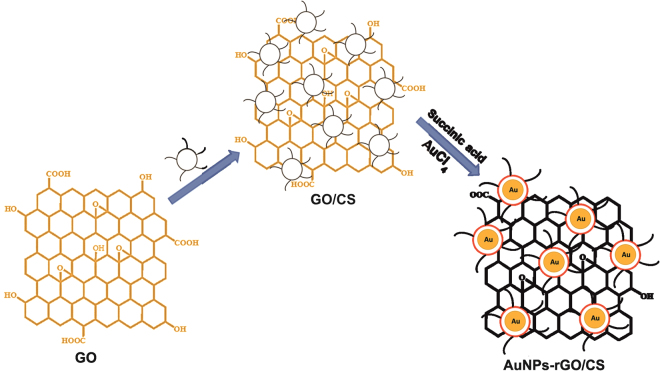
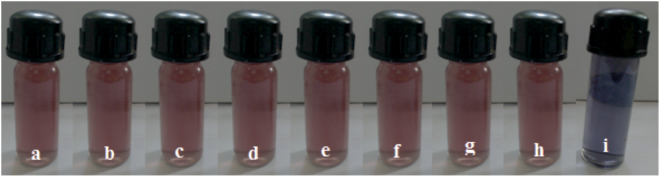
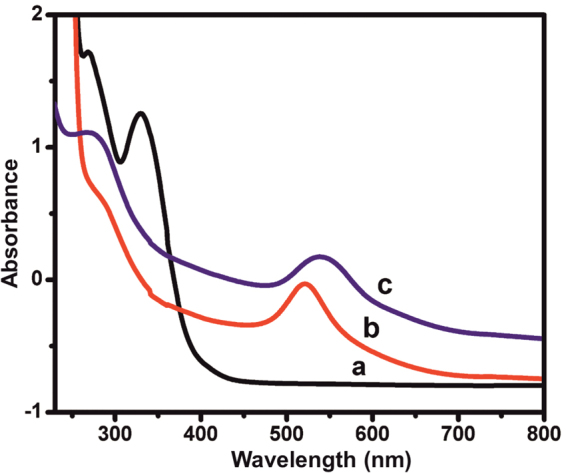
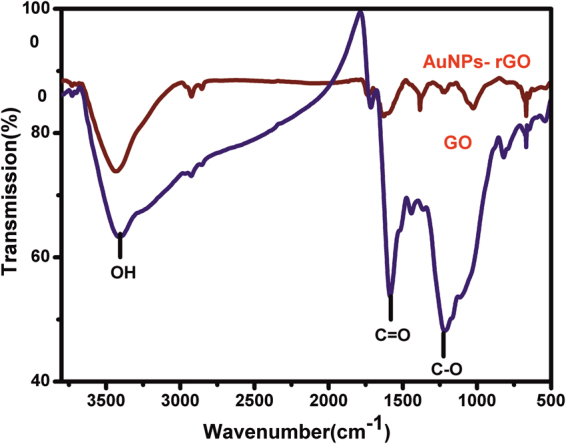
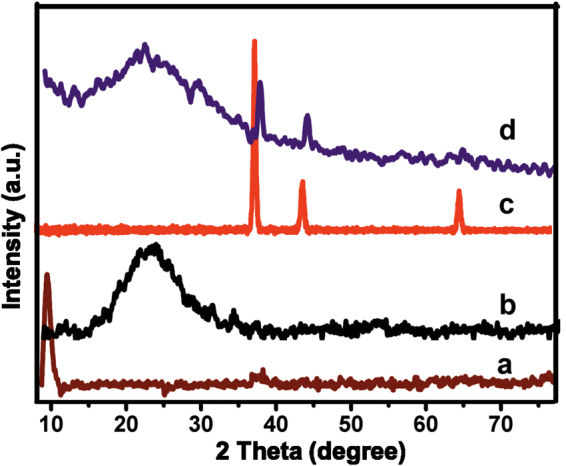
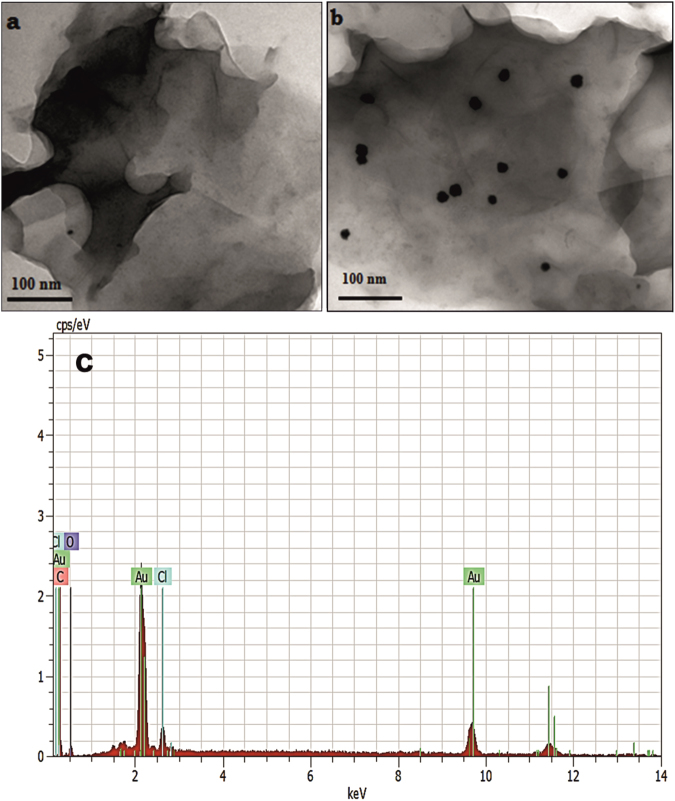
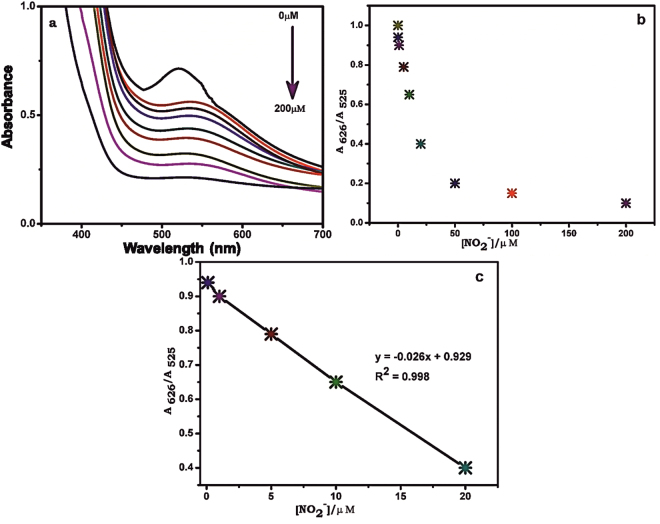
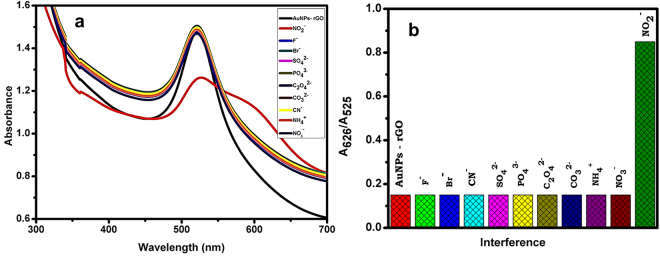
Excess nitrite (NO) concentrations in water supplies is considered detrimental to the environment and human health, and is associated with incidence of stomach cancer. In this work, the authors describe a nitrite detection system based on the synthesis of gold nanoparticles (AuNPs) on reduced graphene oxide (rGO) using an aqueous solution of chitosan and succinic acid. The AuNPs-rGO nanocomposite was confirmed by different physicochemical characterization methods including transmission electron microscopy, elemental analysis, X-ray diffraction, UV-visible (UV-vis) and Fourier transform infrared spectroscopy. The AuNPs-rGO nanocomposite was applicable to the sensitive and selective detection of NO with increasing concentrations quantifiable by UV-vis spectroscopy and obvious to the naked eye. The color of the AuNPs-rGO nanocomposite changes from wine red to purple with the addition of different concertation of NO. Therefore, nitrite ion concentrations can be quantitatively detected using AuNPs-rGO sensor with UV-vis spectroscopy and estimated with the naked eye. The sensor is able to detect NO in a linear response ranging from 1 to 20 μM with a detection limit of 0.1 μM by spectrophotometric method. The as-prepared AuNPs-rGO nanocomposite shows appropriate selectivity towards NO in the presence of potentially interfering metal anions.
供水中过量的亚硝酸盐(NO)浓度被认为对环境和人类健康有害,并且与胃癌的发病率有关。在这项工作中,作者描述了一种基于壳聚糖和琥珀酸水溶液在还原氧化石墨烯(rGO)上合成金纳米颗粒(AuNPs)的亚硝酸盐检测系统。通过包括透射电子显微镜、元素分析、X射线衍射、紫外可见(UV-vis)和傅里叶变换红外光谱在内的不同物理化学表征方法对AuNPs-rGO纳米复合材料进行了确认。AuNPs-rGO纳米复合材料适用于对NO的灵敏和选择性检测,其浓度增加可通过紫外可见光谱定量,肉眼也能明显观察到。随着加入不同浓度的NO,AuNPs-rGO纳米复合材料的颜色从酒红色变为紫色。因此,可使用AuNPs-rGO传感器通过紫外可见光谱定量检测亚硝酸根离子浓度,并通过肉眼估计。该传感器能够通过分光光度法在1至20μM的线性响应范围内检测NO,检测限为0.1μM。所制备的AuNPs-rGO纳米复合材料在存在潜在干扰金属阴离子的情况下对NO表现出适当的选择性。