Khalil Ibrahim, Julkapli Nurhidayatullaili Muhd, Yehye Wageeh A, Basirun Wan Jefrey, Bhargava Suresh K
Institute of Postgraduate Studies Building, Nanotechnology & Catalysis Research Centre (NANOCAT), University of Malaya, Kuala Lumpur 50603, Malaysia.
Institute of Postgraduate Studies, Department of Chemistry, University of Malaya, Kuala Lumpur 50603, Malaysia.
Materials (Basel). 2016 May 24;9(6):406. doi: 10.3390/ma9060406.
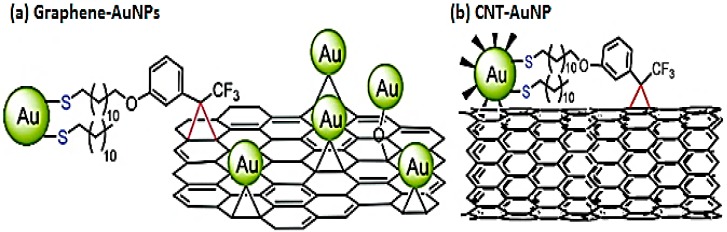
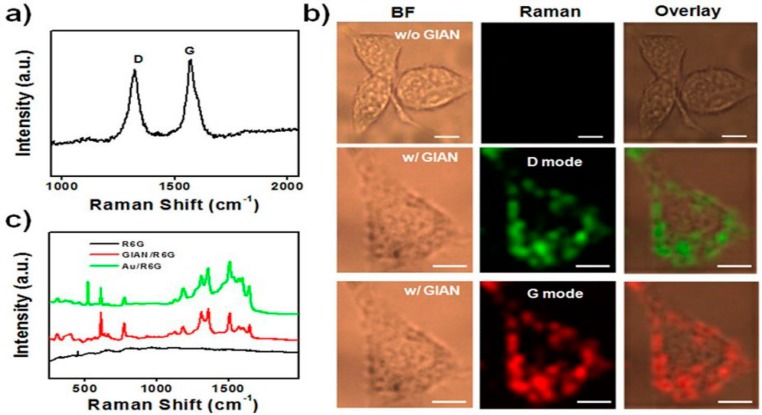
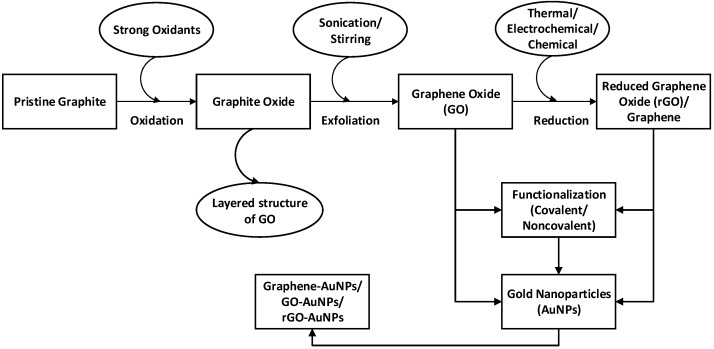
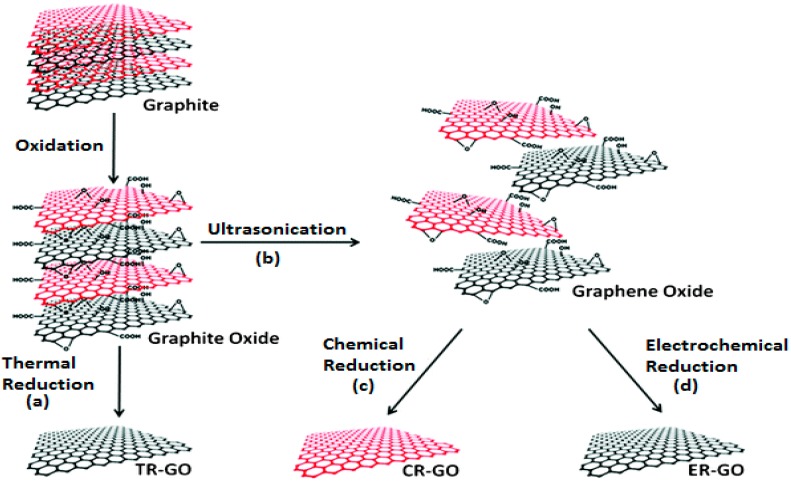
Graphene is a single-atom-thick two-dimensional carbon nanosheet with outstanding chemical, electrical, material, optical, and physical properties due to its large surface area, high electron mobility, thermal conductivity, and stability. These extraordinary features of graphene make it a key component for different applications in the biosensing and imaging arena. However, the use of graphene alone is correlated with certain limitations, such as irreversible self-agglomerations, less colloidal stability, poor reliability/repeatability, and non-specificity. The addition of gold nanostructures (AuNS) with graphene produces the graphene-AuNS hybrid nanocomposite which minimizes the limitations as well as providing additional synergistic properties, that is, higher effective surface area, catalytic activity, electrical conductivity, water solubility, and biocompatibility. This review focuses on the fundamental features of graphene, the multidimensional synthesis, and multipurpose applications of graphene-Au nanocomposites. The paper highlights the graphene-gold nanoparticle (AuNP) as the platform substrate for the fabrication of electrochemical and surface-enhanced Raman scattering (SERS)-based biosensors in diverse applications as well as SERS-directed bio-imaging, which is considered as an emerging sector for monitoring stem cell differentiation, and detection and treatment of cancer.
石墨烯是一种单原子厚度的二维碳纳米片,因其具有大表面积、高电子迁移率、热导率和稳定性,故而具备出色的化学、电学、材料、光学及物理性能。石墨烯的这些非凡特性使其成为生物传感与成像领域不同应用中的关键组成部分。然而,单独使用石墨烯存在一些局限性,比如不可逆的自聚集、较低的胶体稳定性、较差的可靠性/可重复性以及非特异性。将金纳米结构(AuNS)与石墨烯相结合可制备出石墨烯 - AuNS杂化纳米复合材料,该复合材料既能最大限度地减少这些局限性,还能提供额外的协同性能,即更高的有效表面积、催化活性、电导率、水溶性和生物相容性。本综述聚焦于石墨烯的基本特性、石墨烯 - 金纳米复合材料的多维合成及其多用途应用。本文强调了石墨烯 - 金纳米粒子(AuNP)作为平台基底在制造基于电化学和表面增强拉曼散射(SERS)的生物传感器方面的应用,这些生物传感器可用于多种不同的应用场景,以及SERS导向的生物成像,而生物成像被认为是监测干细胞分化以及癌症检测与治疗的一个新兴领域。