Yan Xuebing, Liu Liguo, Li Hao, Qin Huanlong, Sun Zhenliang
Department of General Surgery, Shanghai Tenth People's Hospital, Tongji University School of Medicine.
Department of General Surgery, Shanghai Jiao Tong University Affiliated Sixth People's Hospital.
Onco Targets Ther. 2017 Oct 17;10:5031-5046. doi: 10.2147/OTT.S145949. eCollection 2017.
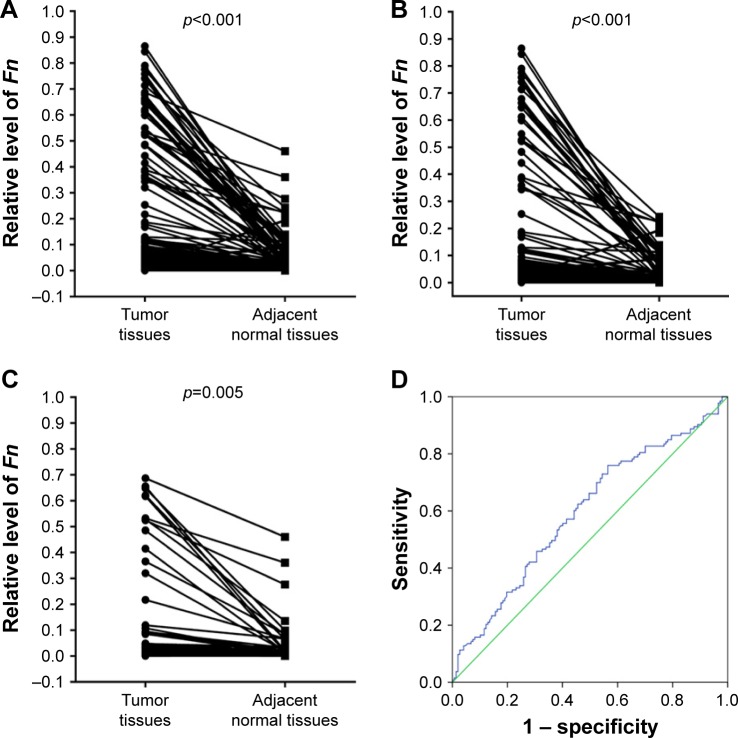
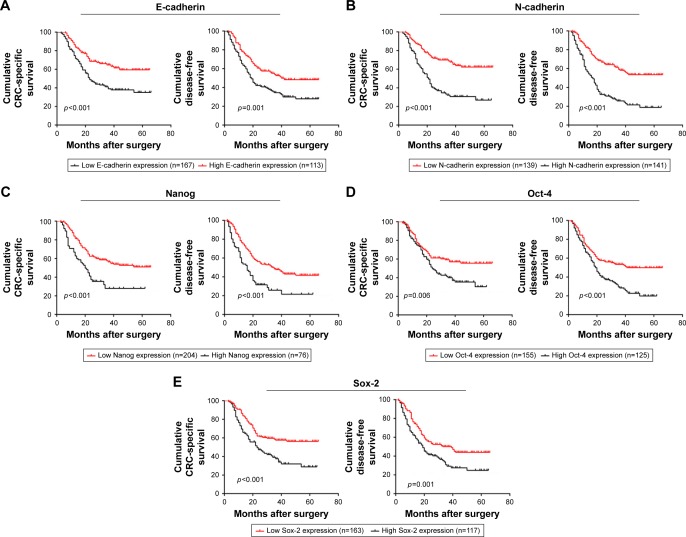
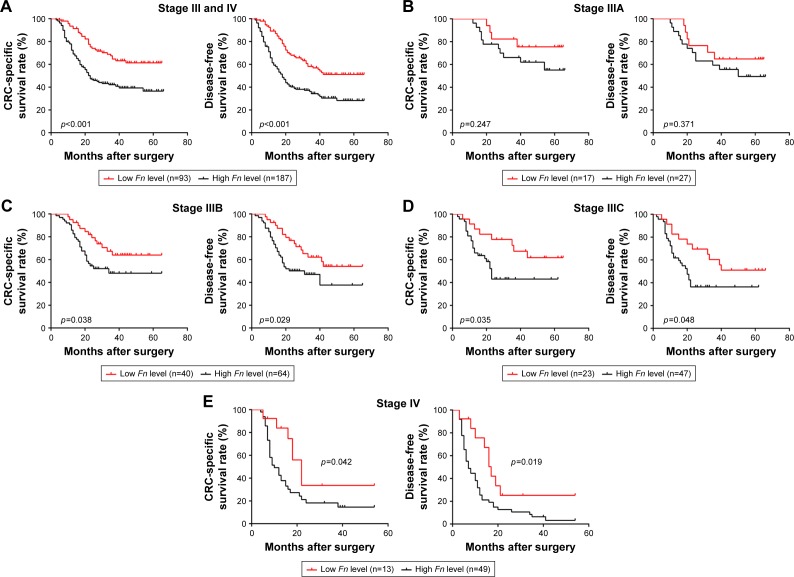
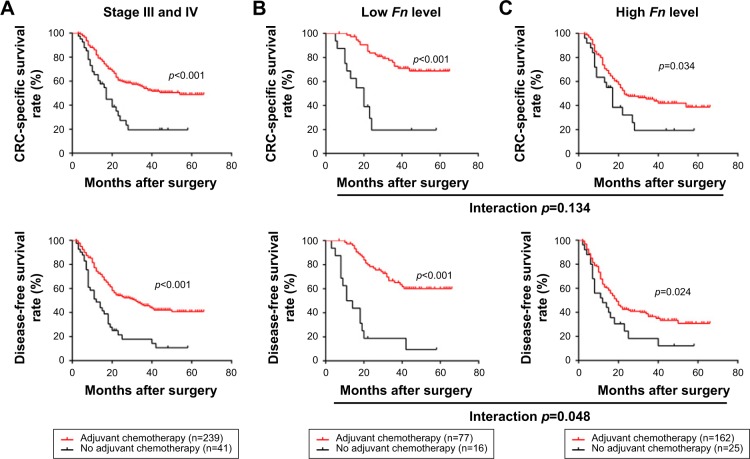
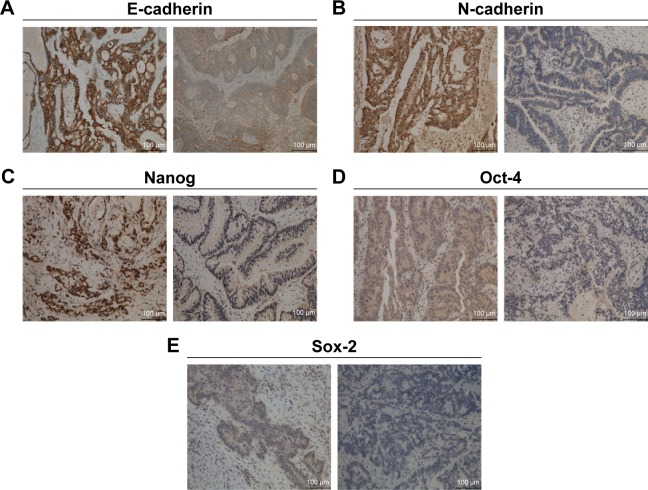
Colorectal cancer (CRC) is a common digestive malignancy and emerging studies have closely linked its initiation and development with gut microbiota changes. () has been recently identified as a pathogenic bacteria for CRC; however, its prognostic significance for patients is poorly investigated and is less for patients within late stage. Therefore, in this study, we made efforts to analyze its level and prognostic significance in a retrospective cohort of 280 stage III/IV CRC patients. We found that the level was abnormally high in tumor tissues and correlated with tumor invasion, lymph node metastasis status, and distant metastasis. We also identified it as an independent adverse prognostic factor for cancer-specific survival (CSS) and disease-free survival (DFS). The following subgroup analysis indicated that level could stratify CSS and DFS in stage IIIB/C and IV patients but failed in stage IIIA patients. In addition, stage III/IV patients with low level were found to benefit more from adjuvant chemotherapy than those with high level, in terms of DFS. Finally, we analyzed the expression and clinical significance of epithelial-to-mesenchymal transition (EMT) markers (E-cadherin and N-cadherin) and cancer stem cell (CSC) markers (Nanog, Oct-4, and Sox-2) in CRC tissues. The results indicated that N-cadherin, Nanog, Oct-4, and Sox-2 were adverse prognostic factors in these patients, while the opposite was true for E-cadherin. More importantly, expression of E-cadherin, N-cadherin, and Nanog was significantly correlated with level in tumor tissues, suggesting the potential involvement of in EMT-CSC cross talk during CRC progression. Taken together, these findings indicate that is a novel predictive biomarker for clinical management in stage III/IV patients, and targeting may be an effective adjuvant approach for preventing CRC metastasis and chemotherapy resistance.
结直肠癌(CRC)是一种常见的消化系统恶性肿瘤,新兴研究已将其发生和发展与肠道微生物群变化紧密联系起来。()最近已被确定为CRC的病原菌;然而,其对患者的预后意义研究较少,对晚期患者的意义更小。因此,在本研究中,我们努力分析了280例III/IV期CRC患者的回顾性队列中其水平及预后意义。我们发现肿瘤组织中()水平异常升高,且与肿瘤侵袭、淋巴结转移状态及远处转移相关。我们还将其确定为癌症特异性生存(CSS)和无病生存(DFS)的独立不良预后因素。以下亚组分析表明,()水平可对IIIB/C期和IV期患者的CSS和DFS进行分层,但对IIIA期患者无效。此外,就DFS而言,发现()水平低的III/IV期患者比()水平高的患者从辅助化疗中获益更多。最后,我们分析了CRC组织中上皮-间质转化(EMT)标志物(E-钙黏蛋白和N-钙黏蛋白)和癌症干细胞(CSC)标志物(Nanog、Oct-4和Sox-2)的表达及临床意义。结果表明,N-钙黏蛋白、Nanog、Oct-4和Sox-2是这些患者的不良预后因素,而E-钙黏蛋白则相反。更重要的是,E-钙黏蛋白、N-钙黏蛋白和Nanog的表达与肿瘤组织中的()水平显著相关,提示()在CRC进展过程中可能参与EMT-CSC串扰。综上所述,这些发现表明()是III/IV期患者临床管理的一种新型预测生物标志物,靶向()可能是预防CRC转移和化疗耐药的有效辅助方法。