Lokossou Sênan Christa, Tchobo Fidèle Paul, Yédomonhan Hounnankpon, Soumanou Mohamed Mansourou
Unit of Food and Enzymatic Engineering Research, Polytechnic School of Abomey-Calavi, University of Abomey-Calavi, 01 BP 2009 Cotonou, Benin.
Laboratory of Botany and Plant Ecology, Faculty of Sciences and Technologies, University of Abomey-Calavi, 01 BP 4521 Cotonou, Benin.
Int Sch Res Notices. 2017 Sep 7;2017:6571089. doi: 10.1155/2017/6571089. eCollection 2017.
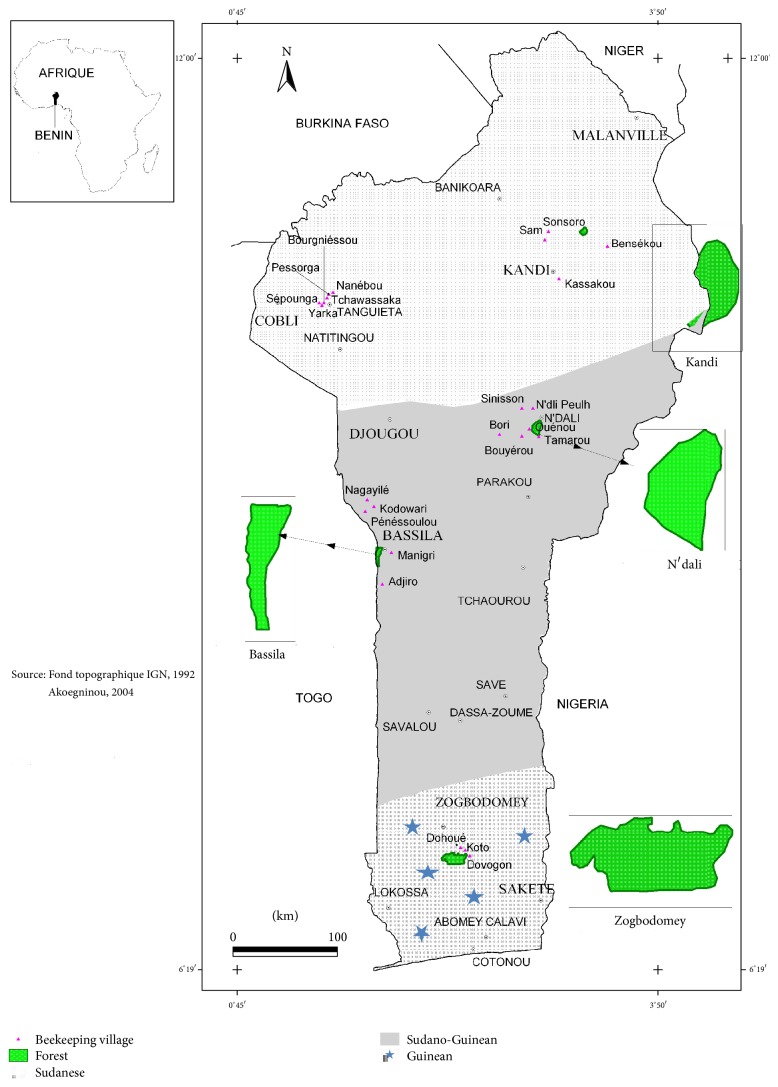
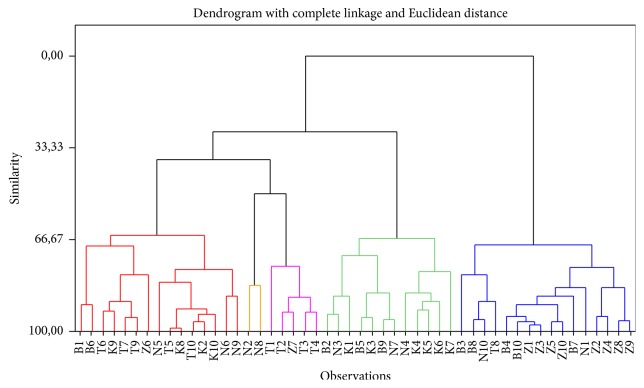
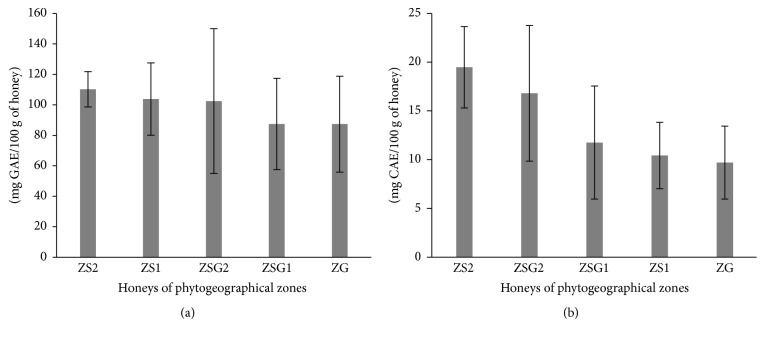
The physicochemical and phytochemical analyses of honeys ( = 50) from Sudanese, Sudano-Guinean, and Guinean areas of Benin were investigated. Results showed that dark amber is the dominant color. Moisture content ranged from 15.50% to 23.50%, and 72% of honeys respected the Codex Alimentarius recommendation. pH varied between 2.87 and 6.15, and free acidity ranged from 9.00 to 39.00 meq/kg. Electrical conductivity varied from 0.37 to 1.43 mS/cm. The content in fructose varied from 21.67% to 94.21%, and proline content ranged between 306.31 and 1187.93 mg/kg. All physicochemical characteristics varied with the areas. A negative correlation was found between pH and moisture content ( = -0.55; < 0.01). A positive correlation was established between pH and conductivity ( = 0.79; < 0.01) and between proline and color ( = 0.44; < 0.01). Total phenolic content varied between 55.97 and 224.99 mg GAE/100 g, and flavonoid content ranged between 1.43 and 29.81 mg CAE/100 g. Flavonoid was positively correlated with color ( = 0.78; < 0.01) and proline ( = 0.47; < 0.01). Tukey's test revealed differences between total phenolic and flavonoid contents of honeys from five areas ( < 0.01). In general, Sudanese and Sudano-Guinean honeys showed potential toward therapeutic applications because of their high phenolic contents.
对来自贝宁苏丹地区、苏丹-几内亚地区和几内亚地区的50份蜂蜜进行了理化和植物化学分析。结果表明,深琥珀色是主要颜色。水分含量在15.50%至23.50%之间,72%的蜂蜜符合食品法典委员会的建议。pH值在2.87至6.15之间变化,游离酸度在9.00至39.00 meq/kg之间。电导率在0.37至1.43 mS/cm之间变化。果糖含量在21.67%至94.21%之间,脯氨酸含量在306.31至1187.93 mg/kg之间。所有理化特性因地区而异。发现pH值与水分含量之间存在负相关(r = -0.55;P < 0.01)。pH值与电导率之间(r = 0.79;P < 0.01)以及脯氨酸与颜色之间(r = 0.44;P < 0.01)建立了正相关。总酚含量在55.97至224.99 mg GAE/100 g之间,黄酮类化合物含量在1.43至29.81 mg CAE/100 g之间。黄酮类化合物与颜色(r = 0.78;P < 0.01)和脯氨酸(r = 0.47;P < 0.01)呈正相关。Tukey检验显示五个地区蜂蜜的总酚和黄酮类化合物含量存在差异(P < 0.01)。总体而言,苏丹和苏丹-几内亚蜂蜜因其高酚含量而显示出治疗应用的潜力。