Belloir Christine, Savistchenko Jimmy, Neiers Fabrice, Taylor Andrew J, McGrane Scott, Briand Loïc
Centre des Sciences du Goût et de l'Alimentation, INRA, CNRS, Bourgogne Franche-Comté University, AgroSup Dijon, Dijon, France.
WALTHAM Centre for Pet Nutrition, Melton Mowbray, Leicestershire, Great Britain.
PLoS One. 2017 Oct 30;12(10):e0187051. doi: 10.1371/journal.pone.0187051. eCollection 2017.
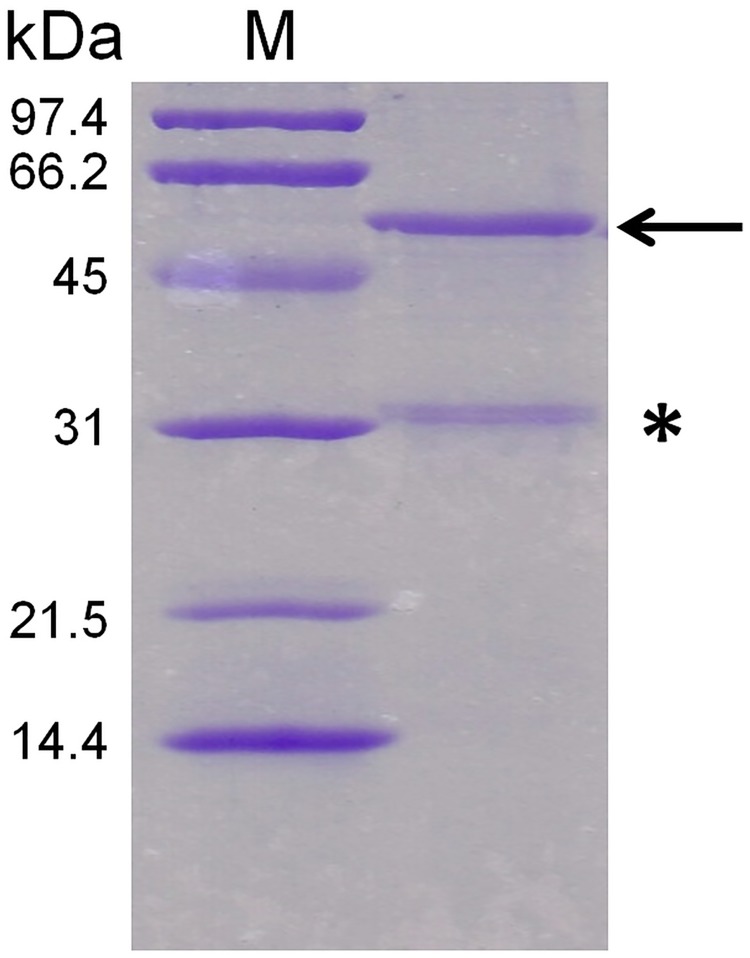
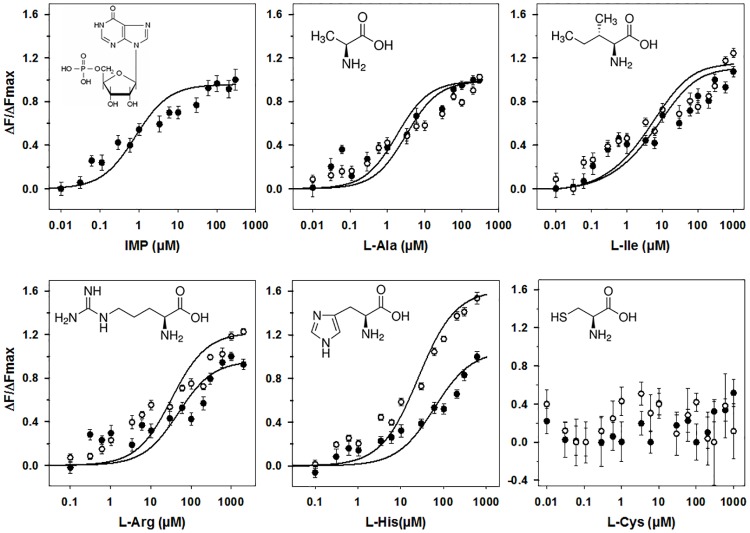
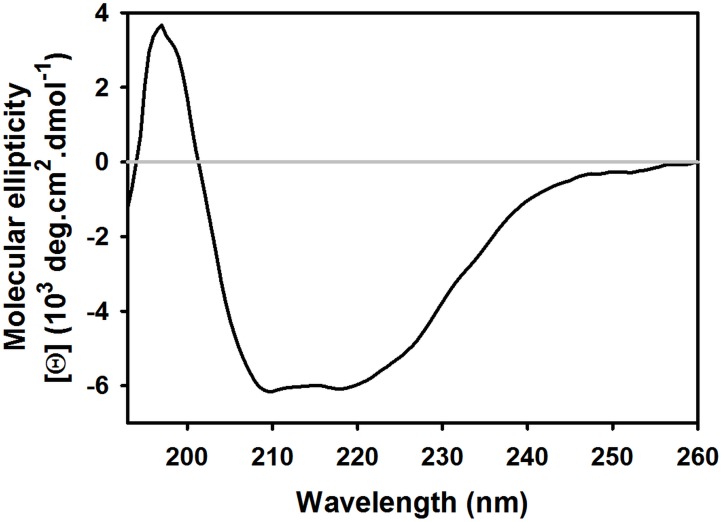
Umami taste perception is mediated by the heterodimeric G-protein coupled receptors (GPCRs), formed by the assembly of T1R1 and T1R3 subunits. T1R1 and T1R3 subunits are class C GPCRs whose members share common structural homologies including a long N-terminal domain (NTD) linked to a seven transmembrane domain by a short cysteine-rich region. The NTD of the T1R1 subunit contains the primary binding site for umami stimuli, such as L-glutamate (L-Glu) for humans. Inosine-5'-monophosphate (IMP) binds at a location close to the opening of the T1R1-NTD "flytrap", thus creating the observed synergistic response between L-Glu and IMP. T1R1/T1R3 binding studies have revealed species-dependent differences. While human T1R1/T1R3 is activated specifically by L-Glu, the T1R1/T1R3 in other species is a broadly tuned receptor, sensitive to a range of L-amino acids. Because domestic cats are obligate carnivores, they display strong preferences for some specific amino acids. To better understand the structural basis of umami stimuli recognition by non-human taste receptors, we measured the binding of selected amino acids to cat T1R1/T1R3 (cT1R1/cT1R3) umami taste receptor. For this purpose, we expressed cT1R1-NTD in bacteria as inclusion bodies. After purification, refolding of the protein was achieved. Circular dichroism spectroscopic studies revealed that cT1R1-NTD was well renatured with evidence of secondary structures. Using size-exclusion chromatography coupled to light scattering, we found that the cT1R1-NTD behaves as a monomer. Ligand binding quantified by intrinsic tryptophan fluorescence showed that cT1R1-NTD is capable of binding L-amino acids with Kd values in the micromolar range. We demonstrated that IMP potentiates L-amino acid binding onto renatured cT1R1-NTD. Interestingly, our results revealed that IMP binds the extracellular domain in the absence of L-amino acids. Thus, this study demonstrates that the feasibility to produce milligram quantities of cT1R1-NTD for functional and structural studies.
鲜味味觉感知是由异源二聚体G蛋白偶联受体(GPCRs)介导的,该受体由T1R1和T1R3亚基组装而成。T1R1和T1R3亚基属于C类GPCRs,其成员具有共同的结构同源性,包括通过短的富含半胱氨酸区域连接到七跨膜结构域的长N端结构域(NTD)。T1R1亚基的NTD包含鲜味刺激物的主要结合位点,例如对人类而言的L-谷氨酸(L-Glu)。5'-肌苷酸(IMP)结合在靠近T1R1-NTD“捕蝇草”开口的位置,从而产生L-Glu和IMP之间观察到的协同反应。T1R1/T1R3结合研究揭示了物种依赖性差异。虽然人类T1R1/T1R3被L-Glu特异性激活,但其他物种中的T1R1/T1R3是一种广泛调谐的受体,对一系列L-氨基酸敏感。由于家猫是专性食肉动物,它们对某些特定氨基酸表现出强烈偏好。为了更好地理解非人类味觉受体识别鲜味刺激物的结构基础,我们测量了选定氨基酸与猫T1R1/T1R3(cT1R1/cT1R3)鲜味味觉受体的结合。为此,我们在细菌中以包涵体形式表达cT1R1-NTD。纯化后,实现了蛋白质的重折叠。圆二色光谱研究表明,cT1R1-NTD重折叠良好,有二级结构的证据。使用尺寸排阻色谱结合光散射,我们发现cT1R1-NTD表现为单体。通过内在色氨酸荧光定量的配体结合表明,cT1R1-NTD能够以微摩尔范围内的Kd值结合L-氨基酸。我们证明IMP增强了L-氨基酸与重折叠的cT1R1-NTD的结合。有趣的是,我们的结果表明IMP在没有L-氨基酸的情况下结合细胞外结构域。因此,本研究证明了生产毫克量的cT1R1-NTD用于功能和结构研究的可行性。