Department of Biochemistry and Molecular Biology, College of Life Sciences, Nanjing Agricultural University, Nanjing, 210095, China.
Institute of Food Quality and Safety, Jiangsu Academy of Agricultural Sciences, Nanjing, 210014, China.
BMC Plant Biol. 2017 Oct 30;17(1):187. doi: 10.1186/s12870-017-1141-0.
Non-essential trance metal such as cadmium (Cd) is toxic to plants. Although some plants have developed elaborate strategies to deal with absorbed Cd through multiple pathways, the regulatory mechanisms behind the Cd tolerance are not fully understood. Ferrochelatase-1 (FC1, EC4.99.1.1) is the terminal enzyme of heme biosynthesis, catalyzing insertion of ferrous ion into protoporphyrin IX. Recent studies have shown that FC1 is involved in several physiological processes. However, its biological function associated with plant abiotic stress response is poorly understood.
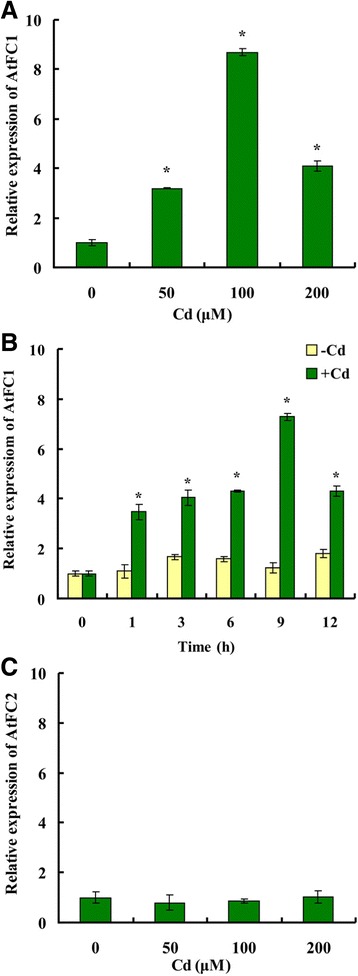
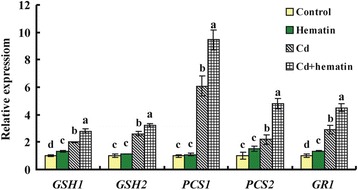
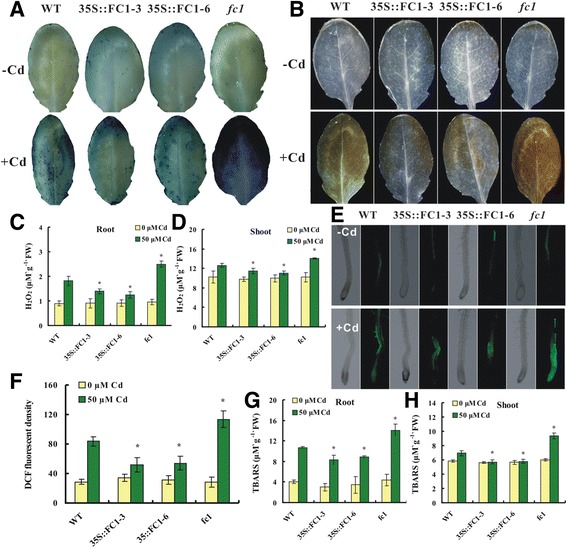
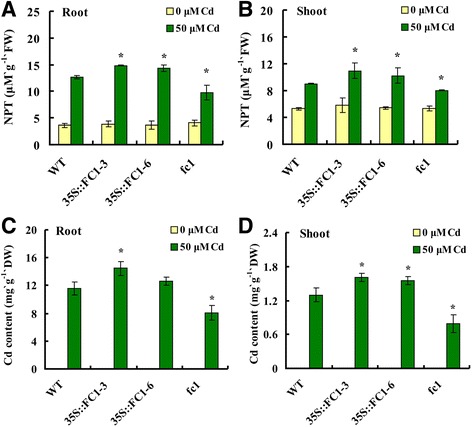
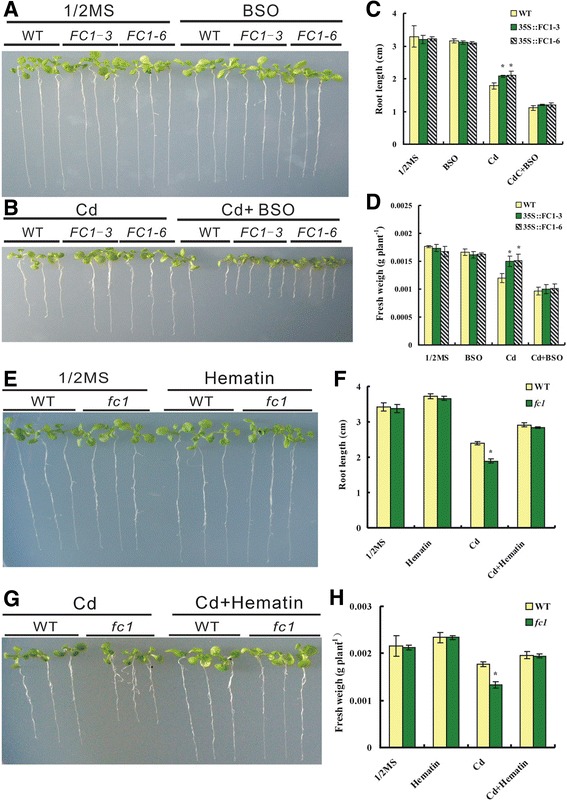
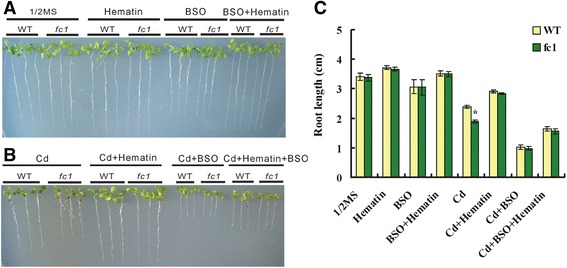
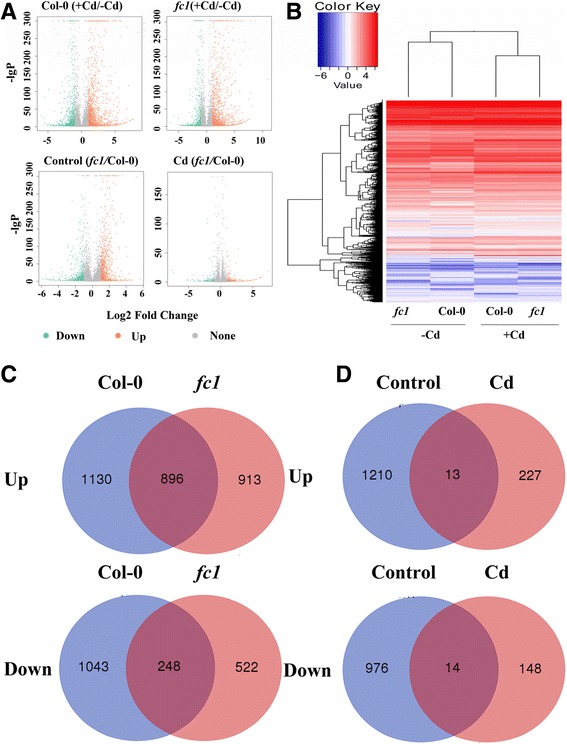
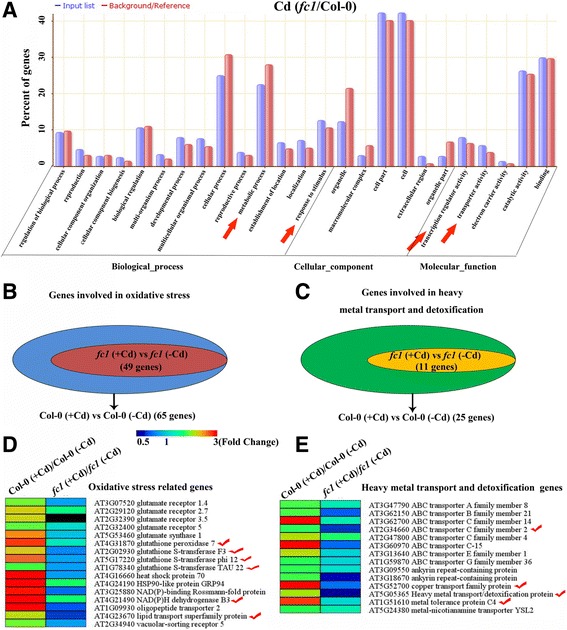
In this study, we showed that AtFC1 was transcriptionally activated by Cd exposure. AtFC1 overexpression (35S::FC1) lines accumulated more Cd and non-protein thiol compounds than wild-type, and conferred plant tolerance to Cd stress, with improved primary root elongation, biomass and chlorophyll (Chl) content, and low degree of oxidation associated with reduced HO, O and peroxides. In contrast, the AtFC1 loss of functional mutant fc1 showed sensitivity to Cd stress. Exogenous provision of heme, the product of AtFC1, partially rescued the Cd-induced toxic phenotype of fc1 mutants by improving the growth of seedlings, generation of glutathione (GSH) and phytochelatins (PCs), and GSH/PCs-synthesized gene expression (e.g. GSH1, GSH2, PCS1, and PCS2). To investigate the mechanism leading to the AtFC1 regulating Cd stress response in Arabidopsis, a transcriptome of fc1 mutant plants under Cd stress was profiled. Our data showed that disfunction of AtFC1 led to 913 genes specifically up-regulated and 522 genes down-regulated in fc1 mutants exposed to Cd. Some of the genes are involved in metal transporters, Cd-induced oxidative stress response, and detoxification.
These results indicate that AtFC1 would act as a positive regulator of plant tolerance to Cd stress. Our study will broaden our understanding of the role of FC1 in mediating plant response to Cd stress and provide a basis for further exploration of its downstream genes.
非必需的转金属如镉(Cd)对植物有毒。尽管一些植物已经通过多种途径发展出了处理吸收 Cd 的精细策略,但 Cd 耐受性背后的调节机制还不完全清楚。亚铁螯合酶-1(FC1,EC4.99.1.1)是血红素生物合成的末端酶,催化亚铁离子插入原卟啉 IX。最近的研究表明,FC1 参与了几个生理过程。然而,其与植物非生物胁迫反应相关的生物学功能还了解甚少。
在这项研究中,我们表明 Cd 暴露会使 AtFC1 转录激活。AtFC1 过表达(35S::FC1)系比野生型积累更多的 Cd 和非蛋白巯基化合物,并赋予植物对 Cd 胁迫的耐受性,表现为主根伸长、生物量和叶绿素(Chl)含量增加,以及氧化程度降低,与 HO、O 和过氧化物的减少相关。相比之下,AtFC1 功能丧失突变体 fc1 对 Cd 胁迫敏感。血红素(AtFC1 的产物)的外源性提供部分通过改善幼苗生长、谷胱甘肽(GSH)和植物螯合肽(PCs)的产生以及 GSH/PCs 合成基因的表达(如 GSH1、GSH2、PCS1 和 PCS2),挽救了 fc1 突变体的 Cd 诱导毒性表型。为了研究导致 AtFC1 调节拟南芥 Cd 应激反应的机制,我们对 Cd 胁迫下 fc1 突变体植物的转录组进行了分析。我们的数据表明,AtFC1 功能丧失导致 913 个基因在暴露于 Cd 的 fc1 突变体中特异性地上调,522 个基因下调。其中一些基因参与金属转运、Cd 诱导的氧化应激反应和解毒。
这些结果表明 AtFC1 是植物耐受 Cd 胁迫的正调节剂。我们的研究将拓宽对 FC1 在介导植物对 Cd 胁迫反应中的作用的理解,并为进一步探索其下游基因提供基础。