Tropical Medicine Unit, Federal University of Espírito Santo, Vitória, Avenida Marechal Campos, 1468-Maruípe, Vitória, Espírito Santo, 29043-900, Brazil.
Department of Parasitology, University of São Paulo, Avenida Professor Lineu Prestes, 1374, Cidade Universitária, São Paulo, 05508-900, Brazil.
Malar J. 2017 Oct 30;16(1):437. doi: 10.1186/s12936-017-2080-9.
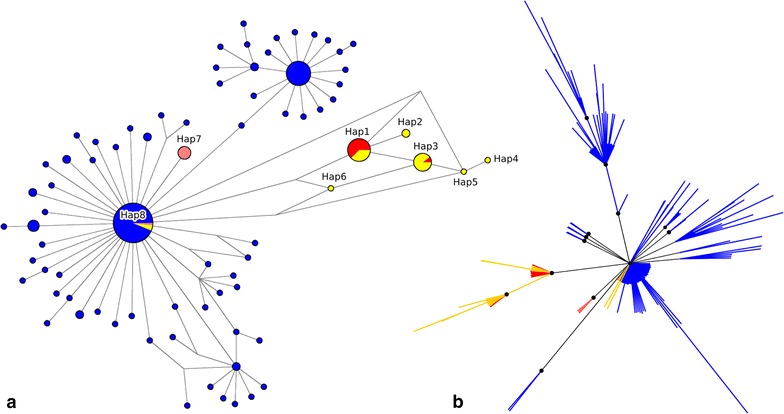
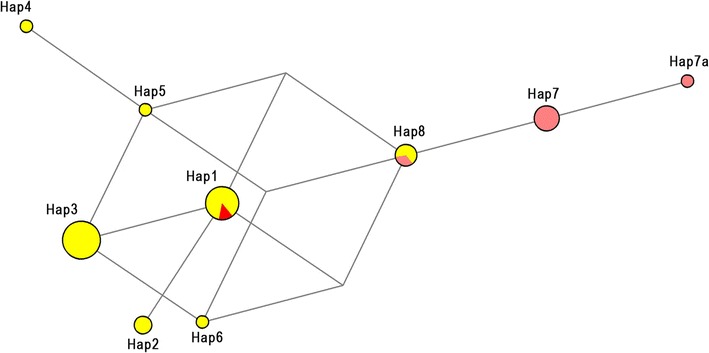
The transmission of malaria in the extra-Amazonian regions of Brazil, although interrupted in the 1960s, has persisted to the present time in some areas of dense Atlantic Forest, with reports of cases characterized by particular transmission cycles and clinical presentations. Bromeliad-malaria, as it is named, is particularly frequent in the state of Espírito Santo, with Plasmodium vivax being the parasite commonly recognized as the aetiologic agent of human infections. With regard to the spatial and temporal distances between cases reported in this region, the transmission cycle does not fit the traditional malaria cycle. The existence of a zoonosis, with infected simians participating in the epidemiology, is therefore hypothesized. In the present study, transmission of bromeliad-malaria in Espírito Santo is investigated, based on the complete mitochondrial genome of DNA extracted from isolates of Plasmodium species, which had infected humans, a simian from the genus Allouata, and Anopheles mosquitoes. Plasmodium vivax/simium was identified in the samples by both nested PCR and real-time PCR. After amplification, the mitochondrial genome was completely sequenced and compared with a haplotype network which included all sequences of P. vivax/simium mitochondrial genomes sampled from humans and simians from all regions in Brazil.
The haplotype network indicates that humans and simians from the Atlantic Forest become infected by the same haplotype, but some isolates from humans are not identical to the simian isolate. In addition, the plasmodial DNA extracted from mosquitoes revealed sequences different from those obtained from simians, but similar to two isolates from humans.
These findings strengthen support for the hypothesis that in the Atlantic Forest, and especially in the state with the highest frequency of bromeliad-malaria in Brazil, parasites with similar molecular backgrounds are shared by humans and simians. The recognized identity between P. vivax and P. simium at the species level, the sharing of haplotypes, and the participation of the same vector in transmitting the infection to both host species indicate interspecies transference of the parasites. However, the intensity, frequency and direction of this transfer remain to be clarified.
尽管巴西亚马孙以外地区的疟疾传播在上世纪 60 年代已被阻断,但在一些密集的大西洋森林地区,这种传播一直持续到现在,并出现了具有特定传播周期和临床表现的病例报告。这种以凤梨科植物命名的疟疾在圣埃斯皮里图州特别常见,通常被认为是引起人类感染的寄生虫是间日疟原虫。鉴于该地区报告的病例在空间和时间上的距离,这种传播周期与传统的疟疾周期并不吻合。因此,人们假设存在一种人畜共患病,受感染的灵长类动物参与了流行病学。在本研究中,基于从感染人类、猴属灵长类动物和疟蚊的疟原虫种分离物中提取的 DNA 的完整线粒体基因组,对圣埃斯皮里图州的凤梨科植物疟疾传播进行了调查。通过巢式 PCR 和实时 PCR 鉴定了间日疟原虫/猿疟原虫。扩增后,对线粒体基因组进行了完全测序,并与包括从巴西所有地区的人类和灵长类动物中采样的所有间日疟原虫/猿疟原虫线粒体基因组的单倍型网络进行了比较。
单倍型网络表明,来自大西洋森林的人类和灵长类动物感染的是相同的单倍型,但一些来自人类的分离物与灵长类动物的分离物并不相同。此外,从蚊子中提取的疟原虫 DNA 显示出与从灵长类动物中获得的序列不同的序列,但与来自人类的两个分离物相似。
这些发现为以下假说提供了更强有力的支持,即在大西洋森林地区,尤其是巴西凤梨科植物疟疾发病率最高的州,具有相似分子背景的寄生虫在人类和灵长类动物中是共有的。间日疟原虫和猿疟原虫在种属水平上的可识别性、单倍型的共享以及相同媒介在将感染传播给两个宿主物种方面的参与表明寄生虫在种间发生了转移。然而,这种转移的强度、频率和方向仍有待阐明。