Institute of Biomedical and Health Engineering, Shenzhen Institutes of Advanced Technology, Chinese Academy of Sciences, Shenzhen, China.
Department of Neurosurgery, Guangzhou General Hospital of Guangzhou Military Command, Guangzhou, China.
Sci Rep. 2017 Oct 30;7(1):14331. doi: 10.1038/s41598-017-14753-7.
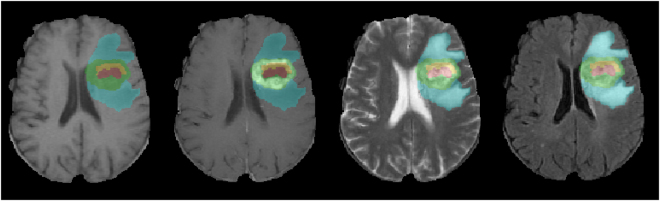
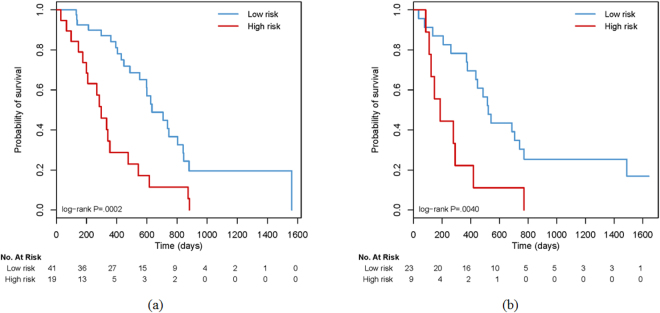
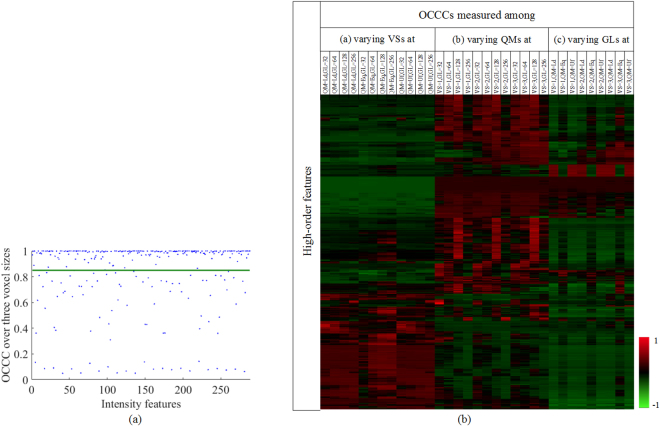
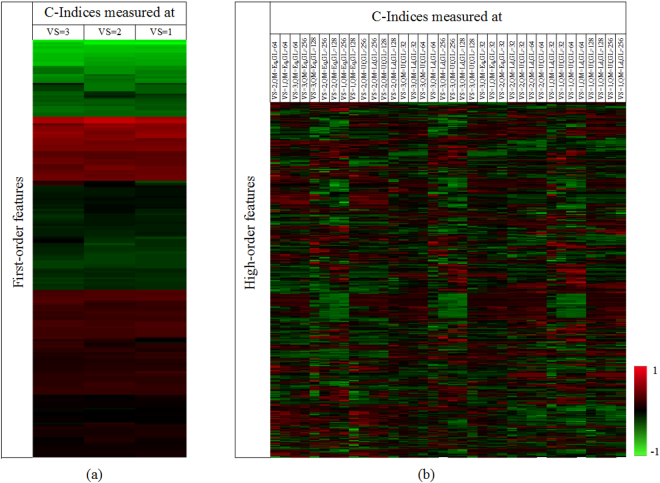
In fully-automatic radiomics model for predicting overall survival (OS) of glioblastoma multiforme (GBM) patients, the effect of image standardization parameters such as voxel size, quantization method and gray level on model reproducibility and prognostic performance are still unclear. In this study, 45792 multiregional radiomics features were automatically extracted from multi-modality MR images with different voxel sizes, quantization methods, and gray levels. The feature reproducibility and prognostic performance were assessed. Multiparametric and fixed-parameter radiomics signatures were constructed based on a training cohort (60 patients). In an independent validation cohort (32 patients), the multiparametric signature achieved better performance for OS prediction (C-Index = 0.705, 95% CI: 0.672, 0.738) and significant stratification of patients into high- and low-risk groups (P = 0.0040, HR = 3.29, 95% CI: 1.40, 7.70), which outperformed the fixed-parameter signatures and conventional factors such as age, Karnofsky Performance Score and tumor volume. This study demonstrated that voxel size, quantization method and gray level had influence on reproducibility and prognosis of radiomics features for GBM OS prediction. An automatic method to determine the optimal parameter settings was provided. It indicated that multiparametric radiomics signature had the potential of offering better prognostic performance than fixed-parameter signatures.
在全自动放射组学模型中,预测多形性胶质母细胞瘤(GBM)患者的总生存期(OS),图像标准化参数(例如体素大小、量化方法和灰度级)对模型可重复性和预后性能的影响尚不清楚。在这项研究中,从具有不同体素大小、量化方法和灰度级的多模态磁共振图像中自动提取了 45792 个多区域放射组学特征。评估了特征的可重复性和预后性能。基于训练队列(60 例患者)构建了多参数和固定参数放射组学特征。在独立验证队列(32 例患者)中,多参数特征在 OS 预测方面具有更好的性能(C-指数=0.705,95%CI:0.672,0.738),并能够显著将患者分为高风险和低风险组(P=0.0040,HR=3.29,95%CI:1.40,7.70),优于固定参数特征和年龄、卡诺夫斯基表现评分和肿瘤体积等常规因素。这项研究表明,体素大小、量化方法和灰度级对 GBM OS 预测的放射组学特征的可重复性和预后有影响。提供了一种自动确定最佳参数设置的方法。这表明多参数放射组学特征比固定参数特征具有更好的预后性能的潜力。