Wu Yi-Zhong, Tan Gao, Wu Fang, Zhi Fa-Chao
Guangdong Provincial Key Laboratory of Gastroenterology, Department of Gastroenterology, Nanfang Hospital, Southern Medical University, Guangzhou, China.
Department of Gastroenterology, Hunan Provincial People's Hospital, Changsha, China.
Oncotarget. 2017 May 18;8(43):73810-73816. doi: 10.18632/oncotarget.17962. eCollection 2017 Sep 26.
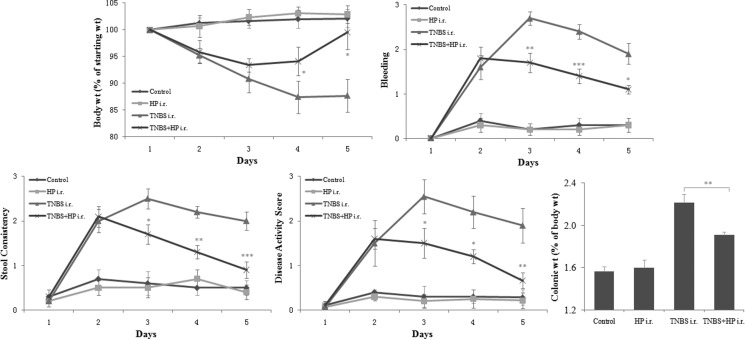
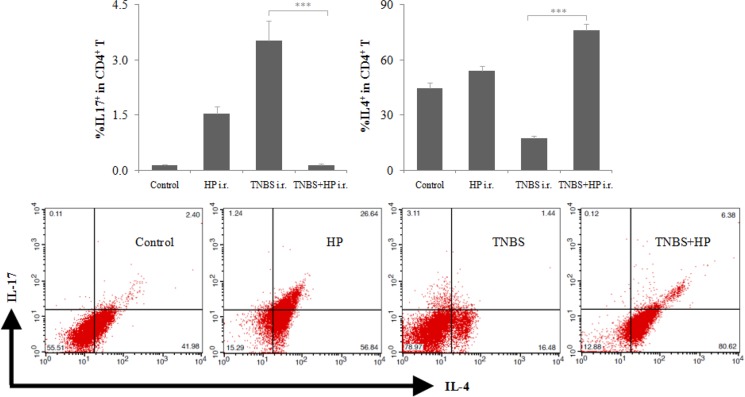
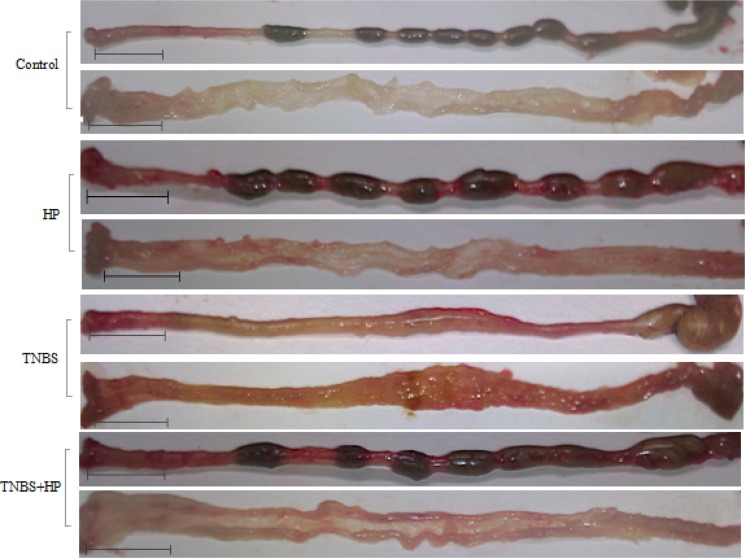
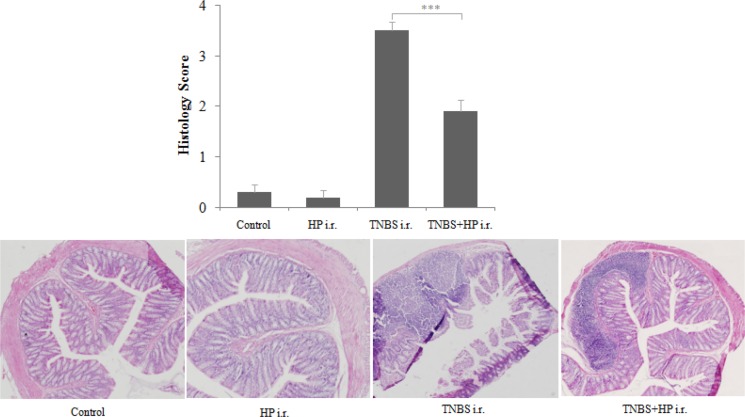
There is an epidemiological inverse relationship between () infection and Crohn's disease (CD). However, whether plays a protective role against CD remains unclear. Since 2, 4, 6-trinitrobenzene sulfonic acid (TNBS)-induced colitis is thought to resemble CD, we investigated whether can attenuate TNBS-induced colitis in mice. Here we show that can attenuate the severity of TNBS-induced colitis. In addition, not only down-regulates Th17 and Th1 cytokine expression, but can up-regulate Th2 cytokine expression and increase the Th2:Th17 ratio of CD4 T in the colonic mucosa of TNBS-induced colitis. Our results indicate that attenuates TNBS-induced colitis mainly through increasing Th2 cells in murine colonic mucosa. Our finding offers a novel view on the role of in regulating gastrointestinal immunity, and may open a new avenue for development of therapeutic strategies in CD by making use of asymptomatic colonization.
()感染与克罗恩病(CD)之间存在流行病学上的负相关关系。然而,其是否对CD起保护作用仍不清楚。由于2,4,6-三硝基苯磺酸(TNBS)诱导的结肠炎被认为类似于CD,我们研究了其是否能减轻小鼠TNBS诱导的结肠炎。在此我们表明其能减轻TNBS诱导的结肠炎的严重程度。此外,其不仅下调Th17和Th1细胞因子表达,还能上调Th2细胞因子表达,并增加TNBS诱导的结肠炎小鼠结肠黏膜中CD4 T细胞的Th2:Th17比例。我们的结果表明其主要通过增加小鼠结肠黏膜中的Th2细胞来减轻TNBS诱导的结肠炎。我们的发现为其在调节胃肠道免疫中的作用提供了新观点,并可能通过利用无症状的()定植为CD治疗策略的开发开辟新途径。