Department of Psychology, Hunter College, City University of New York, New York, NY, 10065, USA.
Institute of Neuroinformatics, University of Zurich/ETH Zurich, Zurich, 8057, Switzerland.
Nat Commun. 2017 Nov 1;8(1):1247. doi: 10.1038/s41467-017-01436-0.
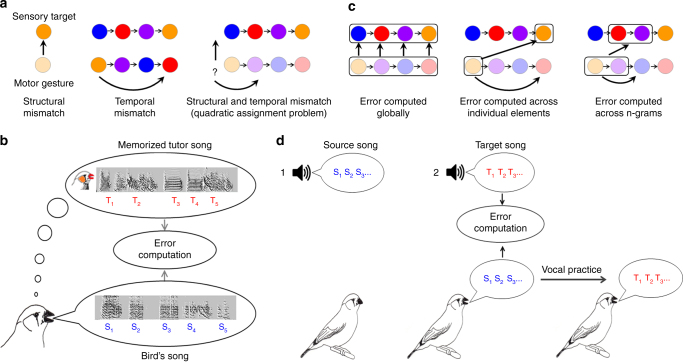
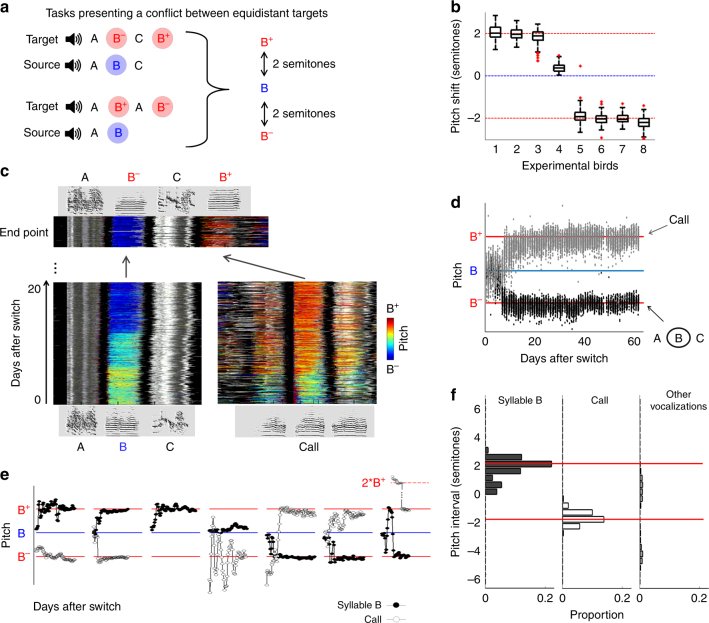
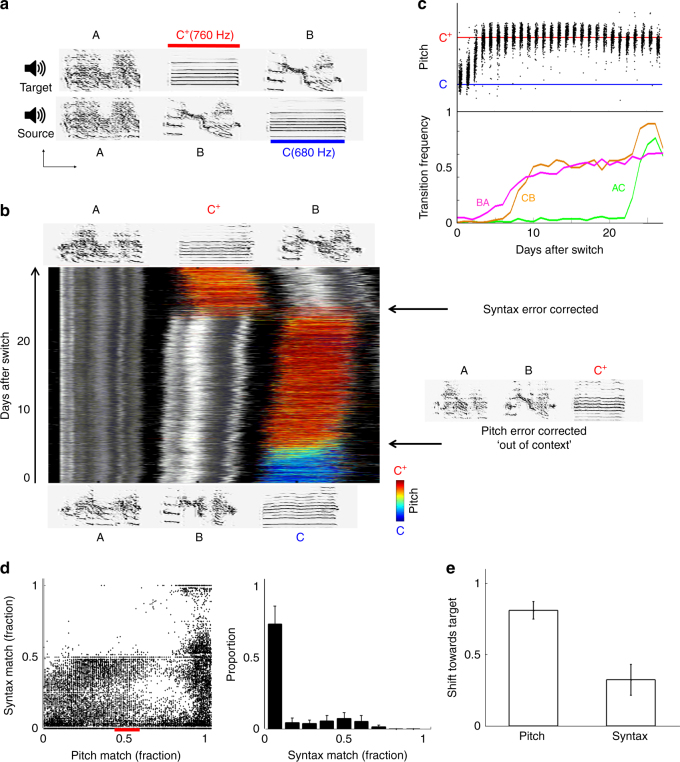
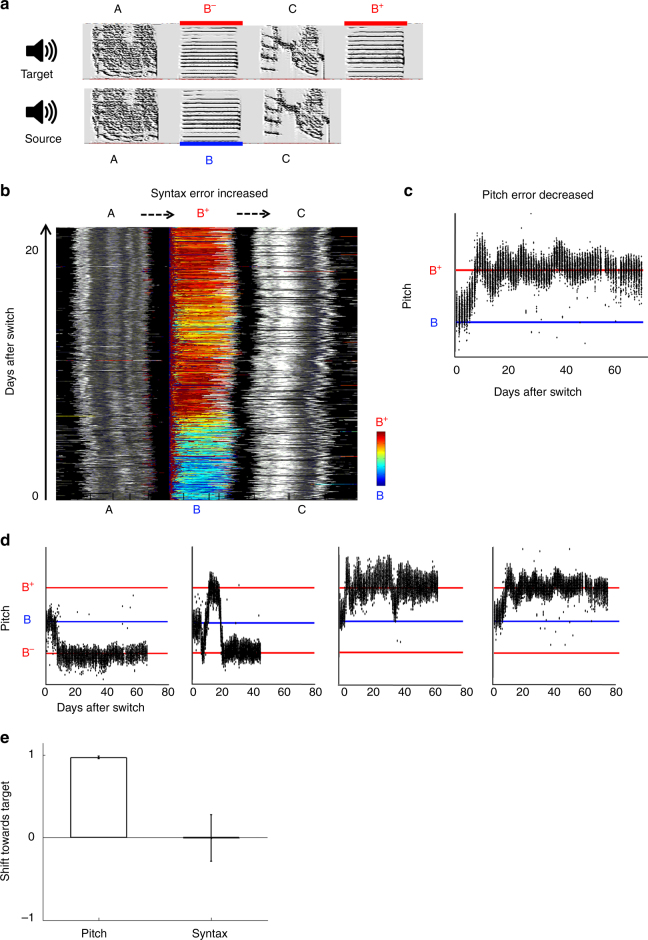
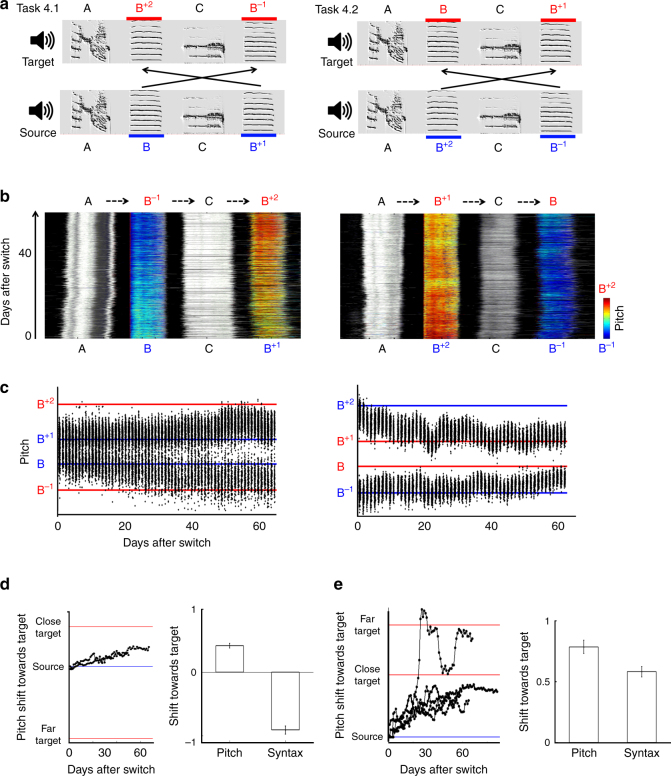
While acquiring motor skills, animals transform their plastic motor sequences to match desired targets. However, because both the structure and temporal position of individual gestures are adjustable, the number of possible motor transformations increases exponentially with sequence length. Identifying the optimal transformation towards a given target is therefore a computationally intractable problem. Here we show an evolutionary workaround for reducing the computational complexity of song learning in zebra finches. We prompt juveniles to modify syllable phonology and sequence in a learned song to match a newly introduced target song. Surprisingly, juveniles match each syllable to the most spectrally similar sound in the target, regardless of its temporal position, resulting in unnecessary sequence errors, that they later try to correct. Thus, zebra finches prioritize efficient learning of syllable vocabulary, at the cost of inefficient syntax learning. This strategy provides a non-optimal but computationally manageable solution to the task of vocal sequence learning.
在获得运动技能的过程中,动物会将其可塑的运动序列转化为与目标相匹配的运动序列。然而,由于个体动作的结构和时间位置都是可调节的,因此运动序列的可能变换数量会随着序列长度呈指数级增加。因此,确定朝着给定目标的最佳变换是一个计算上难以解决的问题。在这里,我们展示了一种进化上的解决方法,用于降低斑胸草雀学习歌曲时的计算复杂性。我们提示幼鸟修改学习歌曲中的音节语音和序列,以匹配新引入的目标歌曲。令人惊讶的是,幼鸟将每个音节与目标中最相似的声音匹配,而不考虑其时间位置,从而导致不必要的序列错误,随后它们会尝试纠正这些错误。因此,斑胸草雀优先高效地学习音节词汇,而牺牲了句法学习的效率。这种策略为解决声音序列学习的任务提供了一个非最优但计算上可管理的解决方案。