Department of Biochemistry & Molecular Biology, University of Texas Medical Branch, Galveston, TX, USA.
Department of Microbiology & Immunology, University of Texas Medical Branch, Galveston, TX, USA.
Cell Rep. 2017 Oct 31;21(5):1180-1190. doi: 10.1016/j.celrep.2017.10.016.
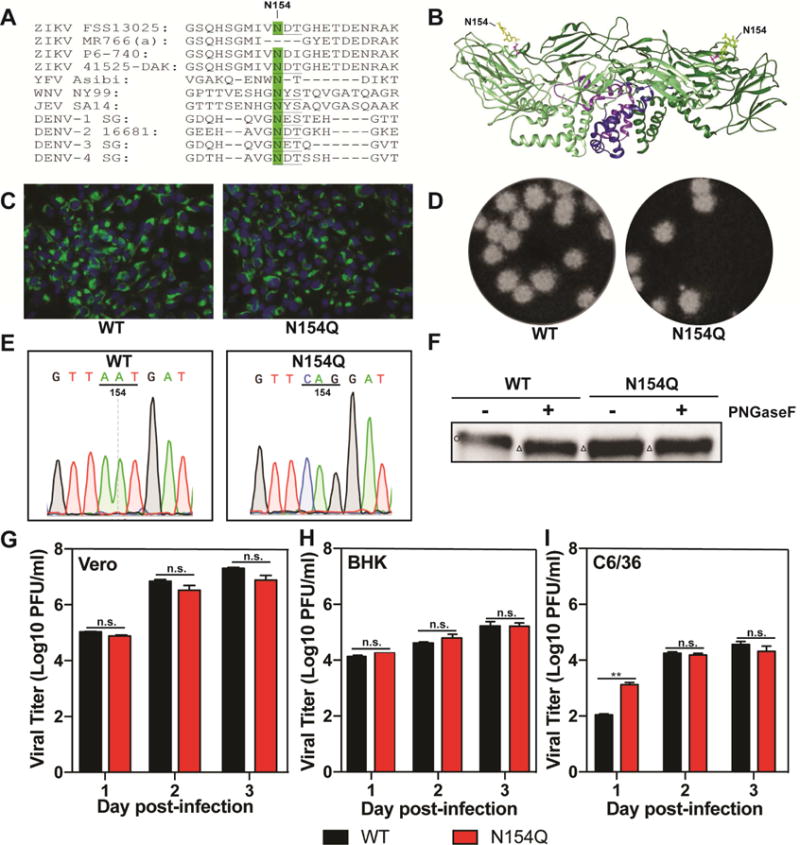
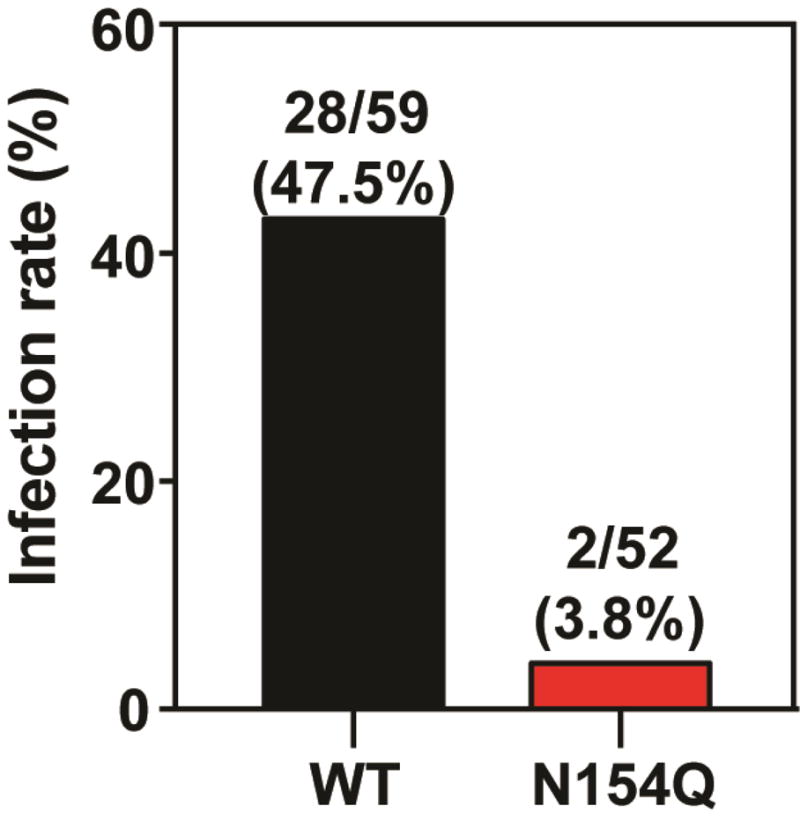
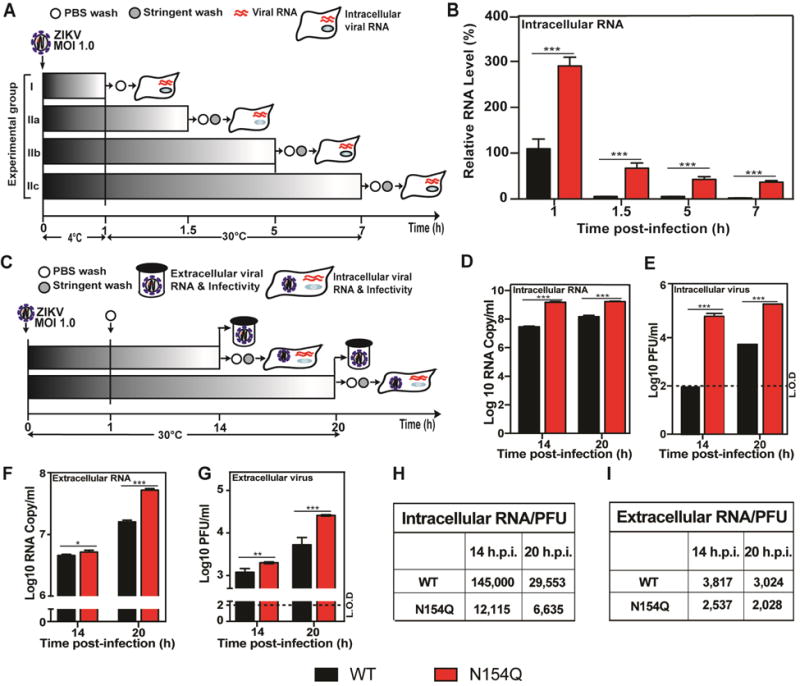
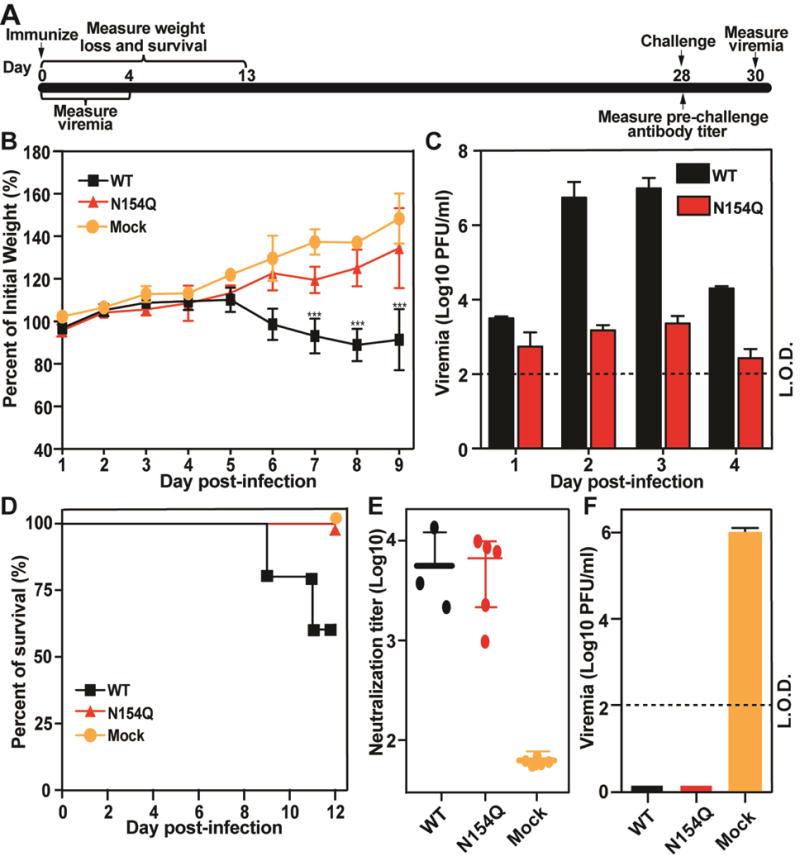
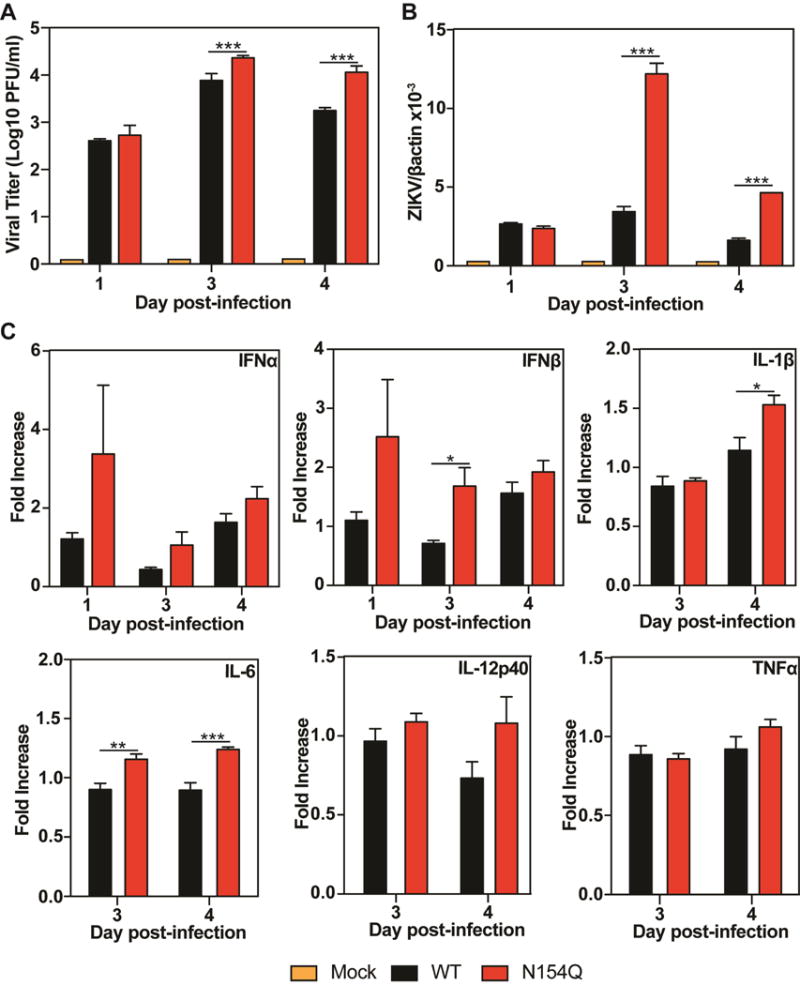
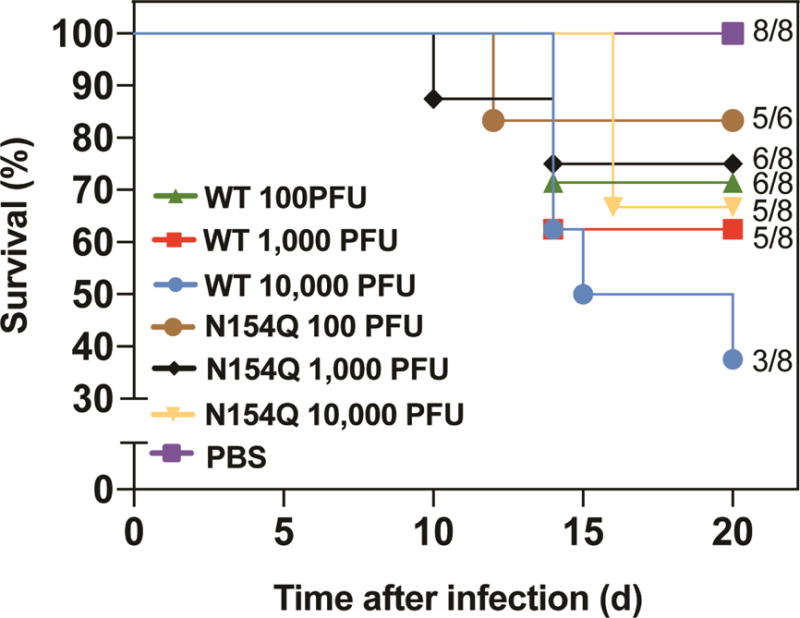
Zika virus (ZIKV) infection causes devastating congenital abnormities and Guillain-Barré syndrome. The ZIKV envelope (E) protein is responsible for viral entry and represents a major determinant for viral pathogenesis. Like other flaviviruses, the ZIKV E protein is glycosylated at amino acid N154. To study the function of E glycosylation, we generated a recombinant N154Q ZIKV that lacks the E glycosylation and analyzed the mutant virus in mammalian and mosquito hosts. In mouse models, the mutant was attenuated, as evidenced by lower viremia, decreased weight loss, and no mortality; however, knockout of E glycosylation did not significantly affect neurovirulence. Mice immunized with the mutant virus developed a robust neutralizing antibody response and were completely protected from wild-type ZIKV challenge. In mosquitoes, the mutant virus exhibited diminished oral infectivity for the Aedes aegypti vector. Collectively, the results demonstrate that E glycosylation is critical for ZIKV infection of mammalian and mosquito hosts.
寨卡病毒(ZIKV)感染可导致严重的先天性异常和格林-巴利综合征。寨卡病毒包膜(E)蛋白负责病毒进入,是病毒发病机制的主要决定因素。与其他黄病毒一样,寨卡病毒 E 蛋白在氨基酸 N154 处发生糖基化。为了研究 E 糖基化的功能,我们生成了一种缺乏 E 糖基化的重组 N154Q 寨卡病毒,并在哺乳动物和蚊子宿主中分析了突变病毒。在小鼠模型中,突变体的毒力减弱,表现在病毒血症水平较低、体重减轻减少和无死亡率;然而,E 糖基化的缺失对神经毒力没有显著影响。用突变病毒免疫的小鼠产生了强大的中和抗体反应,完全免受野生型寨卡病毒的攻击。在蚊子中,突变病毒对埃及伊蚊传播媒介的口服感染力降低。总的来说,这些结果表明 E 糖基化对寨卡病毒感染哺乳动物和蚊子宿主至关重要。