Druce Katie L, McBeth John, van der Veer Sabine N, Selby David A, Vidgen Bertie, Georgatzis Konstantinos, Hellman Bruce, Lakshminarayana Rashmi, Chowdhury Afiqul, Schultz David M, Sanders Caroline, Sergeant Jamie C, Dixon William G
Arthritis Research UK Centre for Epidemiology, University of Manchester, Manchester, United Kingdom.
NIHR Manchester Musculoskeletal Biomedical Research Unit, Central Manchester University Hospitals NHS Foundation Trust, Manchester, United Kingdom.
JMIR Mhealth Uhealth. 2017 Nov 1;5(11):e168. doi: 10.2196/mhealth.8162.
The huge increase in smartphone use heralds an enormous opportunity for epidemiology research, but there is limited evidence regarding long-term engagement and attrition in mobile health (mHealth) studies.
The objective of this study was to examine how representative the Cloudy with a Chance of Pain study population is of wider chronic-pain populations and to explore patterns of engagement among participants during the first 6 months of the study.
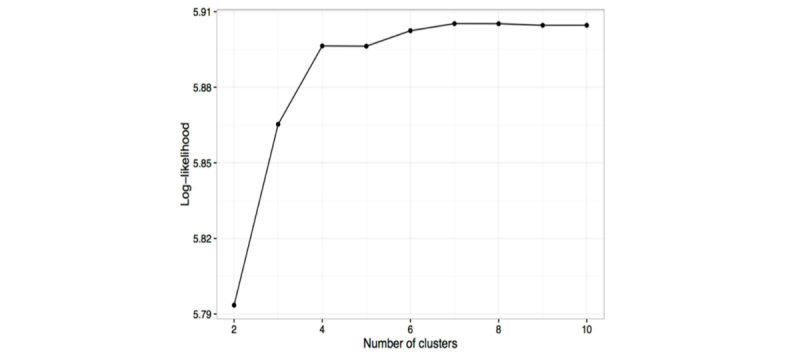
Participants in the United Kingdom who had chronic pain (≥3 months) and enrolled between January 20, 2016 and January 29, 2016 were eligible if they were aged ≥17 years and used the study app to report any of 10 pain-related symptoms during the study period. Participant characteristics were compared with data from the Health Survey for England (HSE) 2011. Distinct clusters of engagement over time were determined using first-order hidden Markov models, and participant characteristics were compared between the clusters.
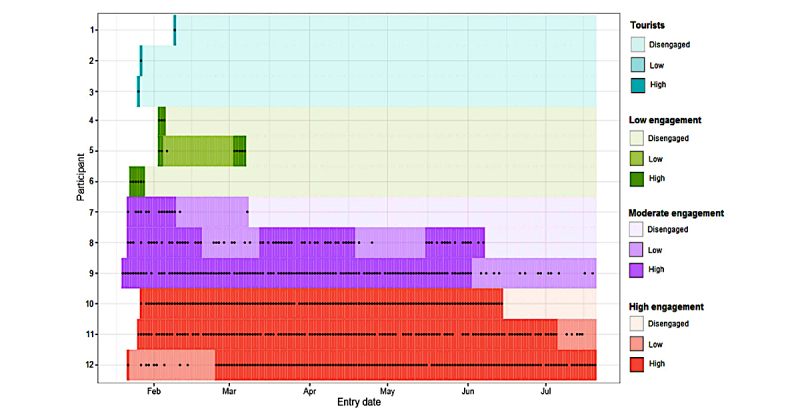
Compared with the data from the HSE, our sample comprised a higher proportion of women (80.51%, 5129/6370 vs 55.61%, 4782/8599) and fewer persons at the extremes of age (16-34 and 75+). Four clusters of engagement were identified: high (13.60%, 865/6370), moderate (21.76%, 1384/6370), low (39.35%, 2503/6370), and tourists (25.44%, 1618/6370), between which median days of data entry ranged from 1 (interquartile range; IQR: 1-1; tourist) to 149 (124-163; high). Those in the high-engagement cluster were typically older, whereas those in the tourist cluster were mostly male. Few other differences distinguished the clusters.
Cloudy with a Chance of Pain demonstrates a rapid and successful recruitment of a large, representative, and engaged sample of people with chronic pain and provides strong evidence to suggest that smartphones could provide a viable alternative to traditional data collection methods.
智能手机使用的大幅增长为流行病学研究带来了巨大机遇,但关于移动健康(mHealth)研究中的长期参与度和损耗率的证据有限。
本研究的目的是检验“疼痛来袭,阴云密布”研究人群在多大程度上代表更广泛的慢性疼痛人群,并探索研究前6个月参与者的参与模式。
2016年1月20日至2016年1月29日期间在英国招募的患有慢性疼痛(≥3个月)的参与者,如果年龄≥17岁且在研究期间使用研究应用程序报告10种与疼痛相关症状中的任何一种,则符合条件。将参与者特征与2011年英格兰健康调查(HSE)的数据进行比较。使用一阶隐马尔可夫模型确定不同时间参与度的集群,并比较各集群之间的参与者特征。
与HSE的数据相比,我们的样本中女性比例更高(80.51%,5129/6370对比55.61%,4782/8599),年龄两端的人群较少(16 - 34岁和75岁以上)。确定了四个参与度集群:高(13.60%,865/6370)、中(21.76%,1384/6370)、低(39.35%,2503/6370)和游客(25.44%,1618/6370),各集群之间数据录入的中位数天数从1天(四分位间距;IQR:1 - 1;游客)到149天(124 - 163;高)不等。高参与度集群的参与者通常年龄较大,而游客集群的参与者大多为男性。各集群之间几乎没有其他差异。
“疼痛来袭,阴云密布”研究表明,快速且成功地招募了大量具有代表性且积极参与的慢性疼痛患者样本,并提供了有力证据表明智能手机可为传统数据收集方法提供可行的替代方案。