Taki Minami, Shimojima Yoshio, Nogami Ayako, Yoshida Takuhiro, Suzuki Michio, Imaoka Koichi, Momoi Hiroki, Hanyu Norinao
Department of Neurology, Iida Municipal Hospital, Japan.
Department of Clinical Laboratory, Iida Municipal Hospital, Japan.
Intern Med. 2018 Jan 15;57(2):273-277. doi: 10.2169/internalmedicine.9196-17. Epub 2017 Nov 1.
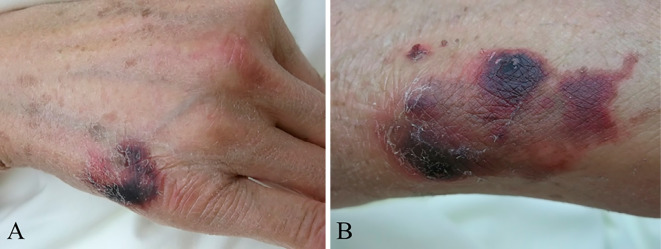
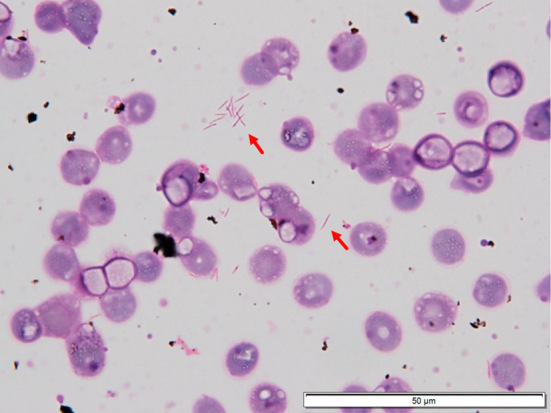
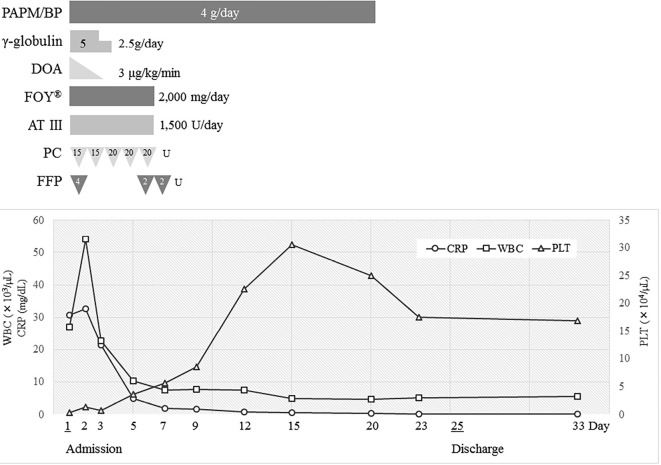
Sepsis caused by a Capnocytophaga canis infection has only been rarely reported. A 67-year-old female with a past medical history of splenectomy was admitted to our hospital with fever and general malaise. She had been bitten by a cat. She showed disseminated intravascular coagulation and multi-organ failure because of severe sepsis. On blood culture, characteristic gram-negative fusiform rods were detected; therefore, a Capnocytophaga species infection was suspected. A nucleotide sequence analysis revealed the species to be C. canis, which was newly identified in 2016. C. canis may have low virulence in humans; however, C. canis with oxidase activity may cause severe zoonotic infection.
犬二氧化碳嗜纤维菌感染引起的败血症鲜有报道。一名有脾切除病史的67岁女性因发热和全身不适入住我院。她曾被猫咬伤。由于严重败血症,她出现了弥散性血管内凝血和多器官功能衰竭。血培养检测到特征性革兰氏阴性梭形杆菌;因此,怀疑是二氧化碳嗜纤维菌属感染。核苷酸序列分析显示该菌种为犬二氧化碳嗜纤维菌,于2016年新发现。犬二氧化碳嗜纤维菌在人类中可能毒力较低;然而,具有氧化酶活性的犬二氧化碳嗜纤维菌可能会引起严重的人畜共患感染。