Department of Biochemistry, College of Medicine, Chang-Gung University, 333, Taoyuan, Taiwan.
Radiation Biology Research Center, Institute for Radiological Research, Chang Gung University/Chang Gung Memorial Hospital, 333, Linkou, Taoyuan, Taiwan.
Sci Rep. 2017 Nov 1;7(1):14868. doi: 10.1038/s41598-017-14864-1.
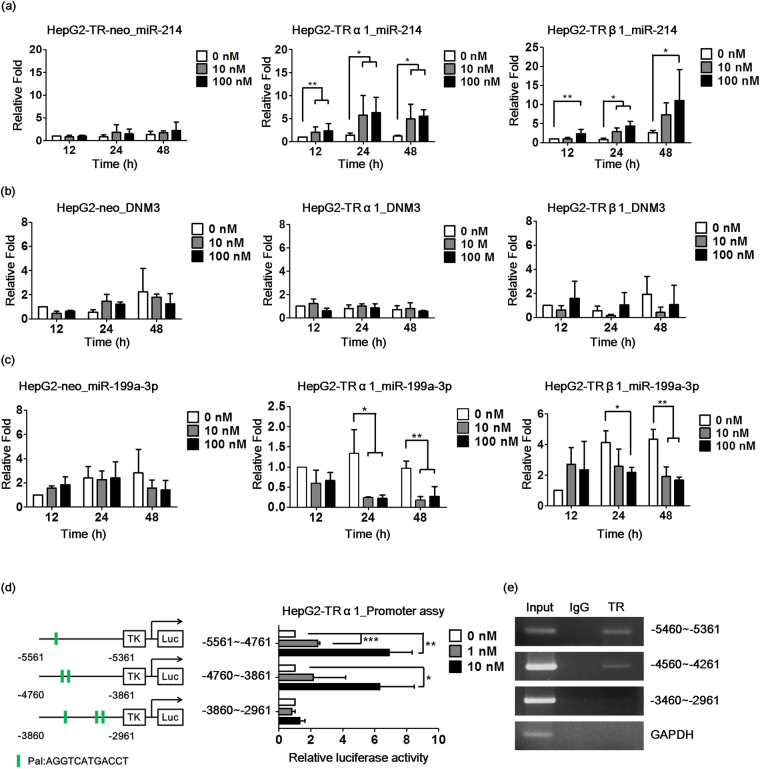
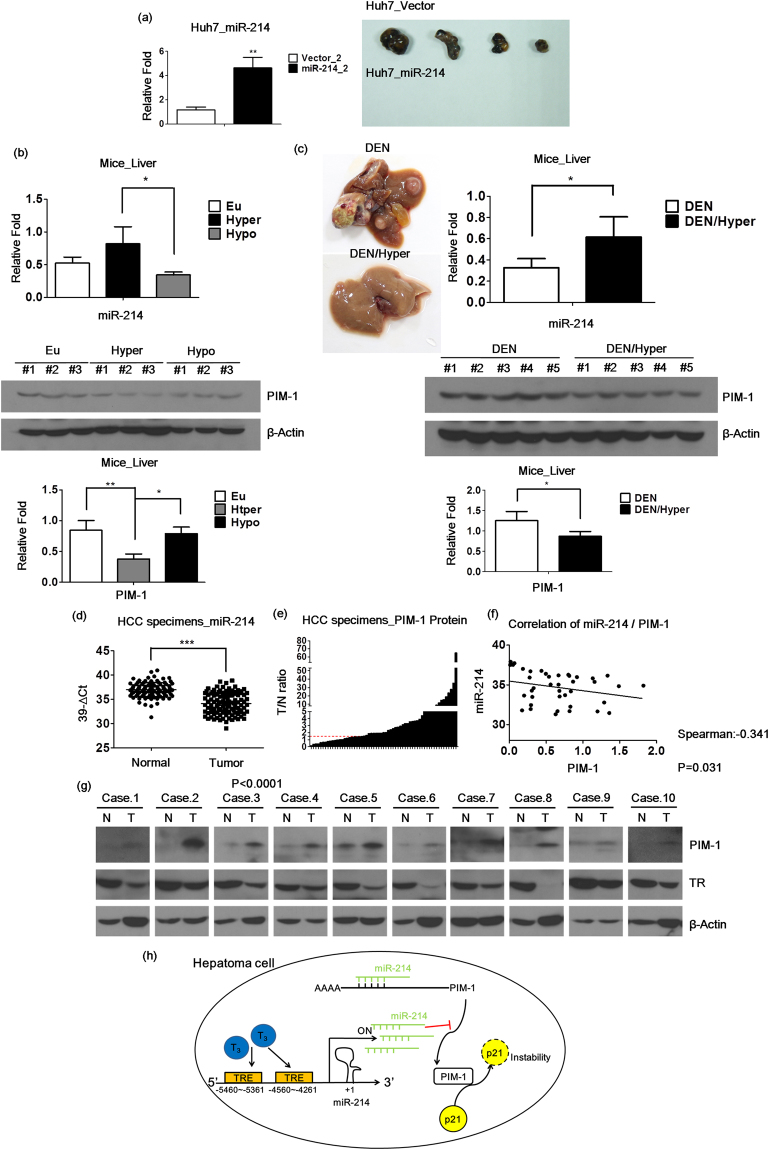
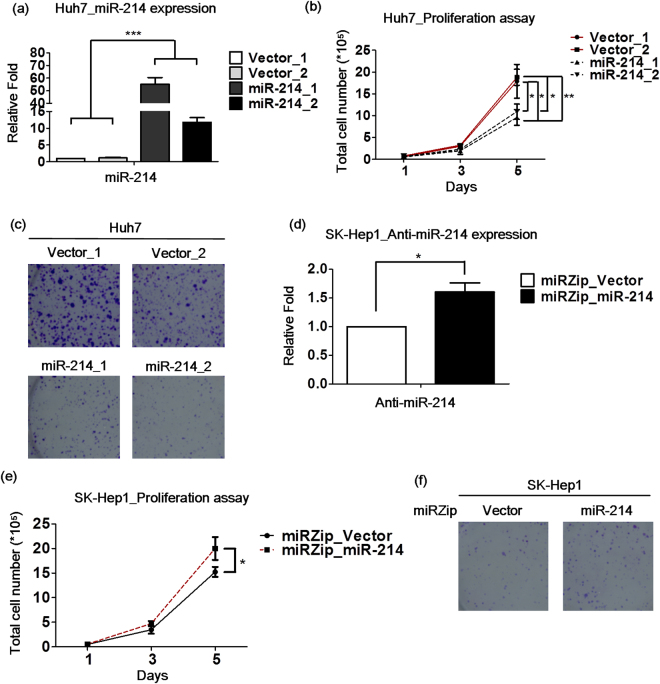
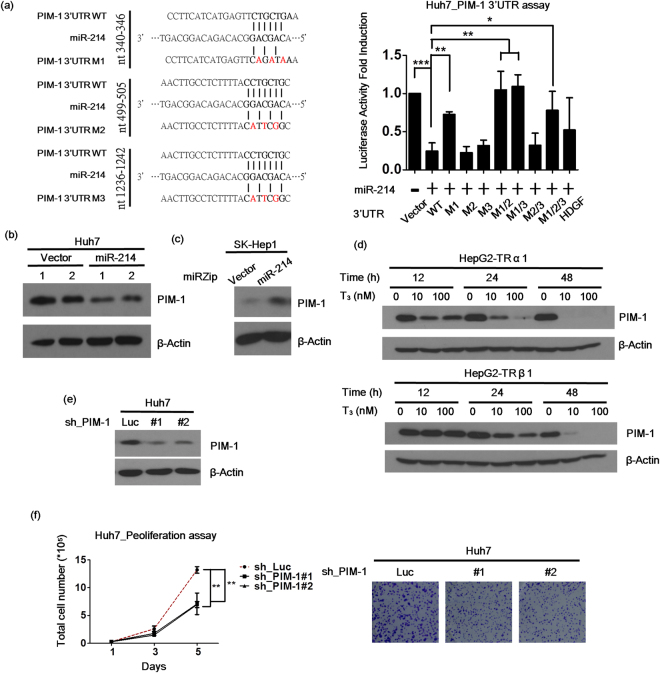
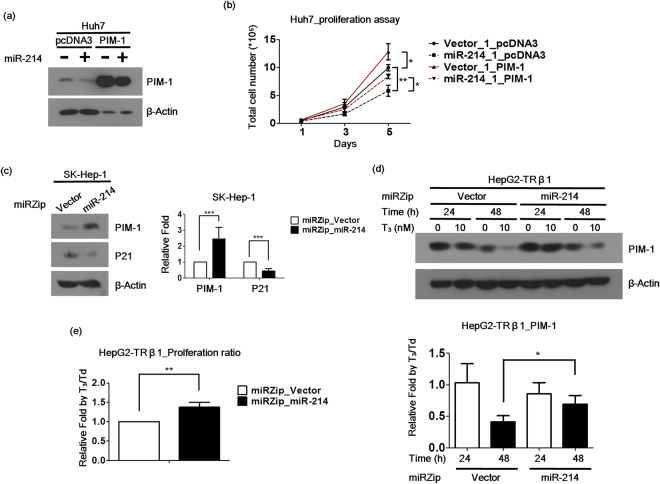
Thyroid hormone (TH) plays a role in regulating the metabolic rate, heart functions, muscle control and maintenance of bones. 3,3'5-tri-iodo-L-thyronine (T) displays high affinity to nuclear thyroid hormone receptors (TRs), which mediate most TH actions. Recent studies have shown hypothyroidism in patients with an increased risk of hepatocellular carcinoma (HCC). MicroRNAs (miRNAs), a class of non-protein-coding RNA, are suggested to control tumor growth by interacting with target genes. However, the clinical significance of T/TR-regulated miRNAs in tumors has yet to be established. In the current study, miRNA expression profile screening was performed using SYBR Green-Based qRT-PCR array in TR-overexpressing HepG2 cells. miR-214-3p, which is expressed at low levels in HCC, was stimulated upon T application. The 3'UTR luciferase reporter assay confirmed that the proto-oncogene serine/threonine-protein kinase, PIM-1, is a miR-214-3p target. PIM-1 was decreased upon treatment with miR-214-3p or T stimulation. PIM-1 was highly expressed in HCC, and the effect of PIM-1 on cell proliferation might be mediated by the inhibition of p21. Furthermore, the T-induced suppression of cell proliferation was partially rescued upon miR-214-3p knockdown. Our data demonstrate that T induces miR-214-3p expression and suppresses cell proliferation through PIM-1, thus contributing to the inhibition of HCC tumor formation.
甲状腺激素 (TH) 在调节代谢率、心脏功能、肌肉控制和骨骼维持方面发挥作用。3,3'5-三碘-L-甲状腺素 (T) 对核甲状腺激素受体 (TR) 具有高亲和力,TR 介导了大多数 TH 作用。最近的研究表明,甲状腺功能减退症患者患肝细胞癌 (HCC) 的风险增加。微小 RNA (miRNA) 是一类非蛋白编码 RNA,通过与靶基因相互作用来控制肿瘤生长。然而,T/TR 调节的 miRNA 在肿瘤中的临床意义尚未确定。在本研究中,使用 SYBR Green 基于 qRT-PCR 阵列在 TR 过表达 HepG2 细胞中进行 miRNA 表达谱筛选。miR-214-3p 在 HCC 中表达水平较低,经 T 处理后被激活。3'UTR 荧光素酶报告测定证实原癌基因丝氨酸/苏氨酸蛋白激酶 PIM-1 是 miR-214-3p 的靶基因。miR-214-3p 或 T 刺激后 PIM-1 减少。PIM-1 在 HCC 中高表达,PIM-1 对细胞增殖的影响可能通过抑制 p21 介导。此外,miR-214-3p 敲低部分挽救了 T 诱导的细胞增殖抑制。我们的数据表明,T 通过 PIM-1 诱导 miR-214-3p 表达并抑制细胞增殖,从而有助于抑制 HCC 肿瘤形成。