International Institute of Tropical Agriculture, Dar es Salaam, Tanzania.
Boyce Thompson Institute, Ithaca, New York.
Genome Biol Evol. 2017 Nov 1;9(11):2958-2973. doi: 10.1093/gbe/evx219.
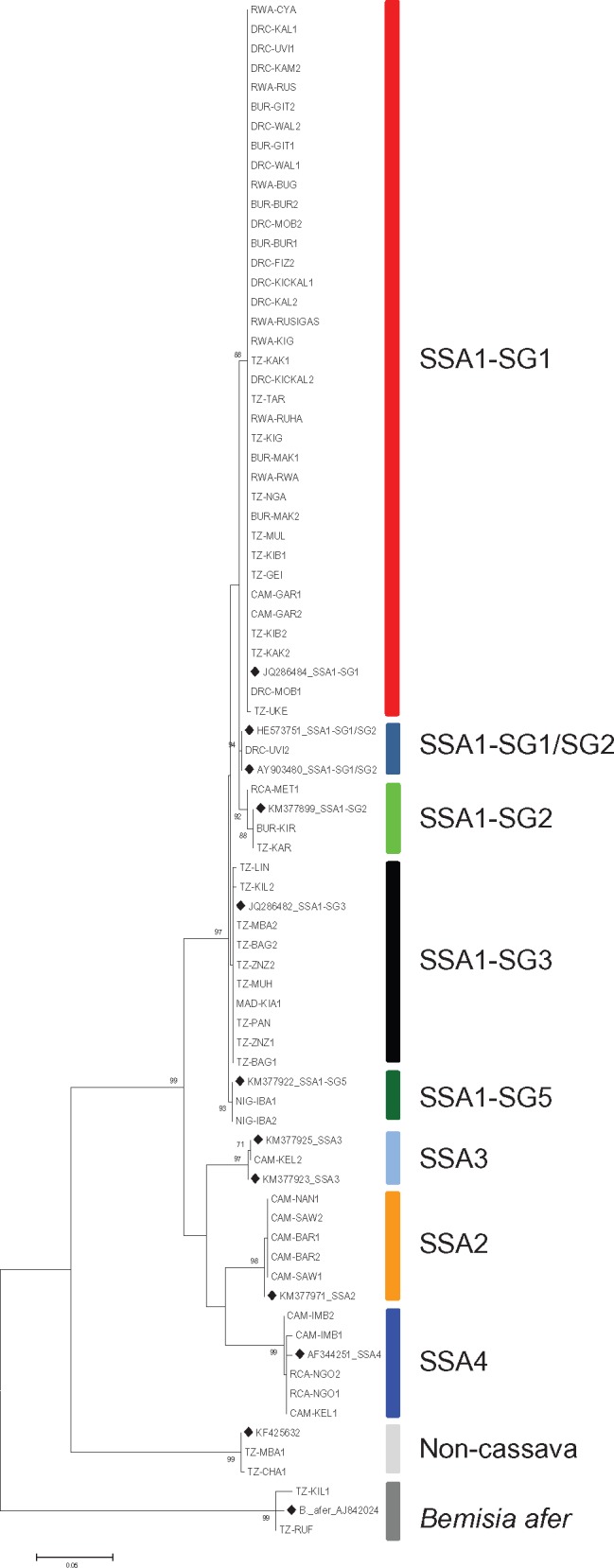
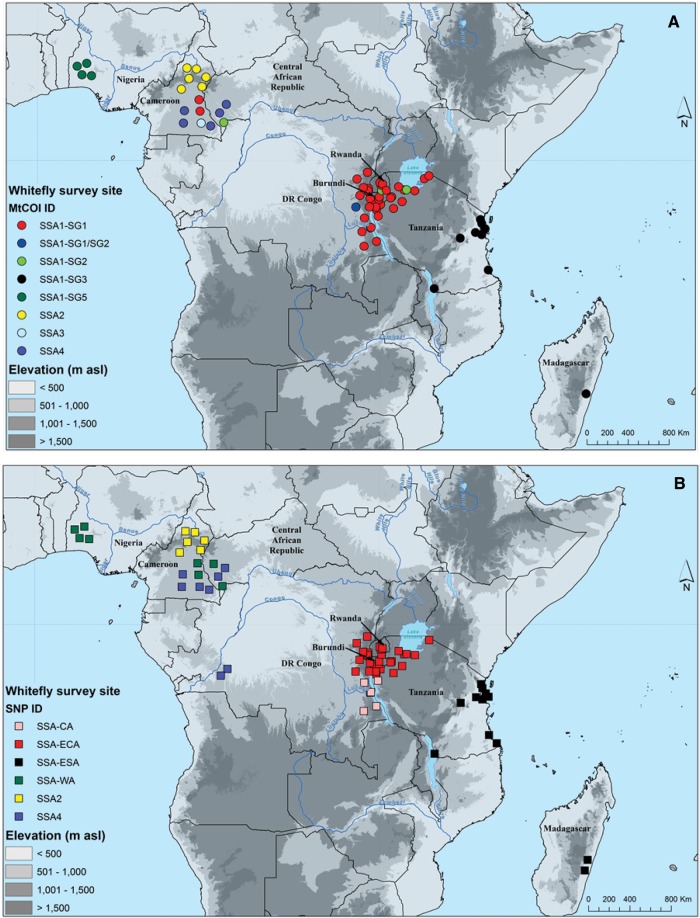
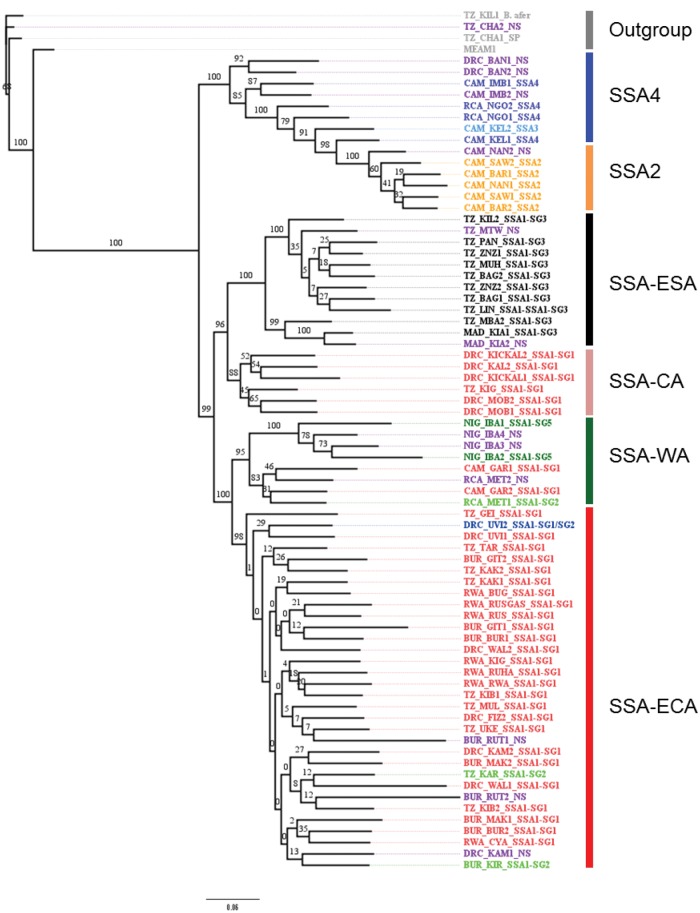
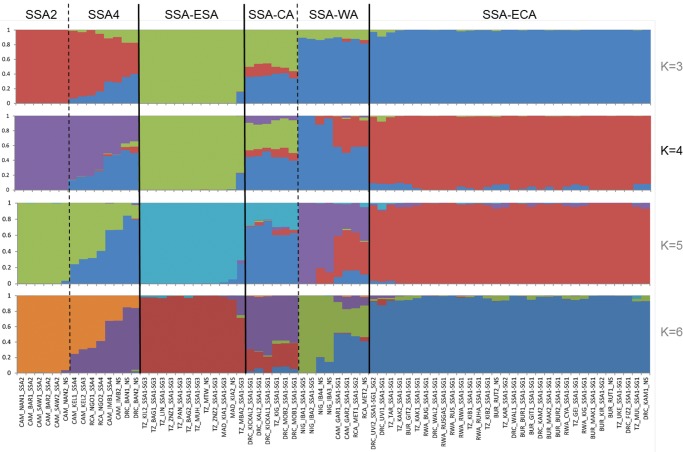
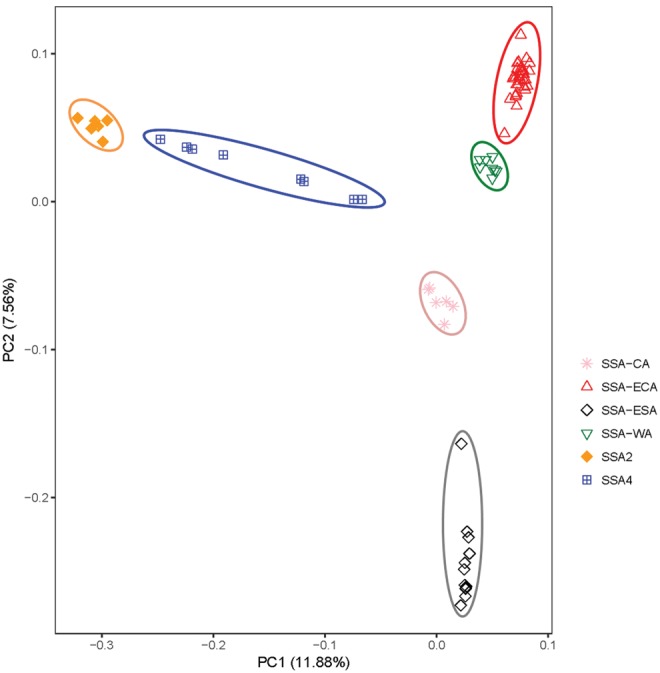
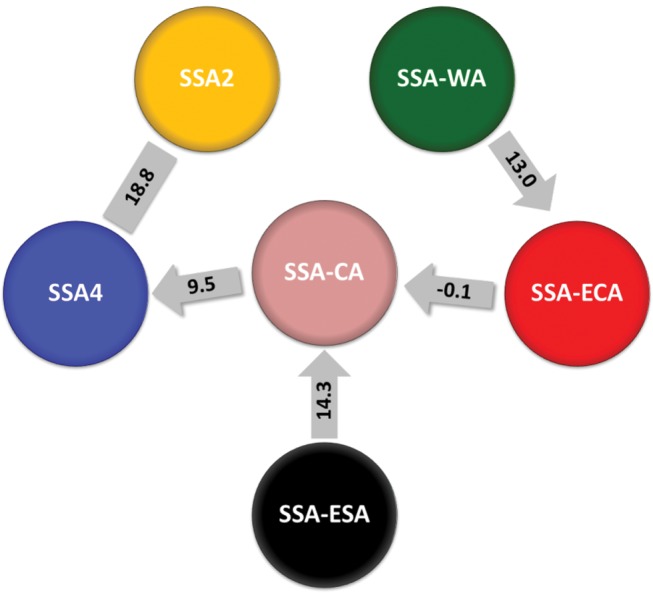
Bemisia tabaci threatens production of cassava in Africa through vectoring viruses that cause cassava mosaic disease (CMD) and cassava brown streak disease (CBSD). B. tabaci sampled from cassava in eight countries in Africa were genotyped using NextRAD sequencing, and their phylogeny and population genetics were investigated using the resultant single nucleotide polymorphism (SNP) markers. SNP marker data and short sequences of mitochondrial DNA cytochrome oxidase I (mtCOI) obtained from the same insect were compared. Eight genetically distinct groups were identified based on mtCOI, whereas phylogenetic analysis using SNPs identified six major groups, which were further confirmed by PCA and multidimensional analyses. STRUCTURE analysis identified four ancestral B. tabaci populations that have contributed alleles to the six SNP-based groups. Significant gene flows were detected between several of the six SNP-based groups. Evidence of gene flow was strongest for SNP-based groups occurring in central Africa. Comparison of the mtCOI and SNP identities of sampled insects provided a strong indication that hybrid populations are emerging in parts of Africa recently affected by the severe CMD pandemic. This study reveals that mtCOI is not an effective marker at distinguishing cassava-colonizing B. tabaci haplogroups, and that more robust SNP-based multilocus markers should be developed. Significant gene flows between populations could lead to the emergence of haplogroups that might alter the dynamics of cassava virus spread and disease severity in Africa. Continuous monitoring of genetic compositions of whitefly populations should be an essential component in efforts to combat cassava viruses in Africa.
烟粉虱通过传播导致木薯花叶病(CMD)和木薯白条病(CBSD)的病毒威胁非洲的木薯生产。使用 NextRAD 测序对来自非洲 8 个国家木薯上的烟粉虱进行了基因型分析,并利用所得的单核苷酸多态性(SNP)标记研究了它们的系统发育和种群遗传学。比较了来自同一昆虫的 SNP 标记数据和线粒体 DNA 细胞色素氧化酶 I(mtCOI)的短序列。根据 mtCOI 确定了 8 个遗传上不同的群体,而使用 SNP 进行的系统发育分析确定了 6 个主要群体,这些群体进一步通过 PCA 和多维分析得到证实。STRUCTURE 分析确定了 4 个祖先烟粉虱种群,它们为 6 个基于 SNP 的群体提供了等位基因。在几个基于 SNP 的群体之间检测到显著的基因流。在中部非洲发生的基于 SNP 的群体的基因流最强。对采样昆虫的 mtCOI 和 SNP 同一性的比较强烈表明,在最近受到严重 CMD 大流行影响的非洲部分地区,正在出现杂交种群。本研究表明,mtCOI 不是区分木薯定植烟粉虱单倍型群体的有效标记,应该开发更强大的基于 SNP 的多位点标记。种群之间的显著基因流可能导致单倍型群体的出现,从而改变非洲木薯病毒传播和疾病严重程度的动态。对白粉虱种群遗传组成的持续监测应该是在非洲防治木薯病毒的努力中的一个重要组成部分。