Section of Surgical Oncology Research, Division of Surgical Oncology, Rutgers Cancer Institute of New Jersey, New Brunswick, NJ 08903, USA.
Department of Surgery, Rutgers Robert Wood Johnson Medical School, The State University of New Jersey, New Brunswick, NJ 08903, USA.
Nanomedicine (Lond). 2017 Dec;12(23):2693-2706. doi: 10.2217/nnm-2017-0254. Epub 2017 Nov 3.
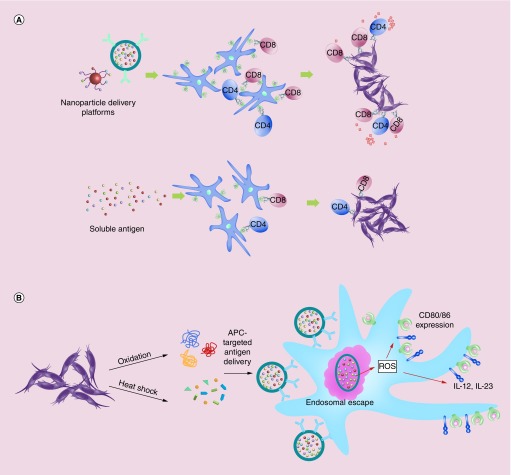
The major goal of immunity is maintaining host survival. Toward this, immune cells recognize and eliminate targets that pose a danger. Primarily, these are external invaders (pathogens) and internal invaders (cancers). Their recognition relies on distinguishing foreign components (antigens) from self-antigens. Since cancer cells are the host's own cells that are harmfully altered, they are difficult to distinguish from normal self. Furthermore, the antigens least resembling the host are often sequestered in parts of the tumor least accessible to immune responses. Therefore, to sufficiently boost immunity, these tumor antigens must be exposed to the immune system. Toward this, nanoparticles provide an innovating means of tumor antigen presentation and are destined to become an integral part of cancer immunotherapy.
免疫的主要目标是维持宿主的生存。为此,免疫细胞识别并清除有危险的靶标。主要的靶标是外来入侵物(病原体)和内源性入侵物(癌症)。它们的识别依赖于将外来成分(抗原)与自身抗原区分开来。由于癌细胞是宿主自身发生有害改变的细胞,因此它们很难与正常的自身区分开来。此外,与宿主最不相似的抗原通常存在于肿瘤中免疫反应最难以到达的部位。因此,为了充分增强免疫力,必须将这些肿瘤抗原暴露于免疫系统。为此,纳米颗粒为肿瘤抗原呈递提供了一种创新手段,有望成为癌症免疫治疗的一个组成部分。