Department of Pediatric Internal Medicine, Ningbo Women & Children's Hospital, 339 Liuding Street, Ningbo 315012, China.
Department of Neurosurgery, Tongji Hospital, Tongji University School of Medicine, 389 Xincun Road, Shanghai 200065, China.
Int J Med Sci. 2017 Sep 8;14(11):1143-1153. doi: 10.7150/ijms.21353. eCollection 2017.
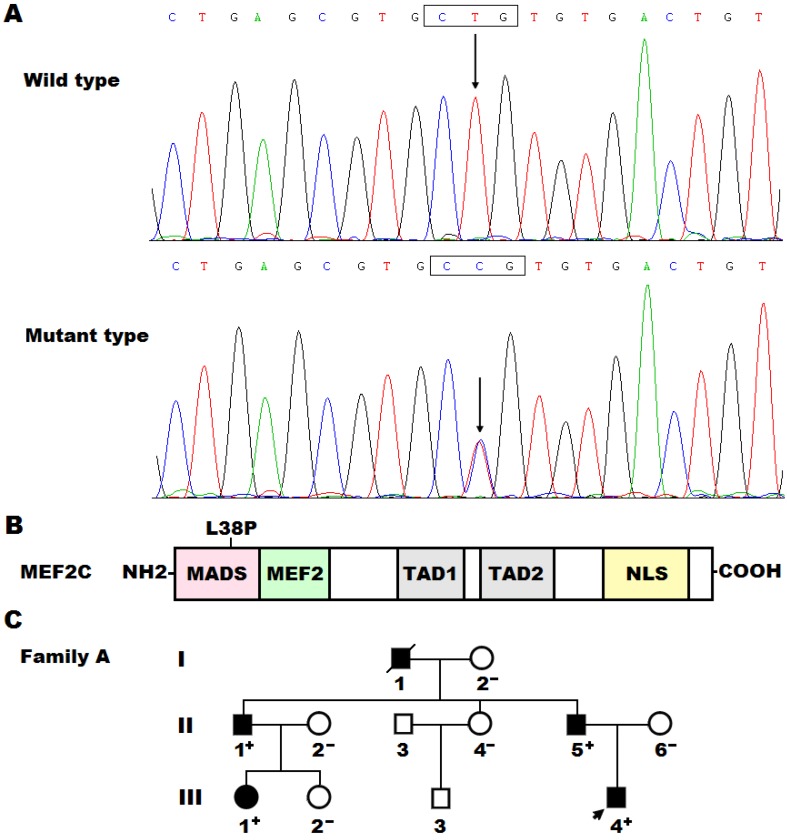
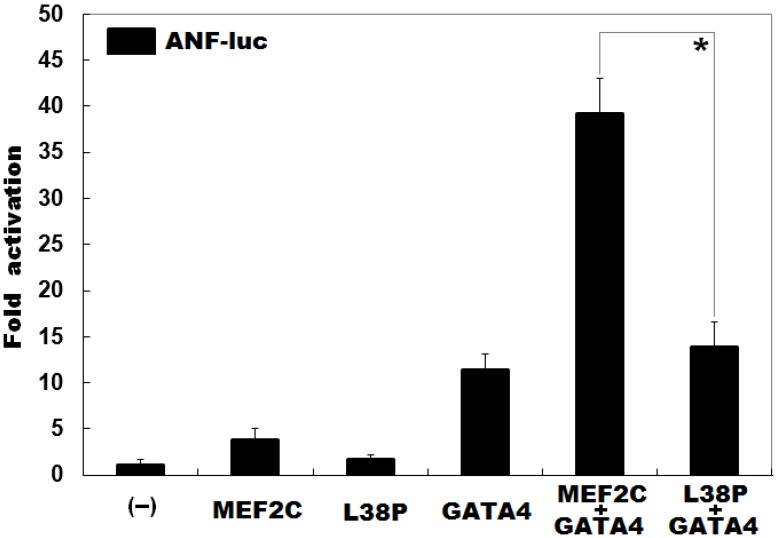
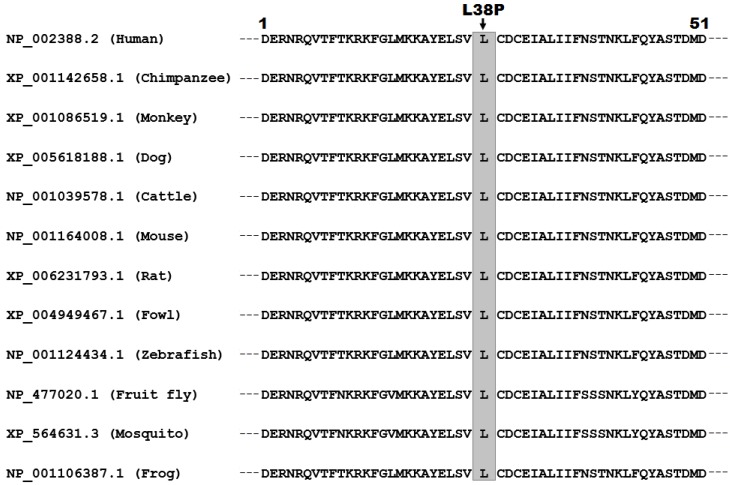
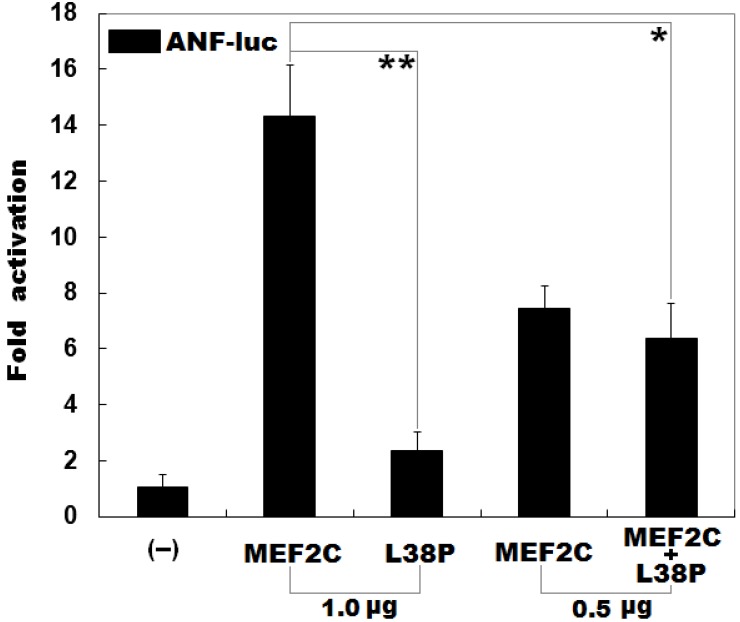
Congenital heart disease (CHD) is the most common type of developmental abnormality in humans, and is a leading cause for substantially increased morbidity and mortality in affected individuals. Increasing studies demonstrates a pivotal role of genetic defects in the pathogenesis of CHD, and presently mutations in more than 60 genes have been associated with CHD. Nevertheless, CHD is of pronounced genetic heterogeneity, and the genetic basis underpinning CHD in a large proportion of patients remains unclear. In the present study, the whole coding exons and splicing donors/acceptors of the gene, which codes for a transcription factor essential for normal cardiovascular development, were sequenced in 200 unrelated patients affected with CHD, and a novel heterozygous missense mutation, p.L38P, was identified in an index patient with patent ductus arteriosus (PDA) and ventricular septal defect (VSD). Genetic scan of the mutation carrier's family members available showed that the mutation was present in all affected family members but absent in unaffected family members. Analysis of the proband's pedigree revealed that the mutation co-segregated with PDA, which was transmitted as an autosomal dominant trait with complete penetrance. The mutation changed the amino acid that was completely conserved evolutionarily, and did not exist in 300 unrelated, ethnically-matched healthy individuals used as controls. Functional deciphers by using a dual-luciferase reporter assay system unveiled that the mutant MEF2C protein had a significantly reduced transcriptional activity. Furthermore, the mutation significantly diminished the synergistic activation between MEF2C and GATA4, another cardiac core transcription factor that has been causally linked to CHD. In conclusion, this is the first report on the association of a loss-of-function mutation with an increased vulnerability to CHD in humans, which provides novel insight into the molecular mechanisms underlying CHD, implying potential implications for early diagnosis and timely prophylaxis of CHD.
先天性心脏病(CHD)是人类最常见的发育异常类型,也是导致受影响个体发病率和死亡率显著增加的主要原因。越来越多的研究表明,遗传缺陷在 CHD 的发病机制中起着关键作用,目前已有 60 多个基因突变与 CHD 相关。然而,CHD 具有明显的遗传异质性,很大一部分患者的 CHD 遗传基础仍不清楚。在本研究中,对 200 名患有 CHD 的无亲缘关系的患者进行了基因编码外显子和剪接供体/受体的全序列分析,该基因编码一种对心血管正常发育至关重要的转录因子,在一名患有动脉导管未闭(PDA)和室间隔缺损(VSD)的先证者中发现了一种新的杂合错义突变,p.L38P。对突变携带者家族成员的遗传扫描显示,该突变存在于所有受影响的家族成员中,但不存在于未受影响的家族成员中。对先证者家系的分析显示,该突变与 PDA 共分离,呈常染色体显性遗传,完全外显。该突变改变了完全保守的进化氨基酸,在 300 名无亲缘关系、种族匹配的健康对照者中不存在。使用双荧光素酶报告基因检测系统进行的功能解析表明,突变的 MEF2C 蛋白的转录活性显著降低。此外,该突变显著减弱了 MEF2C 与 GATA4 之间的协同激活作用,GATA4 是另一种与 CHD 相关的心脏核心转录因子。总之,这是首次报道 基因的功能丧失性突变与人类 CHD 的易感性增加有关,为 CHD 的分子机制提供了新的见解,提示了早期诊断和及时预防 CHD 的潜在意义。