Cagliani Joaquin, Grande Daniel, Molmenti Ernesto P, Miller Edmund J, Rilo Horacio L R
The Feinstein Institute for Medical Research, Center for Heart and Lungs, Northwell Health System, Manhasset, N Y, USA.
The Elmezzi Graduate School of Molecular Medicine, Northwell Health System, Manhasset, NY, USA.
J Stem Cell Regen Biol. 2017;3(2). doi: 10.15436/2471-0598.17.022. Epub 2017 Apr 10.
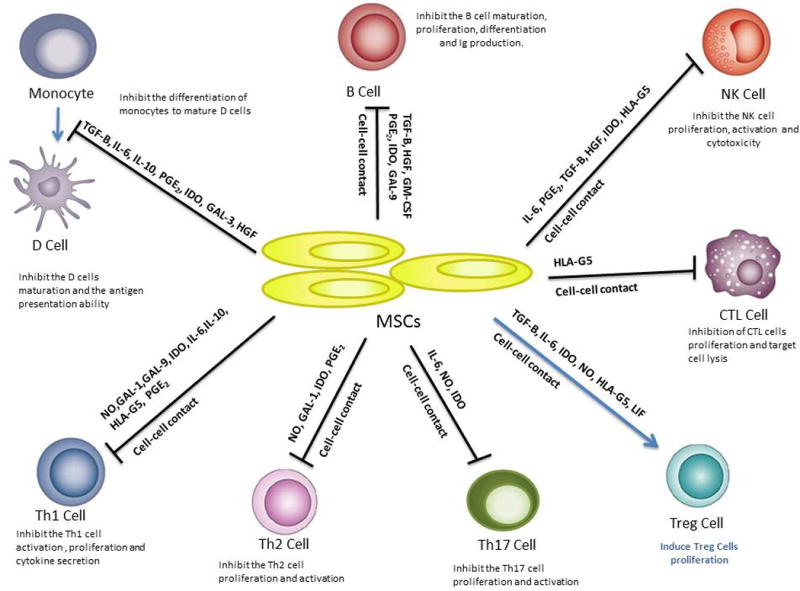
Mesenchymal stromal cells (MSCs) are multipotent progenitor cells that can be isolated and expanded from various sources. MSCs modulate the function of immune cells, including T and B lymphocytes, dendritic cells, and natural killer cells. An understanding of the interaction between MSCs and the inflammatory microenvironment will provide critical information in revealing the precise mechanisms involved in MSCs-mediated therapeutic effects, and for designing more practical protocols for the clinical use of these cells. In this review we describe the current knowledge of the unique biological properties of MSCs, the immunosuppressive effects on immune-competent cells and the paracrine role of soluble factors. A summary of the participation of MSCs in preclinical and clinical studies in treating autoimmune diseases and other diseases is described. We also discuss the current challenges of their use and their potential roles in cell therapies.
间充质基质细胞(MSCs)是多能祖细胞,可从多种来源分离和扩增。MSCs可调节免疫细胞的功能,包括T和B淋巴细胞、树突状细胞和自然杀伤细胞。了解MSCs与炎症微环境之间的相互作用,将为揭示MSCs介导治疗效果的精确机制以及设计更实用的临床应用方案提供关键信息。在本综述中,我们描述了MSCs独特生物学特性的当前知识、对免疫活性细胞的免疫抑制作用以及可溶性因子的旁分泌作用。还介绍了MSCs参与治疗自身免疫性疾病和其他疾病的临床前和临床研究的总结。我们还讨论了其应用目前面临的挑战及其在细胞治疗中的潜在作用。