Hodo Carolyn L, Hamer Sarah A
Carolyn L. Hodo, DVM, DACVP, is a PhD candidate in the department of Veterinary Pathobiology at the Texas A&M University College of Veterinary Medicine and Biomedical Sciences in College Station, Texas. Sarah A. Hamer, PhD, DVM, DACVPM, is an assistant professor in the department of Veterinary Integrative Biosciences at the Texas A&M University College of Veterinary Medicine and Biomedical Sciences in College Station, Texas.
ILAR J. 2017 Dec 15;58(3):379-392. doi: 10.1093/ilar/ilx020.
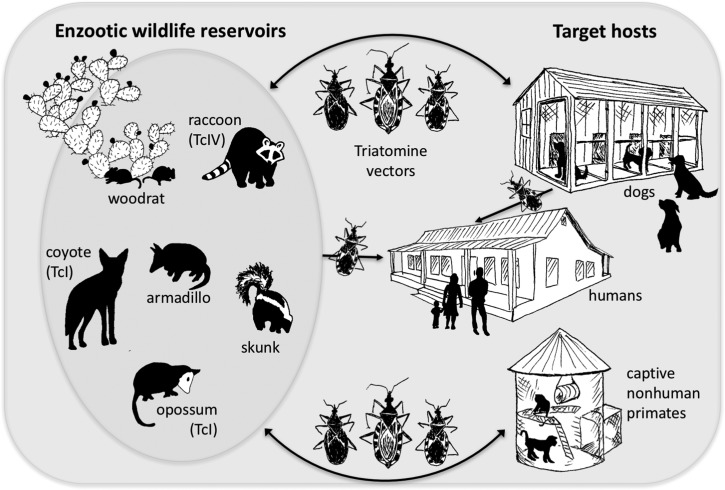
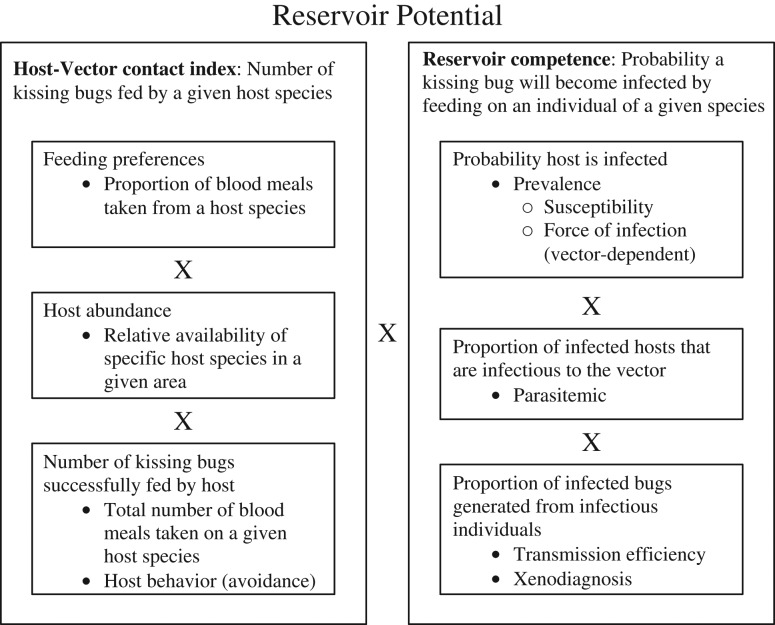
Wildlife species are critical for both feeding vectors and serving as reservoirs of zoonotic vector-borne pathogens. Transmission pathways leading to disease in humans or other target taxa might be better understood and managed given a complete understanding of the relative importance of different reservoir species in nature. Using the conceptual framework of "reservoir potential," which considers elements of both reservoir competence and vector-host contact, we review the wildlife reservoirs of Trypanosoma cruzi in the southern United States, where many species of triatomine vectors occur and wildlife maintain enzootic cycles that create a risk of spillover to humans, domestic dogs, and captive nonhuman primates that may develop Chagas disease. We reviewed 77 published reports of T. cruzi infection in at least 26 wildlife species across 15 southern states. Among the most well-studied and highly infected reservoirs are raccoon (Procyon lotor), woodrat (Neotoma spp.), and opossum (Didelphis virginiana), with aggregate overall infection prevalences of 36.4, 34.7, and 22.9%, respectively. Just over 60% of studies utilized methods from which an infectiousness index could be generated and show that raccoons and striped skunk (Mephitis mephitis) are among the most infectious wildlife hosts. Triatomine-host contact has sparsely been quantified in the southern United States, but 18 of the 24 host species previously identified to have been fed upon by triatomines are wildlife. Future studies to parameterize the reservoir potential model, especially to quantify wildlife infectiousness, vector-host contact, and the epidemiological importance of parasite strains maintained by wildlife, could open new doors for managing enzootic cycles and reducing T. cruzi spillover risk.
野生动物物种对于滋养病媒以及作为人畜共患病媒传播病原体的宿主都至关重要。如果能全面了解自然界中不同宿主物种的相对重要性,那么导致人类或其他目标分类群患病的传播途径或许能得到更好的理解和管控。利用“宿主潜力”这一概念框架,该框架综合考虑了宿主能力和病媒与宿主接触的因素,我们回顾了美国南部克氏锥虫的野生动物宿主情况,美国南部有多种锥蝽病媒,野生动物维持着自然疫源地循环,这给人类、家犬和圈养非人灵长类动物带来了感染恰加斯病的风险。我们查阅了15个南部州至少26种野生动物感染克氏锥虫的77篇已发表报告。研究最多且感染率最高的宿主包括浣熊(北美浣熊)、林鼠(林鼠属)和负鼠(北美负鼠),总体感染率分别为36.4%、34.7%和22.9%。略超60%的研究采用了能生成感染性指数的方法,结果显示浣熊和条纹臭鼬是感染性最强的野生动物宿主。在美国南部,锥蝽与宿主的接触情况鲜有量化,但先前确定被锥蝽吸食过的24种宿主中有18种是野生动物。未来对宿主潜力模型进行参数化的研究,尤其是量化野生动物的感染性、病媒与宿主的接触以及野生动物所维持的寄生虫菌株的流行病学重要性,可能会为管理自然疫源地循环和降低克氏锥虫溢出风险打开新的大门。