Department of Chemical and Biological Engineering, University of Wisconsin-Madison, Madison, WI 53706, United States; Environmental Chemistry and Technology Program, University of Wisconsin-Madison, Madison, WI 53706, United States.
Department of Chemical and Biological Engineering, University of Wisconsin-Madison, Madison, WI 53706, United States.
Metab Eng. 2017 Nov;44:273-283. doi: 10.1016/j.ymben.2017.10.010. Epub 2017 Oct 28.
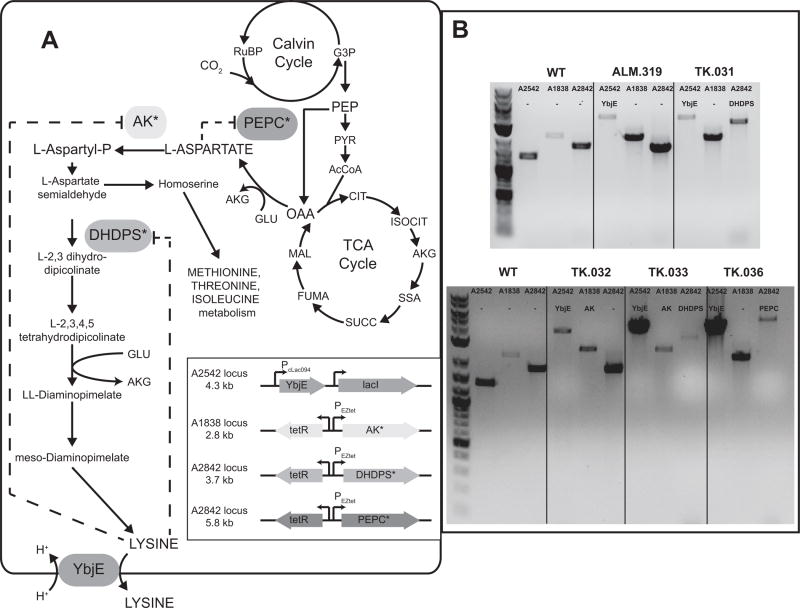
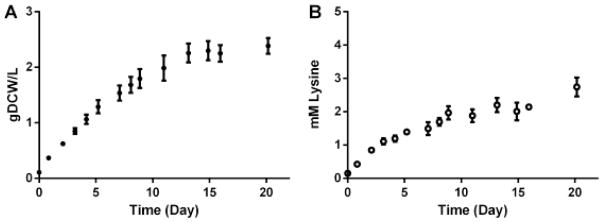
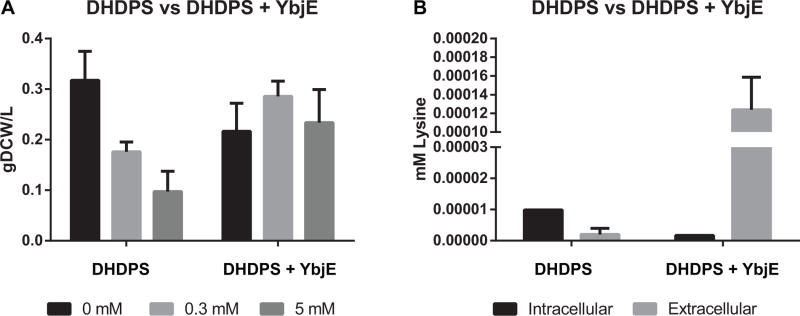
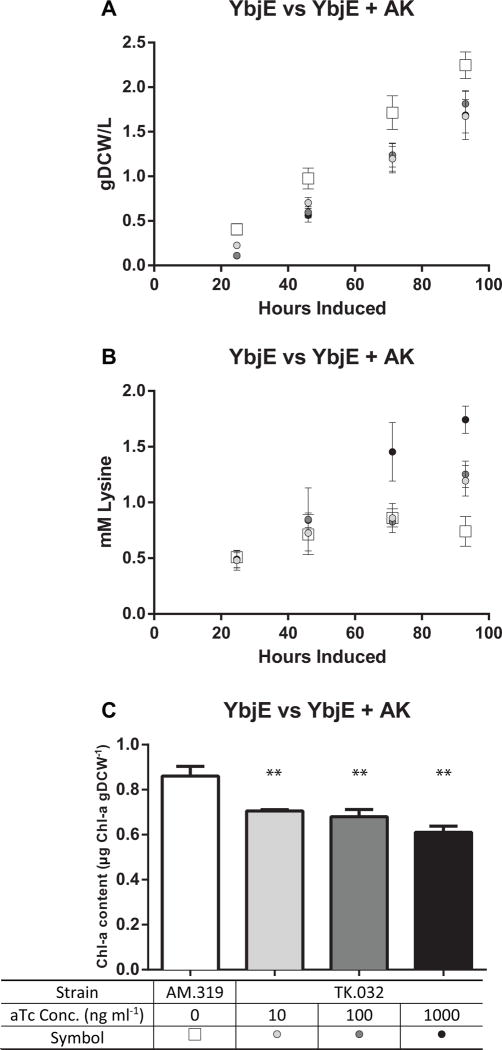
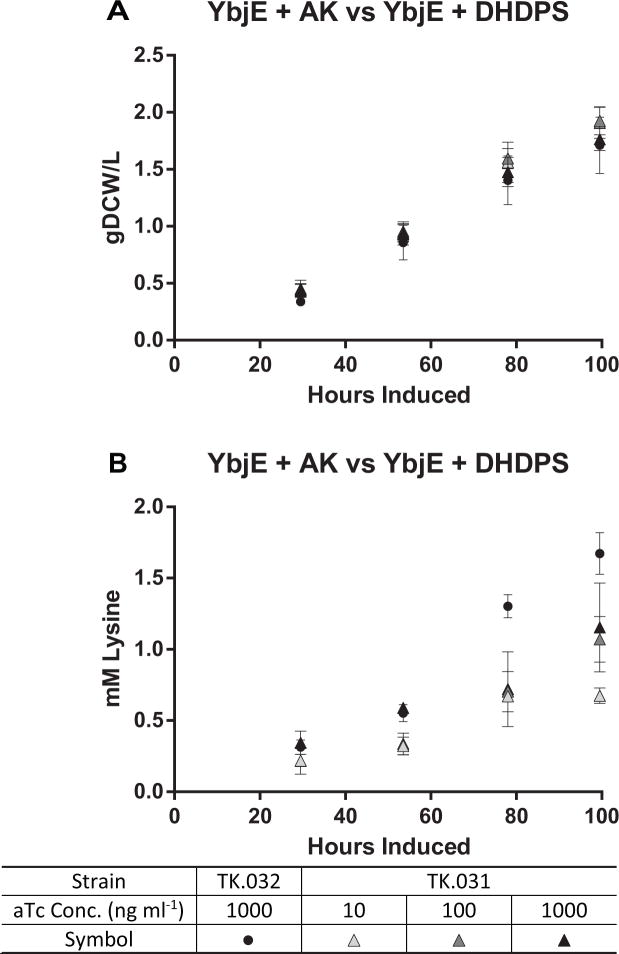
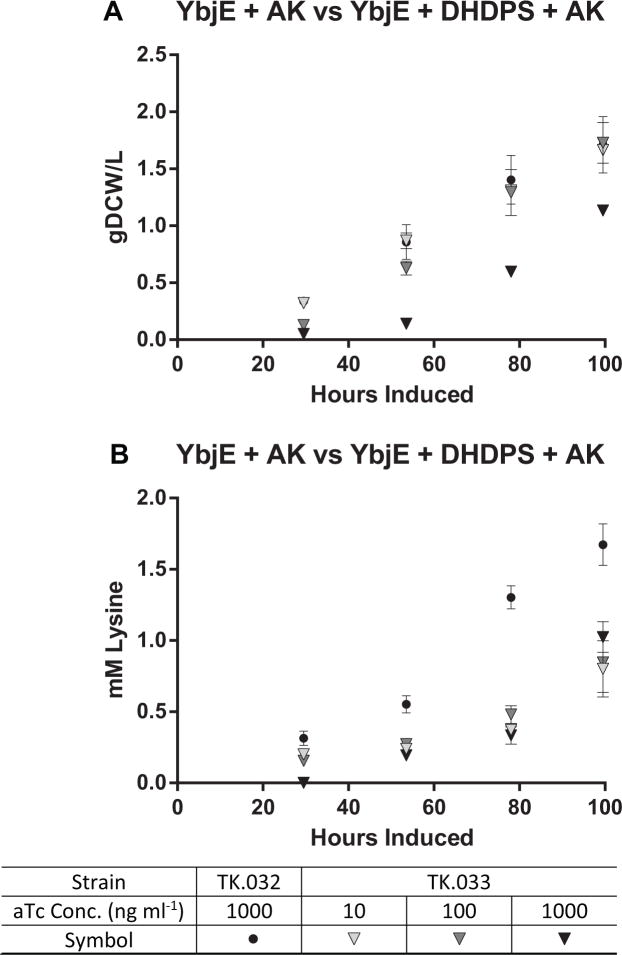
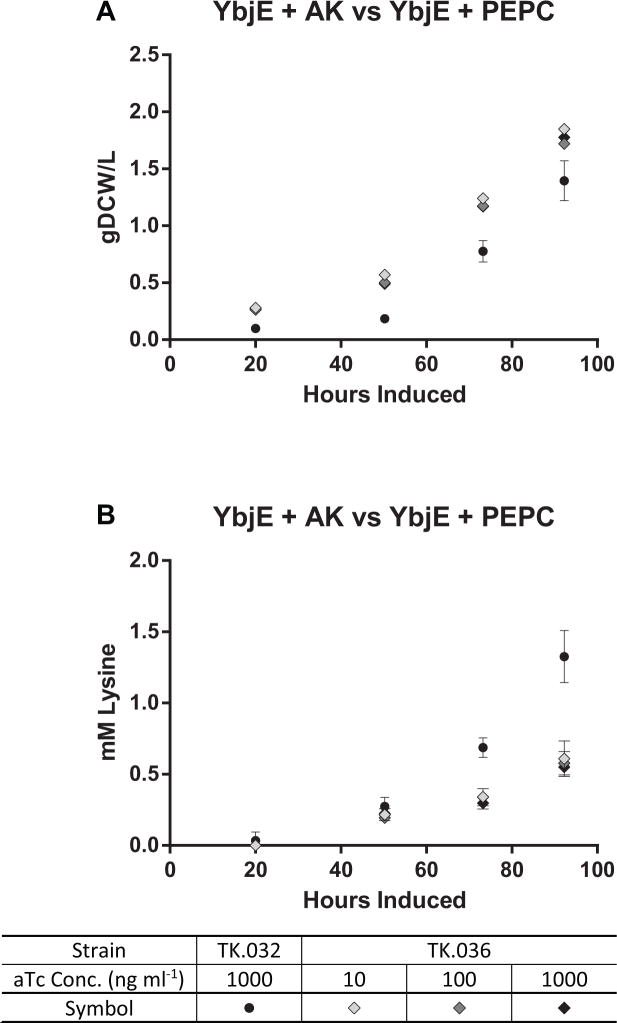
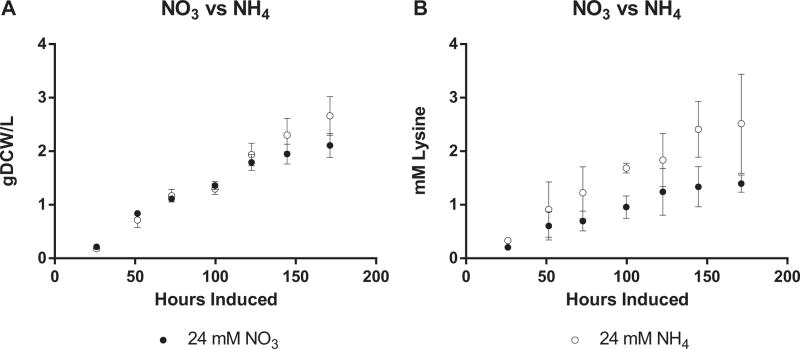
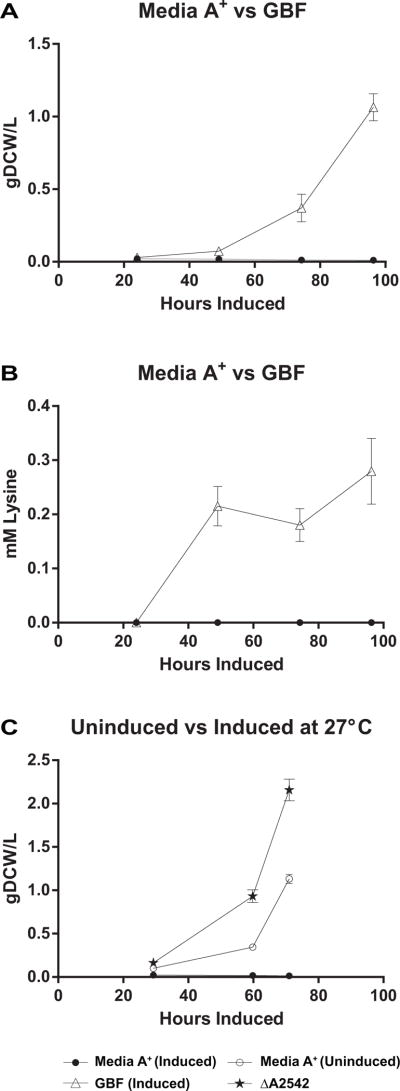
L-lysine and other amino acids are commonly produced through fermentation using strains of heterotrophic bacteria such as Corynebacterium glutamicum. Given the large amount of sugar this process consumes, direct photosynthetic production is intriguing alternative. In this study, we report the development of a cyanobacterium, Synechococcus sp. strain PCC 7002, capable of producing L-lysine with CO as the sole carbon-source. We found that heterologous expression of a lysine transporter was required to excrete lysine and avoid intracellular accumulation that correlated with poor fitness. Simultaneous expression of a feedback inhibition resistant aspartate kinase and lysine transporter were sufficient for high productivities, but this was also met with a decreased chlorophyll content and reduced growth rates. Increasing the reductant supply by using NH, a more reduced nitrogen source relative to NO, resulted in a two-fold increase in productivity directing 18% of fixed carbon to lysine. Given this advantage, we demonstrated lysine production from media formulated with a municipal wastewater treatment sidestream as a nutrient source for increased economic and environmental sustainability. Based on our results, we project that Synechococcus sp. strain PCC 7002 could produce lysine at areal productivities approaching that of sugar cane to lysine via fermentation using non-agricultural lands and low-cost feedstocks.
L-赖氨酸和其他氨基酸通常通过使用谷氨酸棒状杆菌等异养细菌的发酵来生产。考虑到该过程消耗大量的糖,直接光合作用生产是一种很有吸引力的替代方法。在这项研究中,我们报告了一种蓝藻,即聚球藻 PCC 7002 的开发,它能够以 CO 作为唯一的碳源生产 L-赖氨酸。我们发现,异源表达赖氨酸转运蛋白对于排出赖氨酸和避免与不良适应性相关的细胞内积累是必需的。同时表达反馈抑制抗性天冬氨酸激酶和赖氨酸转运蛋白足以实现高生产率,但这也伴随着叶绿素含量降低和生长速率下降。通过使用 NH 作为一种比 NO 更还原的氮源来增加还原剂供应,导致生产率提高了两倍,将 18%的固定碳导向赖氨酸。鉴于这一优势,我们展示了使用城市污水处理副产物作为营养源从培养基中生产赖氨酸,以提高经济和环境可持续性。基于我们的结果,我们预计聚球藻 PCC 7002 可以通过在非农业土地和低成本饲料上使用发酵的方式,以接近甘蔗产赖氨酸的面积生产率来生产赖氨酸。