Department of Pharmacology and Chemical Biology, University of Pittsburgh School of Medicine, Pittsburgh, PA
Department of Pharmacology and Chemical Biology, University of Pittsburgh School of Medicine, Pittsburgh, PA.
J Am Heart Assoc. 2017 Nov 7;6(11):e007253. doi: 10.1161/JAHA.117.007253.
Activated cardiac fibroblasts (CFs), preglomerular vascular smooth muscle cells (PGVSMCs), and glomerular mesangial cells (GMCs) proliferate, cause hypertrophy, and produce collagen; in this way, activated CFs contribute to cardiac fibrosis, and activated PGVSMCs and GMCs promote renal fibrosis. In heart and kidney diseases, SDF-1α (stromal cell-derived factor 1α; endogenous CXCR4 [C-X-C motif chemokine receptor 4] receptor agonist) levels are often elevated; therefore, it is important to know whether and how the SDF-1α/CXCR4 axis activates CFs, PGVSMCs, or GMCs.
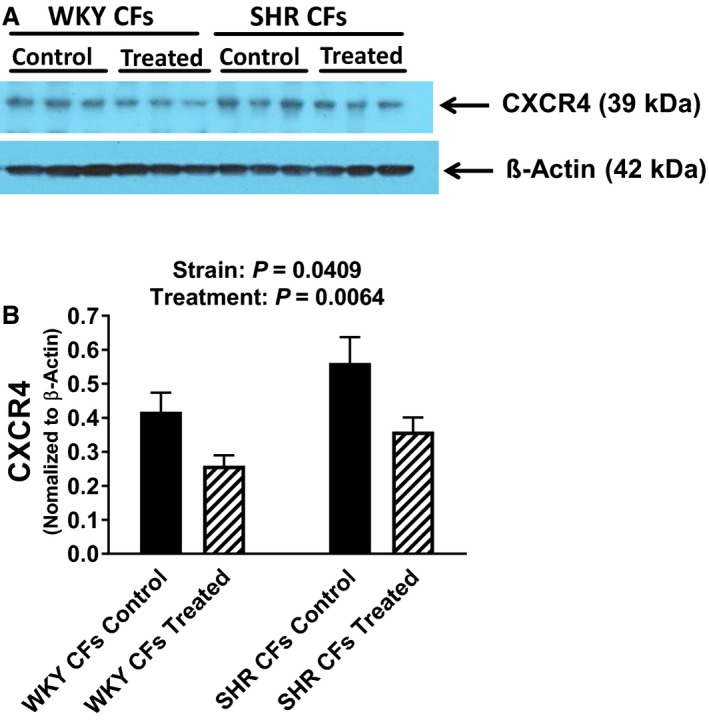
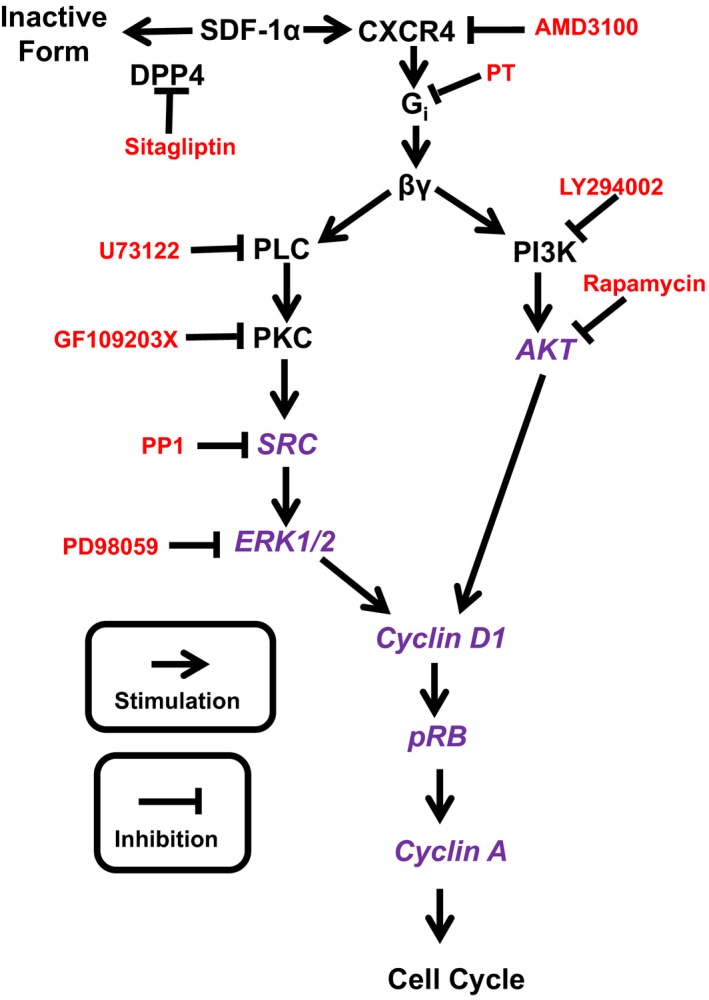
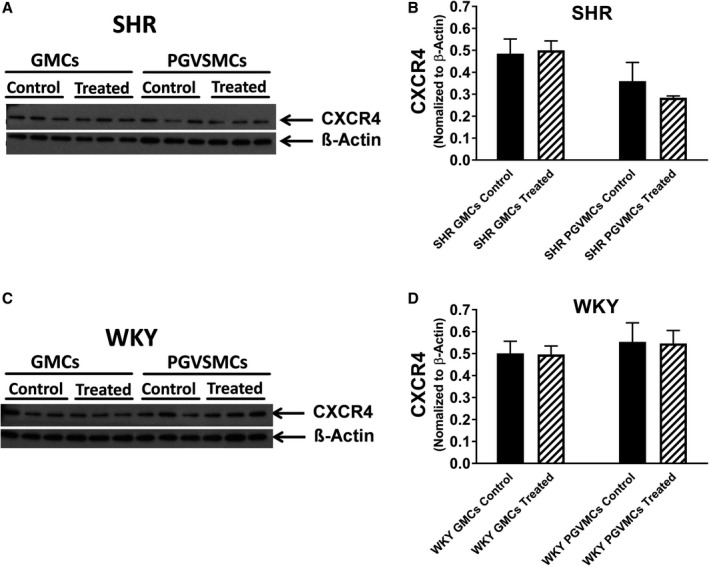
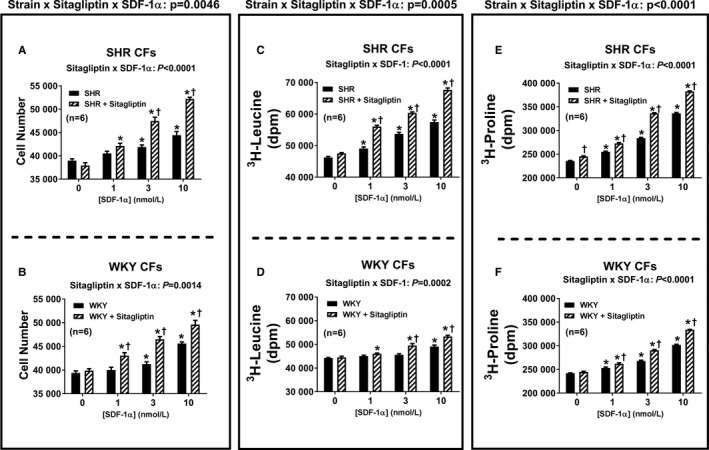
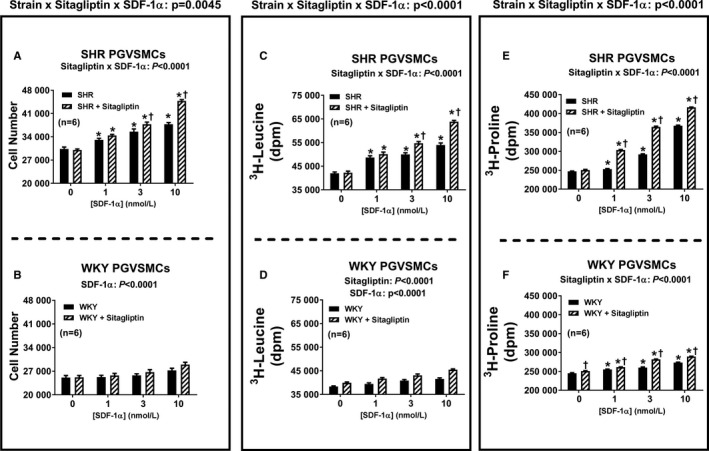
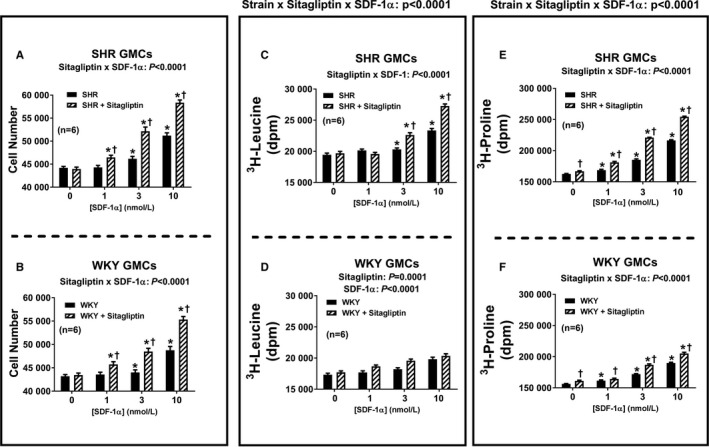
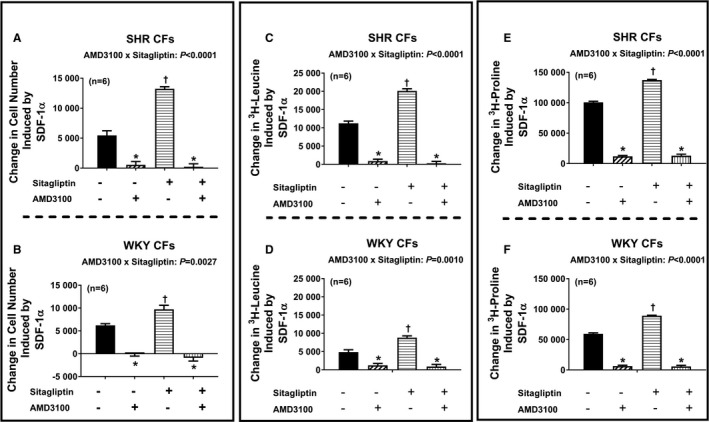
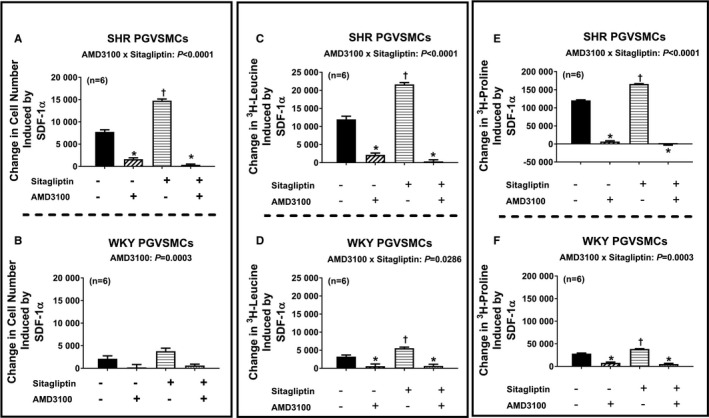
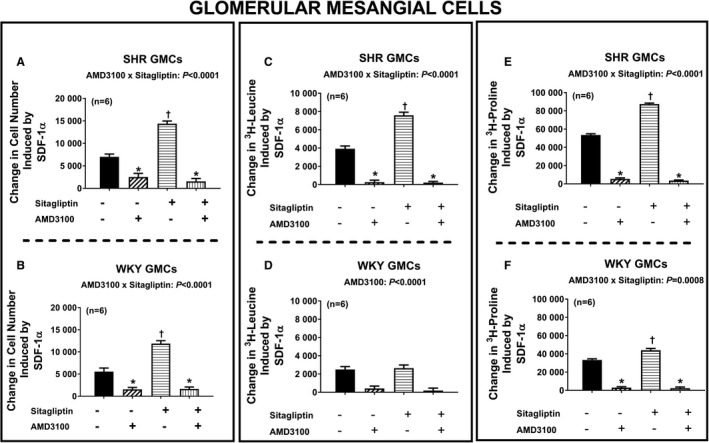
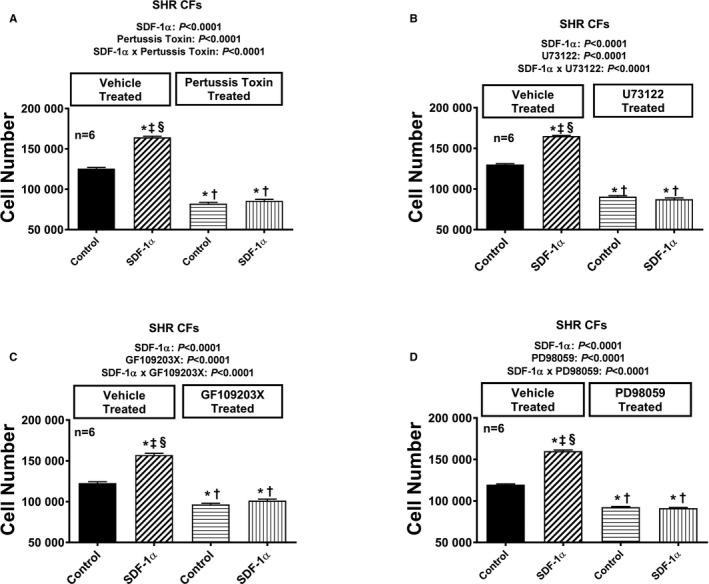
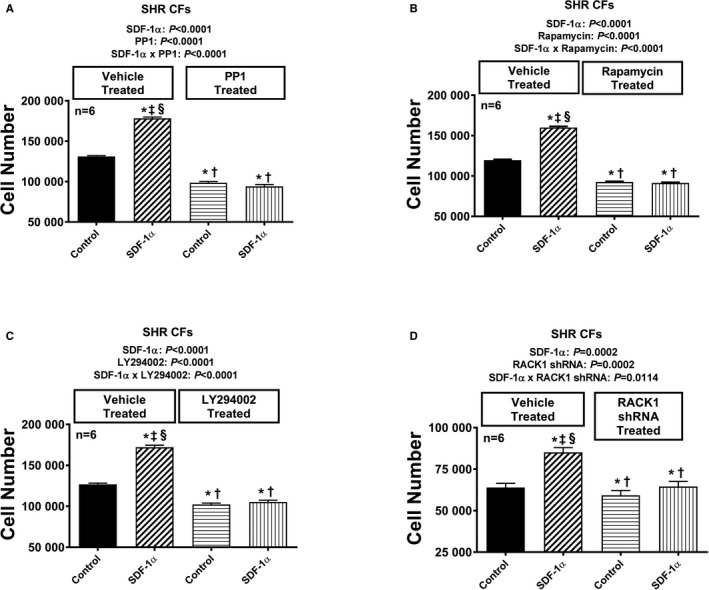
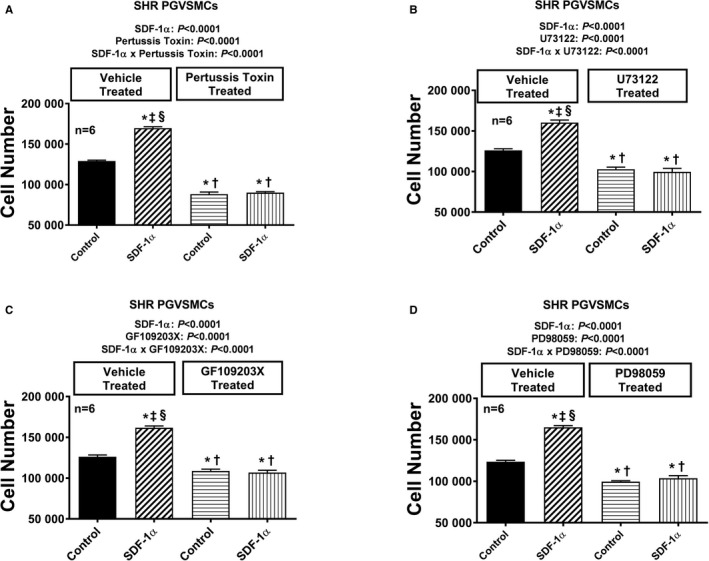
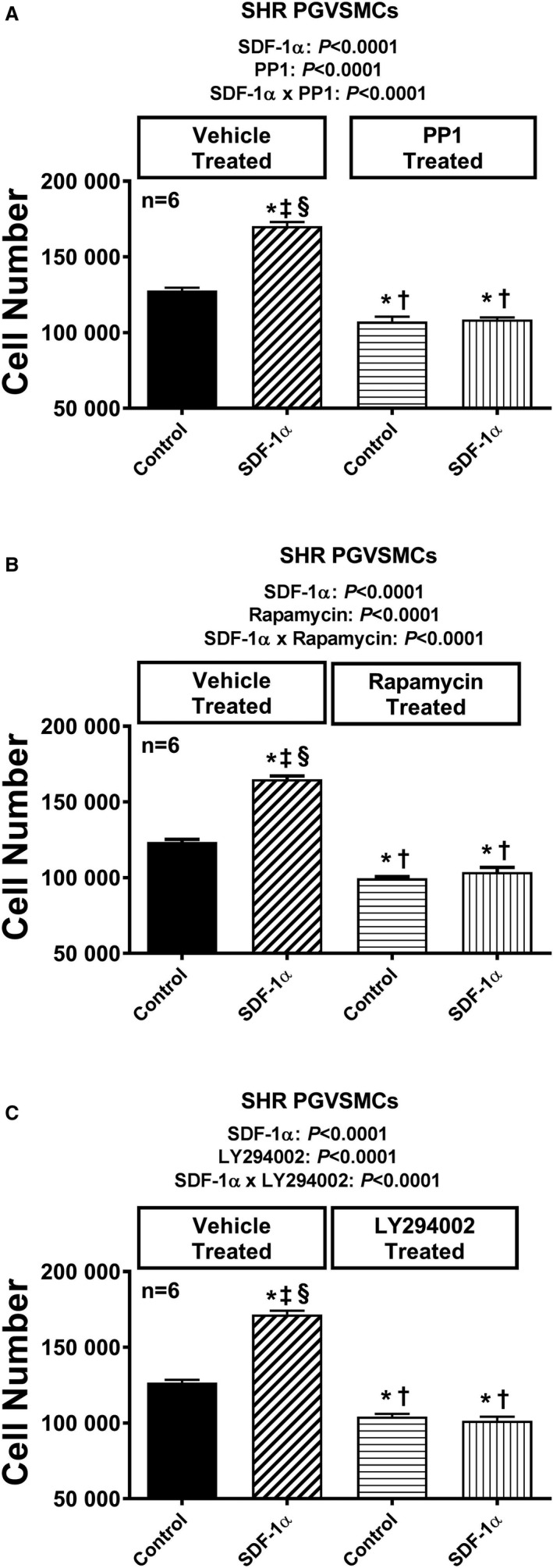
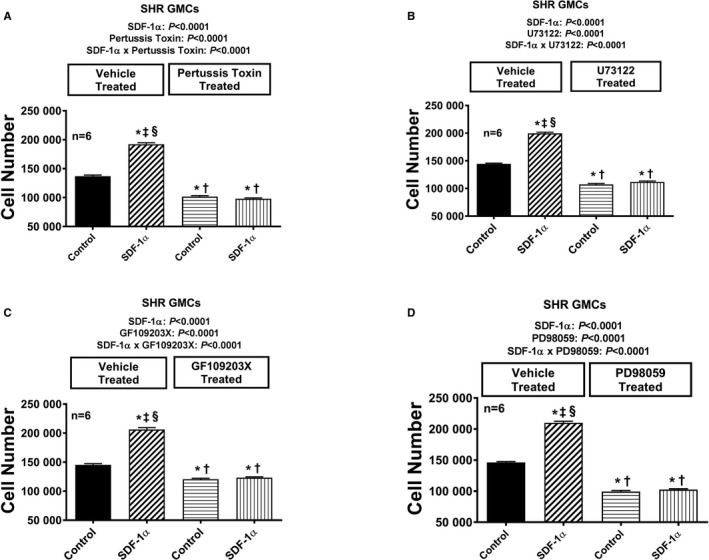
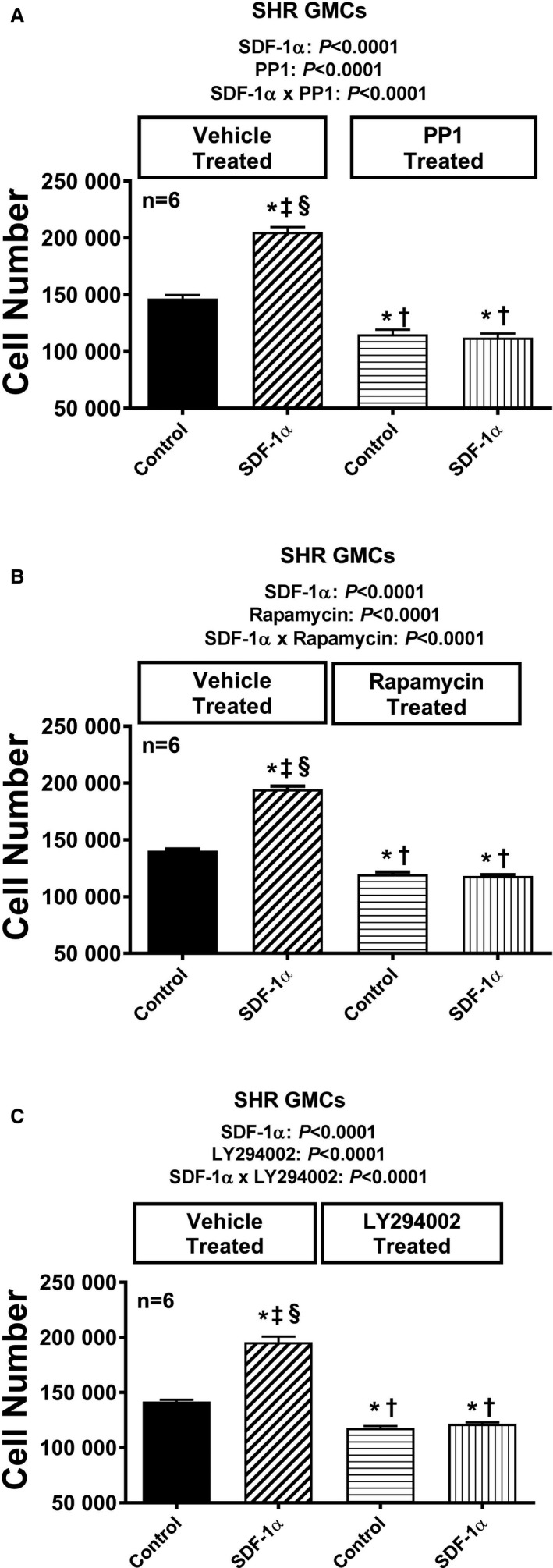
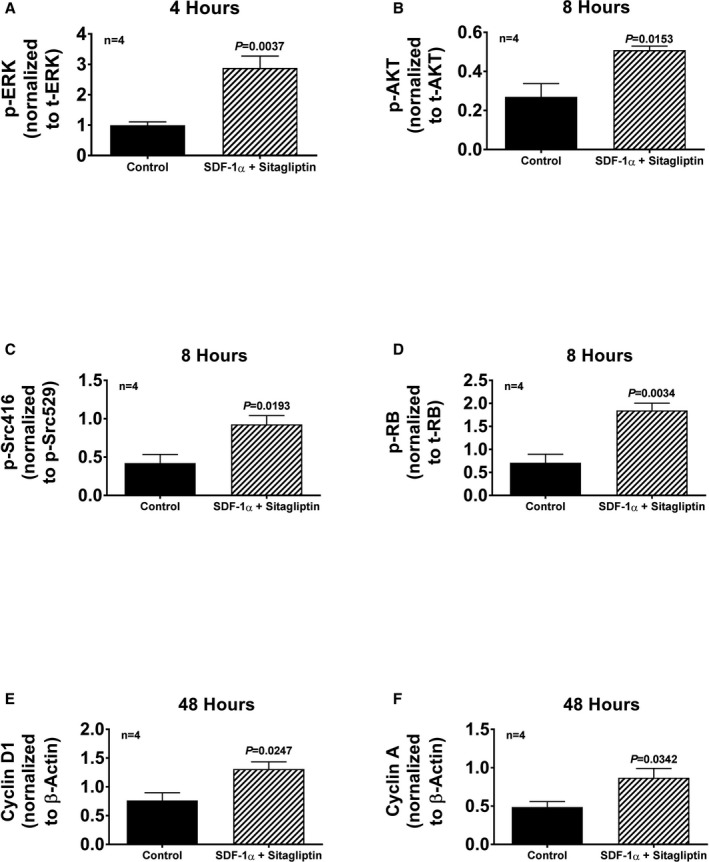
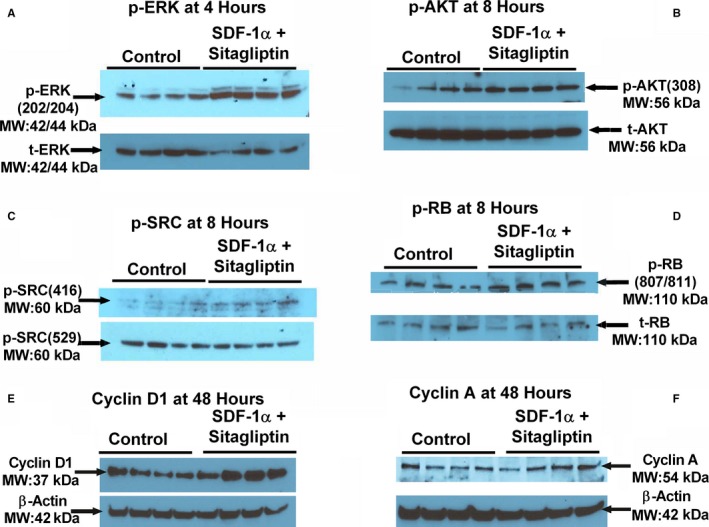
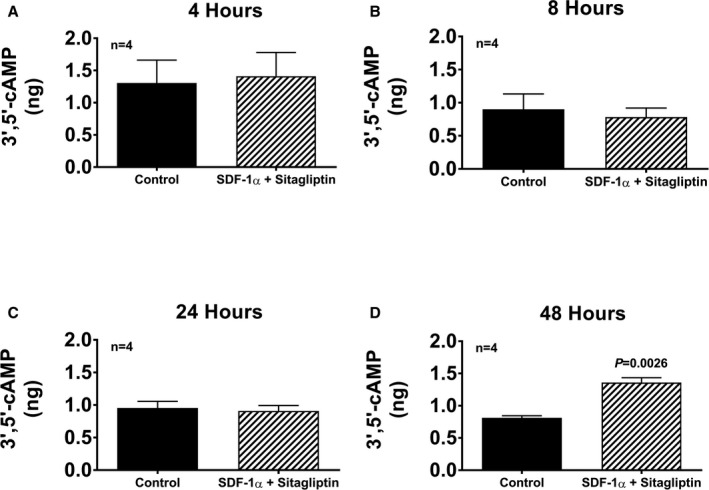
Here we investigated whether SDF-1α activates CFs, PGVSMCs, and GMCs to proliferate, hypertrophy, or produce collagen. DPP4 (dipeptidyl peptidase 4) inactivates SDF-1α and previous experiments show that growth-promoting peptides have greater effects in cells from genetically-hypertensive animals. Therefore, we performed experiments in the absence and presence of sitagliptin (DPP4 inhibitor) and in cells from normotensive Wistar-Kyoto rats and spontaneously hypertensive rats. Our studies show (1) that spontaneously hypertensive and Wistar-Kyoto rat CFs, PGVSMCs, and GMCs express CXCR4 receptors and DPP4 activity; (2) that chronic treatment with physiologically relevant concentrations of SDF-1α causes concentration-dependent increases in the proliferation (cell number) and hypertrophy (H-leucine incorporation) of and collagen production (H-proline incorporation) by CFs, PGVSMCs, and GMCs; (3) that sitagliptin augments these effects of SDF-1α; (4) that interactions between SDF-1α and sitagliptin are greater in spontaneously hypertensive rat cells; (5) that CXCR4 antagonism (AMD3100) blocks all effects of SDF-1α; and (6) that SDF-1α/CXCR4 signal transduction likely involves the RACK1 (receptor for activated C kinase 1)/Gβγ/PLC (phospholipase C)/PKC (protein kinase C) signaling complex.
The SDF-1α/CXCR4 axis drives proliferation and hypertrophy of and collagen production by CFs, PGVSMCs, and GMCs, particularly in cells from genetically hypertensive animals and when DPP4 is inhibited.
激活的心肌成纤维细胞(CFs)、肾小球前血管平滑肌细胞(PGVSMCs)和肾小球系膜细胞(GMCs)增殖、肥大并产生胶原蛋白;由此,激活的 CFs 导致心肌纤维化,而激活的 PGVSMCs 和 GMCs 则促进肾纤维化。在心脏和肾脏疾病中,SDF-1α(基质细胞衍生因子 1α;内源性 CXCR4 [C-X-C 基序趋化因子受体 4] 受体激动剂)水平通常升高;因此,了解 SDF-1α/CXCR4 轴是否以及如何激活 CFs、PGVSMCs 或 GMCs 非常重要。
在这里,我们研究了 SDF-1α 是否激活 CFs、PGVSMCs 和 GMCs 以增殖、肥大或产生胶原蛋白。DPP4(二肽基肽酶 4)使 SDF-1α 失活,并且先前的实验表明,在遗传高血压动物的细胞中,促生长肽具有更大的作用。因此,我们在不存在和存在西他列汀(DPP4 抑制剂)的情况下以及在来自正常血压 Wistar-Kyoto 大鼠和自发性高血压大鼠的细胞中进行了实验。我们的研究表明:(1)自发性高血压和 Wistar-Kyoto 大鼠 CFs、PGVSMCs 和 GMCs 表达 CXCR4 受体和 DPP4 活性;(2)用生理相关浓度的 SDF-1α 慢性处理会导致 CFs、PGVSMCs 和 GMCs 的增殖(细胞数量)和肥大(H-亮氨酸掺入)以及胶原蛋白产生(H-脯氨酸掺入)呈浓度依赖性增加;(3)西他列汀增强了 SDF-1α 的这些作用;(4)SDF-1α 与西他列汀之间的相互作用在自发性高血压大鼠细胞中更大;(5)CXCR4 拮抗剂(AMD3100)阻断 SDF-1α 的所有作用;(6)SDF-1α/CXCR4 信号转导可能涉及 RACK1(激活的 C 激酶 1 受体)/Gβγ/PLC(磷脂酶 C)/PKC(蛋白激酶 C)信号复合物。
SDF-1α/CXCR4 轴驱动 CFs、PGVSMCs 和 GMCs 的增殖、肥大和胶原蛋白产生,特别是在遗传高血压动物的细胞中,并且当 DPP4 被抑制时。