Bhadauria Esha A, Gurudut Peeyoosha
Department of Orthopaedics Physiotherapy, KLE University's Institute of Physiotherapy, Belagavi, India.
J Exerc Rehabil. 2017 Aug 29;13(4):477-485. doi: 10.12965/jer.1734972.486. eCollection 2017 Aug.
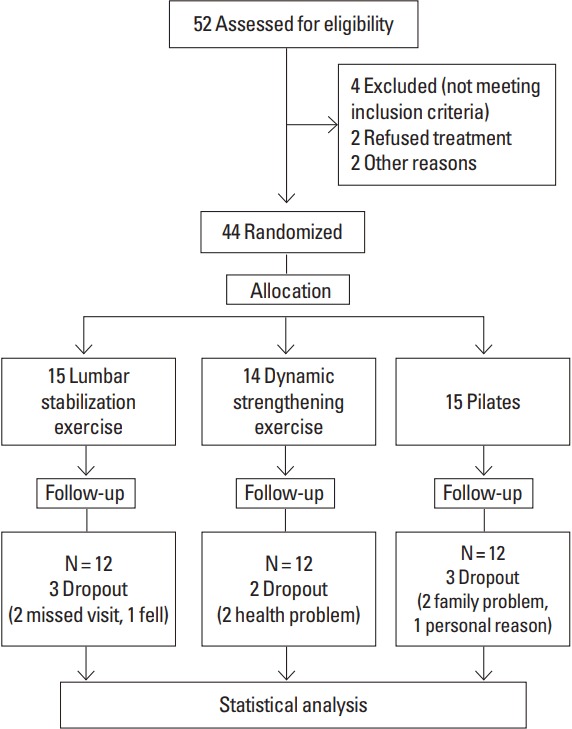
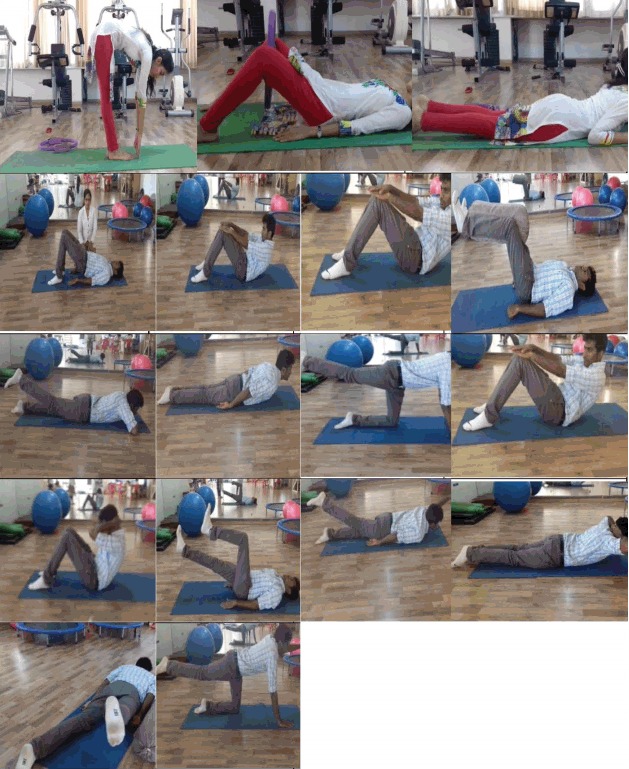
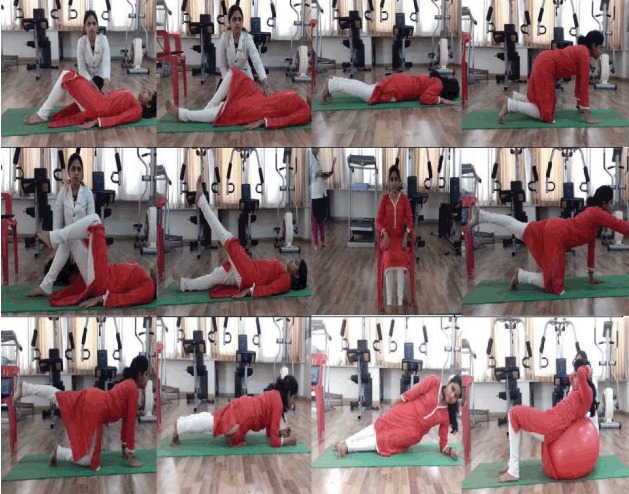
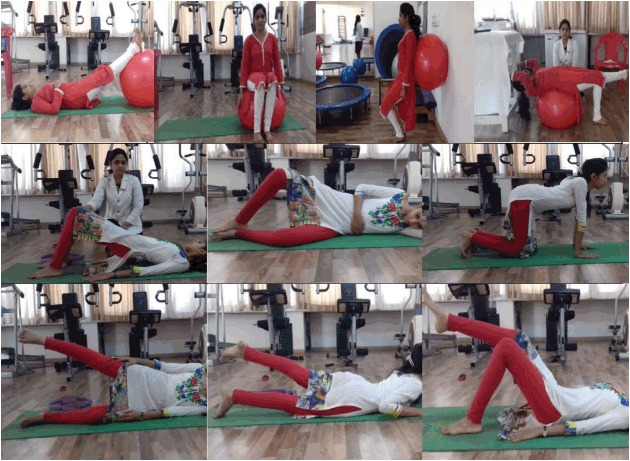
The aim of the present study was to compare three different forms of exercises namely lumbar stabilization, dynamic strengthening, and Pilates on chronic low back pain (LBP) in terms of pain, range of motion, core strength and function. In this study, 44 subjects suffering from non-specific LBP for more than 3 months were randomly allocated into the lumbar stabilization group, the dynamic strengthening group, and the Pilates group. Ten sessions of exercises for 3 weeks were prescribed along with interferential current and hot moist pack. Pain was assessed by visual analog scale, functional affection by modified Oswestry Disability Questionnaire, range of motion by assessing lumbar flexion and extension by modified Schober test and core strength was assessed by pressure biofeedback on day 1 and day 10 of the treatment. There was reduction of pain, improvement in range of motion, functional ability and core strength in all the 3 exercise groups. The improvement was significantly greater in the lumbar stabilization group for all the outcome measures, when compared the posttreatment after 10th session. Pairwise comparison showed that there was greater reduction of disability in the Pilates group than the dynamic strengthening group. It was concluded that the lumbar stabilization is more superior compared to the dynamic strengthening and Pilates in chronic nonspecific LBP. However, long-term benefits need to be assessed and compared with prospective follow-up studies.
本研究的目的是比较三种不同形式的运动,即腰椎稳定训练、动态强化训练和普拉提训练,在慢性下腰痛(LBP)患者的疼痛、活动范围、核心力量和功能方面的效果。在本研究中,44名患有非特异性下腰痛超过3个月的受试者被随机分为腰椎稳定训练组、动态强化训练组和普拉提训练组。除了干扰电流和热湿敷外,还规定了为期3周的10节训练课程。在治疗的第1天和第10天,通过视觉模拟量表评估疼痛,通过改良的奥斯威斯利残疾问卷评估功能影响,通过改良的肖伯试验评估腰椎屈伸活动范围,并通过压力生物反馈评估核心力量。所有3个运动组的疼痛均减轻,活动范围、功能能力和核心力量均有所改善。与第10节训练后的治疗后情况相比,腰椎稳定训练组在所有结果指标上的改善均明显更大。两两比较显示,普拉提训练组的残疾程度降低幅度大于动态强化训练组。得出的结论是,在慢性非特异性下腰痛方面,腰椎稳定训练比动态强化训练和普拉提训练更具优势。然而,需要通过前瞻性随访研究评估并比较其长期益处。