National Health and Environmental Effects Research Laboratory, Office of Research and Development, US Environmental Protection Agency, 109 TW Alexander MC 58C, Research Triangle Park, North Carolina, USA.
Division of Epidemiology, School of Public Health, University of California, Berkeley, Berkley, California, USA.
J Expo Sci Environ Epidemiol. 2018 Mar;28(2):93-100. doi: 10.1038/jes.2017.23. Epub 2017 Nov 8.
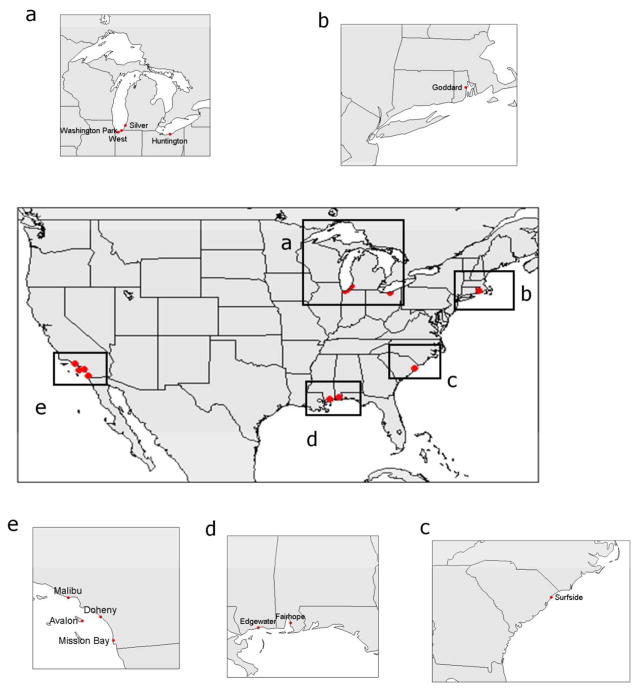
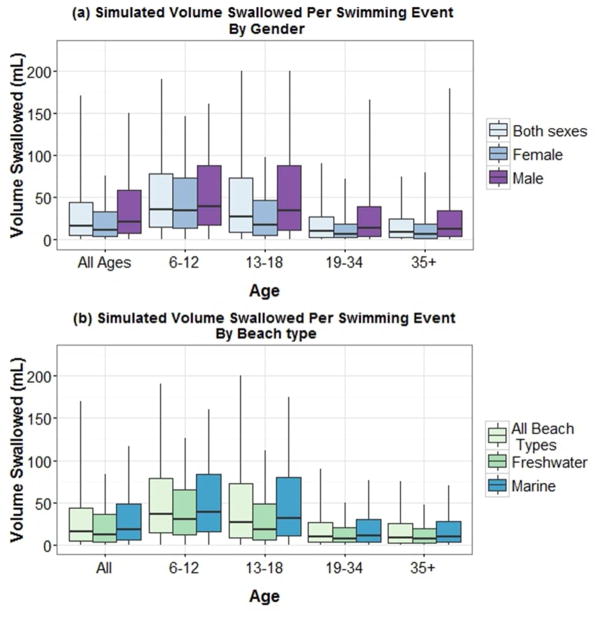
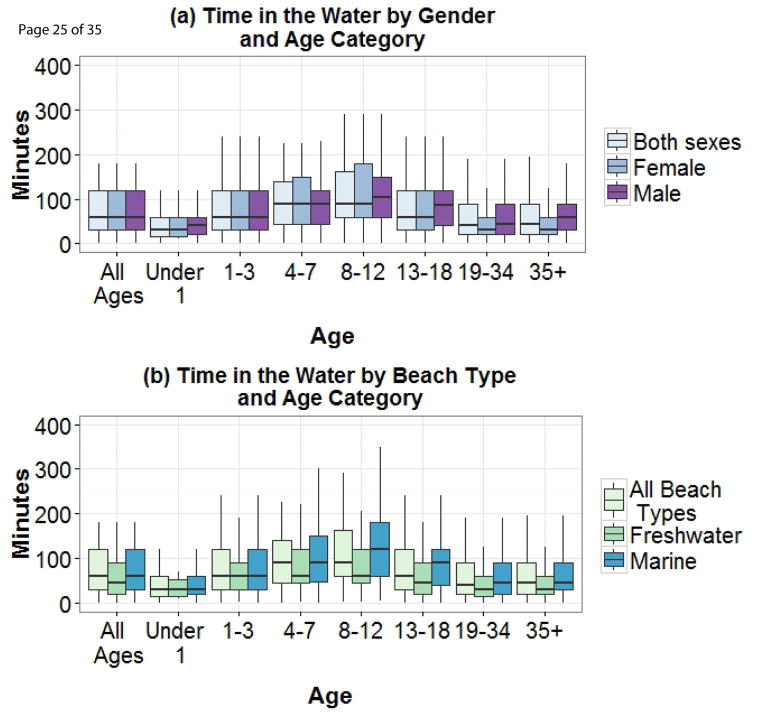
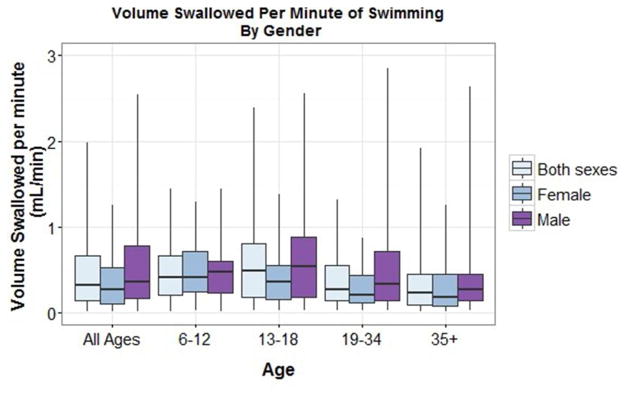
Swimming and recreating in lakes, oceans, and rivers is common, yet the literature suggests children may be at greater risk of illness following such exposures. These effects might be due to differences in immunity or differing behavioral factors such as poorer hygiene, longer exposures to, and greater ingestion of potentially contaminated water and sand. We pooled data from 12 prospective cohorts (n=68,685) to examine exposures to potentially contaminated media such as beach water and sand among children compared with adults, and conducted a simulation using self-reported time spent in the water and volume of water swallowed per minute by age to estimate the total volume of water swallowed per swimming event by age category. Children aged 4-7 and 8-12 years had the highest exposures to water, sand, and algae compared with other age groups. Based on our simulation, we found that children (6-12 years) swallow a median of 36 ml (90th percentile=150 ml), whereas adults aged ≥35 years swallow 9 ml (90th percentile=64 ml) per swimming event, with male children swallowing a greater amount of water compared with females. These estimates may help to reduce uncertainty surrounding routes and durations of recreational exposures and can support the development of chemical and microbial risk assessments.
游泳和在湖泊、海洋和河流中消遣是很常见的,但文献表明,儿童在接触这些水后可能面临更大的患病风险。这些影响可能是由于免疫差异或行为因素的不同,例如较差的卫生习惯、更长时间的暴露、以及更多地摄入潜在受污染的水和沙子。我们汇总了来自 12 项前瞻性队列研究(n=68685)的数据,以比较儿童与成年人接触潜在污染介质(如海滩水和沙子)的情况,并根据自我报告的在水中停留时间和每分钟吞咽的水量,通过年龄进行模拟,以估计每个游泳事件中每个年龄组吞咽的总水量。4-7 岁和 8-12 岁的儿童与其他年龄组相比,接触水、沙子和藻类的暴露量最高。根据我们的模拟结果,我们发现儿童(6-12 岁)每次游泳吞咽的中位数为 36 毫升(第 90 百分位数为 150 毫升),而≥35 岁的成年人每次游泳吞咽 9 毫升(第 90 百分位数为 64 毫升),与女性相比,男童吞咽的水量更多。这些估计值有助于减少围绕娱乐性接触途径和持续时间的不确定性,并可以支持化学和微生物风险评估的制定。