Laboratorio de Biología del Desarrollo, UD de Bioquímica y Biología Molecular and Centro de Investigaciones Biomédicas de Canarias (CIBICAN), Universidad de La Laguna, La Laguna, Av. Astrofísico Sánchez s/n, 38206 La Laguna, Tenerife, Spain.
CNR-National Research Council, Institute of Endocrinology and Experimental Oncology (IEOS), Via Sergio Pansini, 5-80131 Naples, Italy.
Int J Mol Sci. 2017 Nov 8;18(11):2369. doi: 10.3390/ijms18112369.
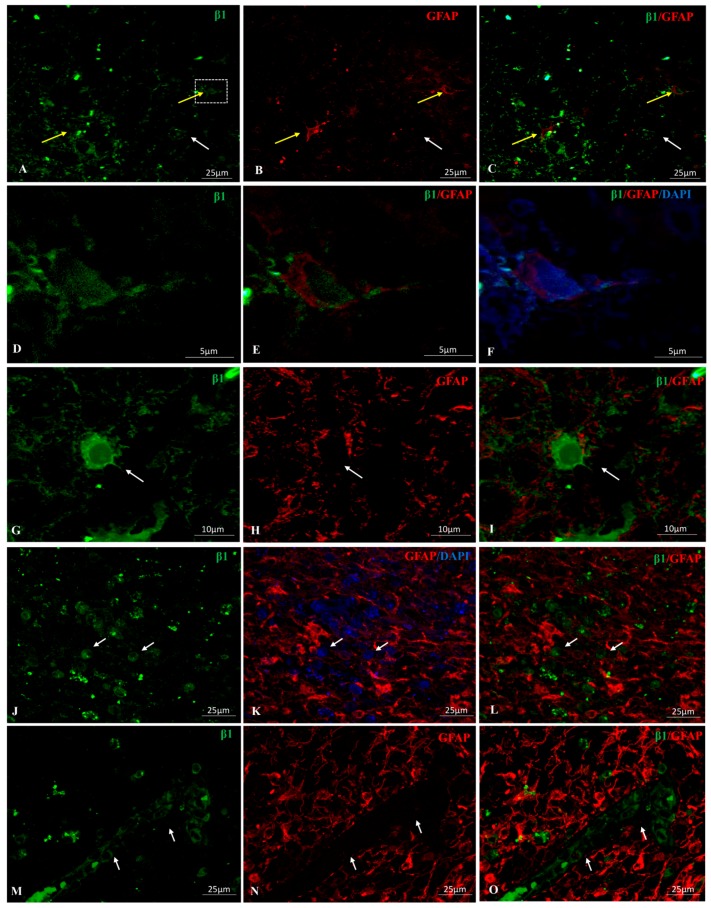
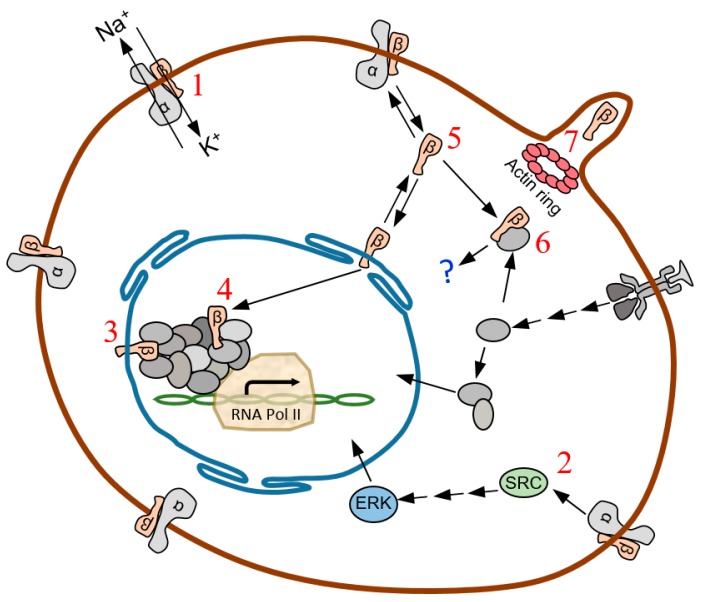
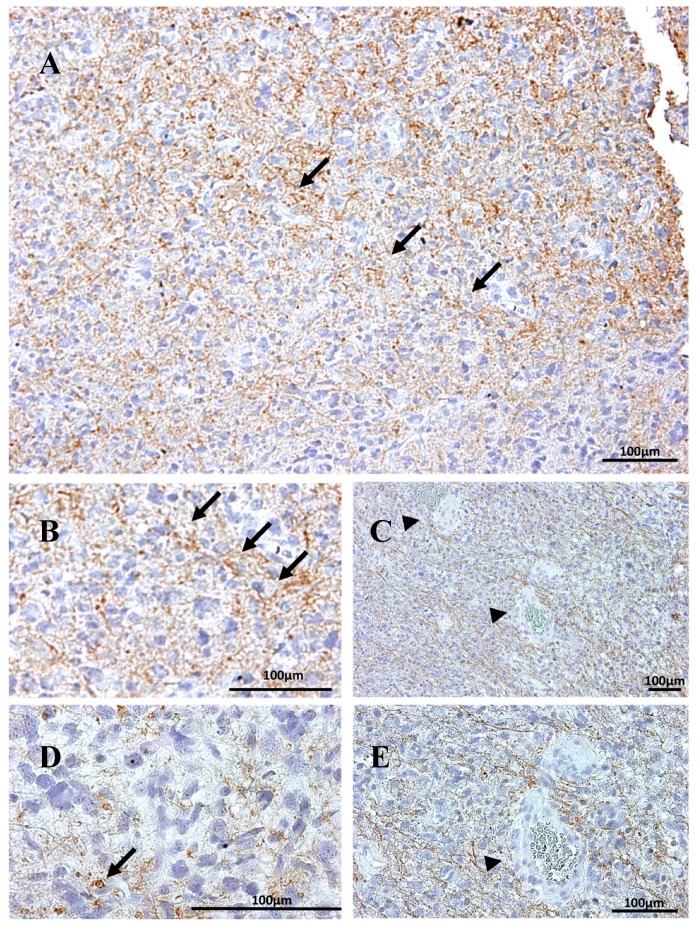
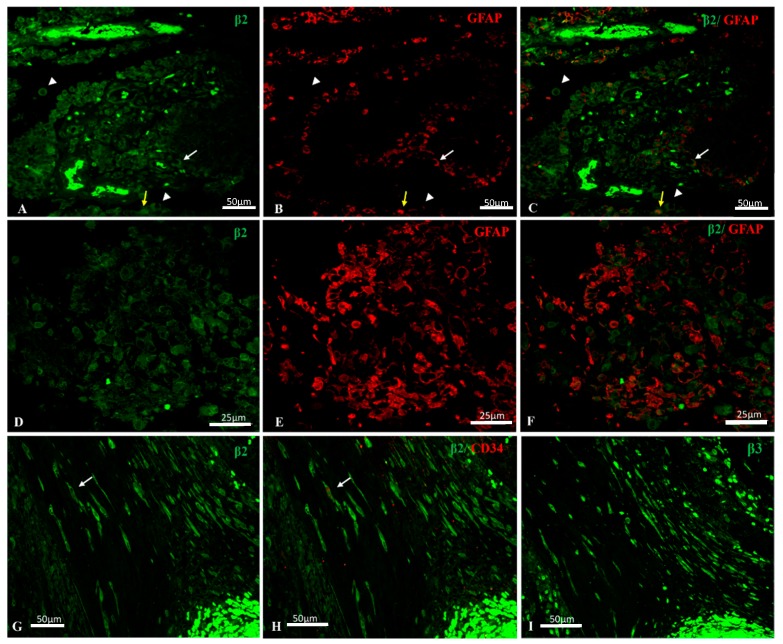
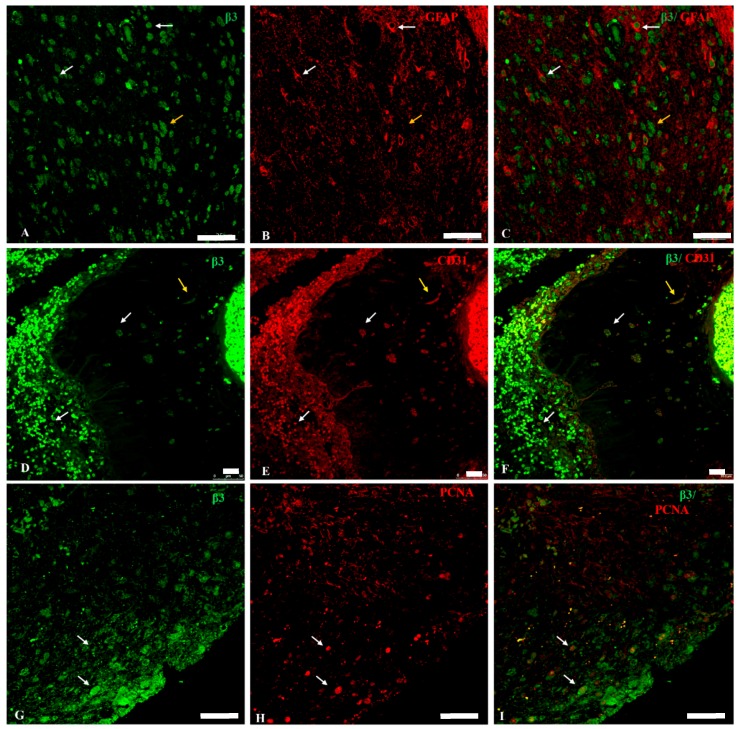
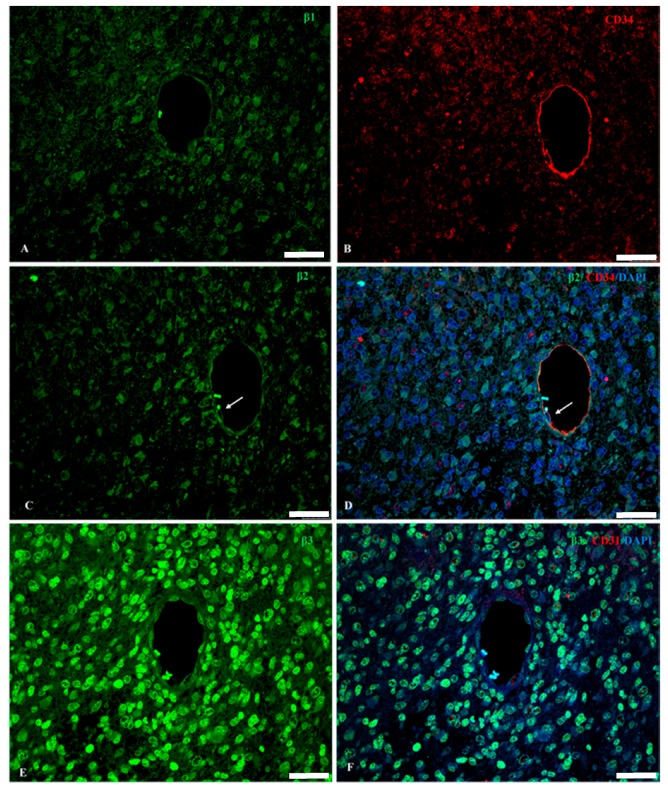
Glioblastoma multiforme (GBM) is the most common form of malignant glioma. Recent studies point out that gliomas exploit ion channels and transporters, including Na, K-ATPase, to sustain their singular growth and invasion as they invade the brain parenchyma. Moreover, the different isoforms of the β-subunit of Na, K-ATPase have been implicated in regulating cellular dynamics, particularly during cancer progression. The aim of this study was to determine the Na, K-ATPase β subunit isoform subcellular expression patterns in all cell types responsible for microenvironment heterogeneity of GBM using immunohistochemical analysis. All three isoforms, β1, β2/AMOG (Adhesion Molecule On Glia) and β3, were found to be expressed in GBM samples. Generally, β1 isoform was not expressed by astrocytes, in both primary and secondary GBM, although other cell types (endothelial cells, pericytes, telocytes, macrophages) did express this isoform. β2/AMOG and β3 positive expression was observed in the cytoplasm, membrane and nuclear envelope of astrocytes and GFAP (Glial Fibrillary Acidic Protein) negative cells. Interestingly, differences in isoforms expression have been observed between primary and secondary GBM: in secondary GBM, β2 isoform expression in astrocytes was lower than that observed in primary GBM, while the expression of the β3 subunit was more intense. These changes in β subunit isoforms expression in GBM could be related to a different ionic handling, to a different relationship between astrocyte and neuron (β2/AMOG) and to changes in the moonlighting roles of Na, K-ATPase β subunits as adaptor proteins and transcription factors.
多形性胶质母细胞瘤(GBM)是最常见的恶性神经胶质瘤。最近的研究指出,神经胶质瘤利用离子通道和转运体,包括 Na+,K+-ATP 酶,以维持其在脑实质中的侵袭性生长和侵袭。此外,Na+,K+-ATP 酶的不同β亚基同工型已被牵连到调节细胞动力学,特别是在癌症进展期间。本研究旨在使用免疫组织化学分析确定负责 GBM 微环境异质性的所有细胞类型中 Na+,K+-ATP 酶β亚基同工型的亚细胞表达模式。在 GBM 样本中发现了所有三种同工型β1、β2/AMOG(粘附分子在神经胶质上)和β3。通常,β1 同工型在原发性和继发性 GBM 中均不由星形胶质细胞表达,尽管其他细胞类型(内皮细胞、周细胞、间质细胞、巨噬细胞)表达该同工型。β2/AMOG 和β3 的阳性表达观察到在星形胶质细胞和 GFAP(神经胶质酸性蛋白)阴性细胞的细胞质、膜和核包膜中。有趣的是,在原发性和继发性 GBM 之间观察到同工型表达的差异:在继发性 GBM 中,星形胶质细胞中β2 同工型的表达低于原发性 GBM 中观察到的表达,而β3 亚基的表达更为强烈。GBM 中β亚基同工型表达的这些变化可能与不同的离子处理、星形胶质细胞和神经元之间不同的关系(β2/AMOG)以及 Na+,K+-ATP 酶β亚基作为衔接蛋白和转录因子的月光下作用的变化有关。