Witkowski A M, Łudzik J, Arginelli F, Bassoli S, Benati E, Casari A, De Carvalho N, De Pace B, Farnetani F, Losi A, Manfredini M, Reggiani C, Malvehy J, Pellacani G
Department of Dermatology, University of Modena and Reggio Emilia, Modena, Italy.
Department of Biostatistics and Telemedicine, Jagiellonian University Medical College, Krakow, Poland.
PLoS One. 2017 Nov 9;12(11):e0187748. doi: 10.1371/journal.pone.0187748. eCollection 2017.
Reflectance confocal microscopy (RCM) is an imaging device that permits non-invasive visualization of cellular morphology and has been shown to improve diagnostic accuracy of dermoscopically equivocal cutaneous lesions. The application of double reader concordance evaluation of dermoscopy-RCM image sets in retrospective settings and its potential application to telemedicine evaluation has not been tested in a large study population.
To improve diagnostic sensitivity of RCM image diagnosis using a double reader concordance evaluation approach; to reduce mismanagement of equivocal cutaneous lesions in retrospective consultation and telemedicine settings.
1000 combined dermoscopy-RCM image sets were evaluated in blind by 10 readers with advanced training and internship in dermoscopy and RCM evaluation. We compared sensitivity and specificity of single reader evaluation versus double reader concordance evaluation as well as the effect of diagnostic confidence on lesion management in a retrospective setting.
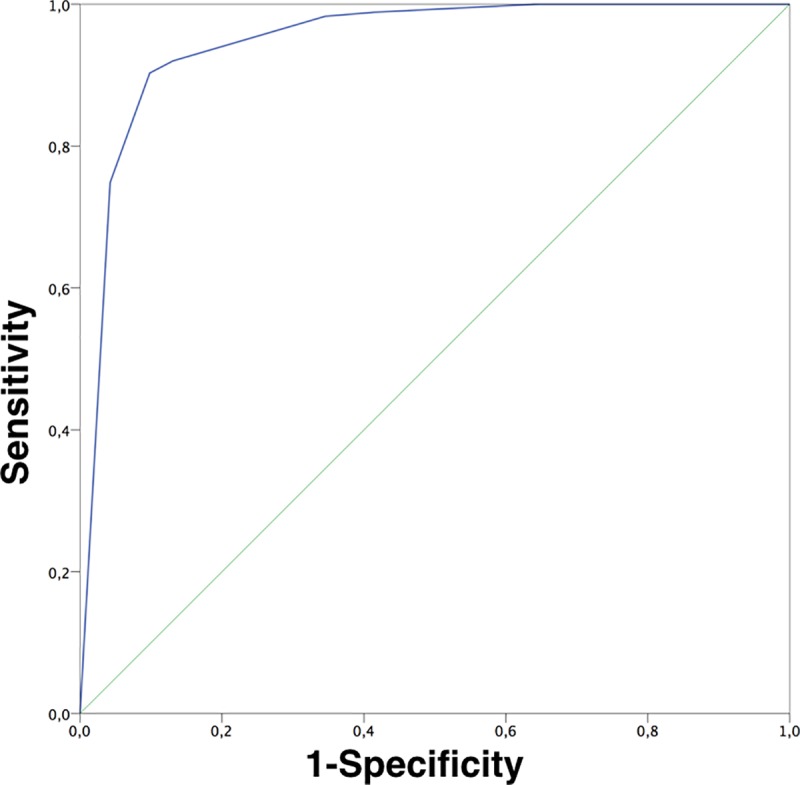
Single reader evaluation resulted in an overall sensitivity of 95.2% and specificity of 76.3%, with misdiagnosis of 8 melanomas, 4 basal cell carcinomas and 2 squamous cell carcinomas. Combined double reader evaluation resulted in an overall sensitivity of 98.3% and specificity of 65.5%, with misdiagnosis of 1 in-situ melanoma and 2 basal cell carcinomas.
Evaluation of dermoscopy-RCM image sets of cutaneous lesions by single reader evaluation in retrospective settings is limited by sensitivity levels that may result in potential mismanagement of malignant lesions. Double reader blind concordance evaluation may improve the sensitivity of diagnosis and management safety. The use of a second check can be implemented in telemedicine settings where expert consultation and second opinions may be required.
反射式共聚焦显微镜(RCM)是一种能够对细胞形态进行无创可视化的成像设备,已被证明可提高皮肤镜检查难以明确诊断的皮肤病变的诊断准确性。在回顾性研究中,对皮肤镜-RCM图像集进行双读一致性评估的应用及其在远程医疗评估中的潜在应用尚未在大型研究人群中进行测试。
采用双读一致性评估方法提高RCM图像诊断的诊断敏感性;减少回顾性会诊和远程医疗环境中难以明确诊断的皮肤病变的管理失误。
10名经过皮肤镜和RCM评估高级培训及实习的读者对1000套皮肤镜-RCM联合图像集进行了盲法评估。我们比较了单读评估与双读一致性评估的敏感性和特异性,以及回顾性研究中诊断信心对病变管理的影响。
单读评估的总体敏感性为95.2%,特异性为76.3%,误诊8例黑色素瘤、4例基底细胞癌和2例鳞状细胞癌。双读联合评估的总体敏感性为98.3%,特异性为65.5%,误诊1例原位黑色素瘤和2例基底细胞癌。
在回顾性研究中,通过单读评估对皮肤病变的皮肤镜-RCM图像集进行评估,其敏感性水平有限,可能导致恶性病变的潜在管理失误。双读盲法一致性评估可能提高诊断敏感性和管理安全性。在可能需要专家会诊和二次意见的远程医疗环境中,可以采用二次检查。