Beyerlein Kenneth R, Dierksmeyer Dennis, Mariani Valerio, Kuhn Manuela, Sarrou Iosifina, Ottaviano Angelica, Awel Salah, Knoska Juraj, Fuglerud Silje, Jönsson Olof, Stern Stephan, Wiedorn Max O, Yefanov Oleksandr, Adriano Luigi, Bean Richard, Burkhardt Anja, Fischer Pontus, Heymann Michael, Horke Daniel A, Jungnickel Katharina E J, Kovaleva Elena, Lorbeer Olga, Metz Markus, Meyer Jan, Morgan Andrew, Pande Kanupriya, Panneerselvam Saravanan, Seuring Carolin, Tolstikova Aleksandra, Lieske Julia, Aplin Steve, Roessle Manfred, White Thomas A, Chapman Henry N, Meents Alke, Oberthuer Dominik
Center for Free-Electron Laser Science, Deutsches Elektronen-Synchrotron DESY, Notkestrasse 85, 22607 Hamburg, Germany.
Photon Science, Deutsches Elektronen-Synchrotron DESY, Hamburg, Germany.
IUCrJ. 2017 Oct 9;4(Pt 6):769-777. doi: 10.1107/S2052252517013124. eCollection 2017 Nov 1.
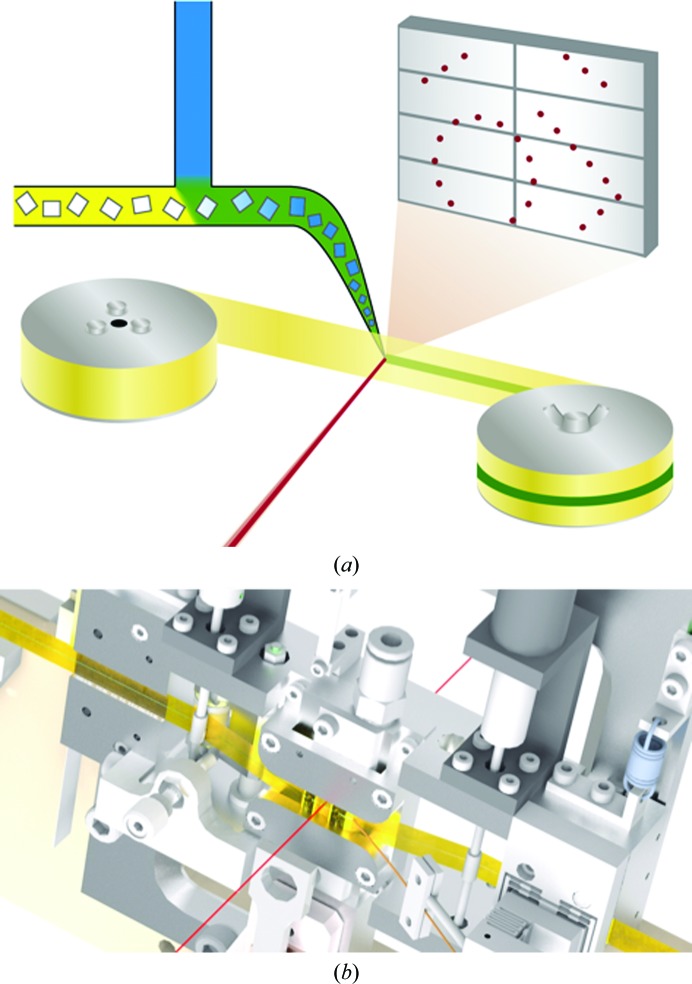
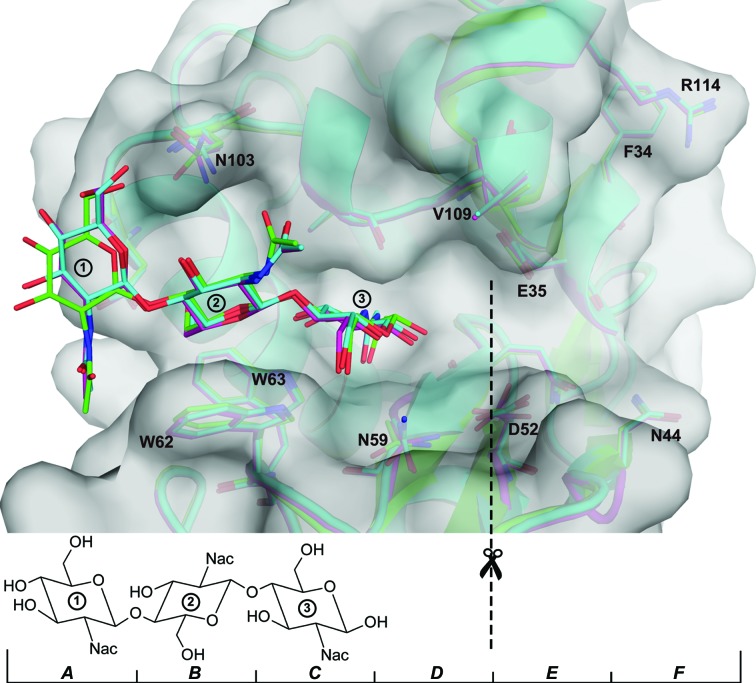
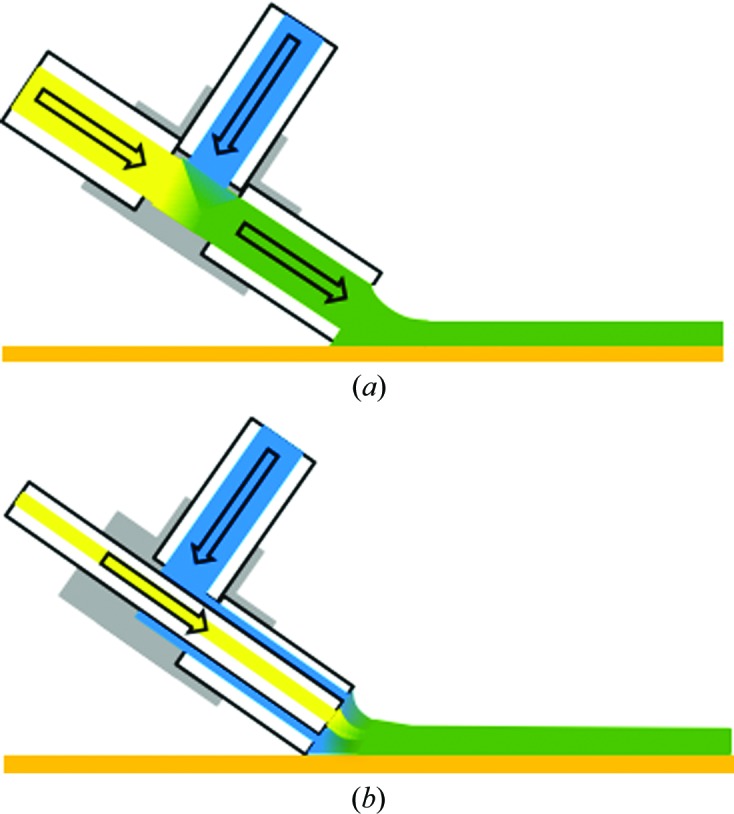
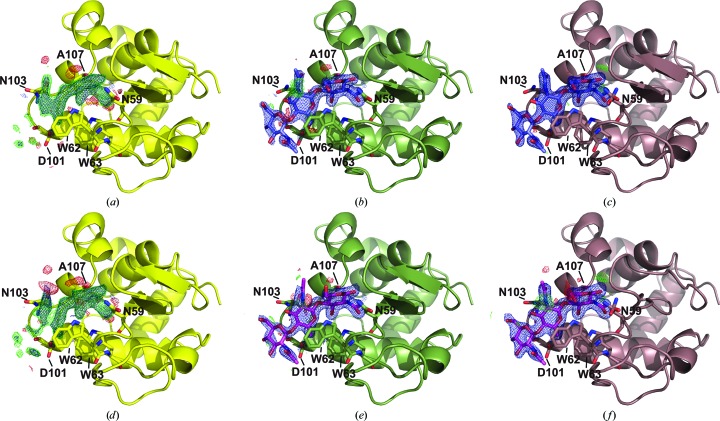
Unravelling the interaction of biological macromolecules with ligands and substrates at high spatial and temporal resolution remains a major challenge in structural biology. The development of serial crystallography methods at X-ray free-electron lasers and subsequently at synchrotron light sources allows new approaches to tackle this challenge. Here, a new polyimide tape drive designed for mix-and-diffuse serial crystallography experiments is reported. The structure of lysozyme bound by the competitive inhibitor chitotriose was determined using this device in combination with microfluidic mixers. The electron densities obtained from mixing times of 2 and 50 s show clear binding of chitotriose to the enzyme at a high level of detail. The success of this approach shows the potential for high-throughput drug screening and even structural enzymology on short timescales at bright synchrotron light sources.
在高空间和时间分辨率下解析生物大分子与配体及底物之间的相互作用,仍然是结构生物学中的一项重大挑战。X射线自由电子激光器以及随后同步加速器光源处串行晶体学方法的发展,为应对这一挑战提供了新途径。本文报道了一种专为混合扩散串行晶体学实验设计的新型聚酰亚胺带驱动装置。利用该装置结合微流体混合器,确定了与竞争性抑制剂壳三糖结合的溶菌酶的结构。从2秒和50秒混合时间获得的电子密度清晰地显示了壳三糖与该酶的结合细节。该方法的成功展示了在明亮的同步加速器光源下进行高通量药物筛选乃至短时间尺度上的结构酶学研究的潜力。