Ferreira Nelson, Pereira-Henriques Alda, Almeida Maria Rosário
IBMC-Instituto de Biologia Molecular e Celular, Rua do Campo Alegre 823, 4150-180 Porto, Portugal.
I3S-Instituto de Inovação e Investigação em Saúde, Universidade do Porto, Porto, Portugal.
Biochem Biophys Rep. 2015 Aug 1;3:123-133. doi: 10.1016/j.bbrep.2015.07.019. eCollection 2015 Sep.
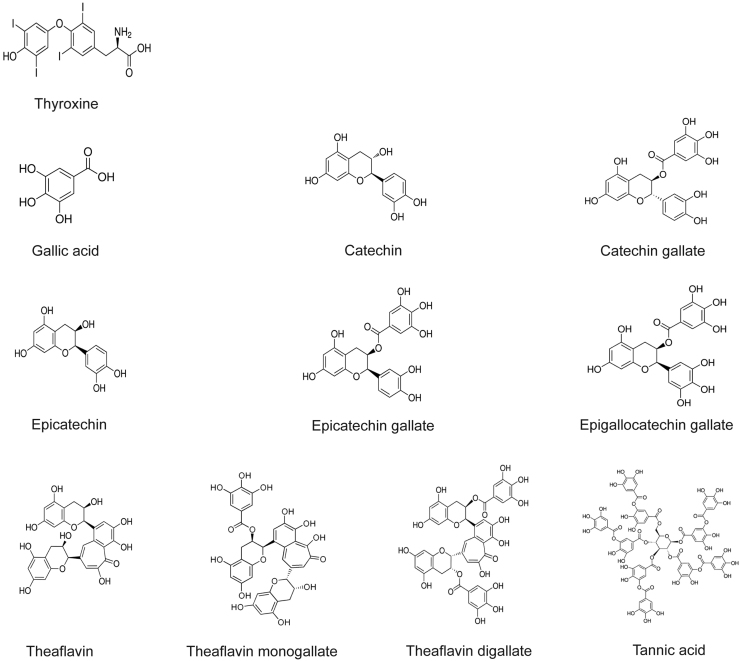
Many polyphenols have been proposed as broad-spectrum inhibitors of amyloid formation. To investigate structure-activity relationships relevant for the interaction of flavonoids with transthyretin (TTR), the protein associated with familial amyloid polyneuropathy (FAP), we compared the effects of major tea catechins and their larger polymers theaflavins, side-by-side, on TTR amyloid formation process.
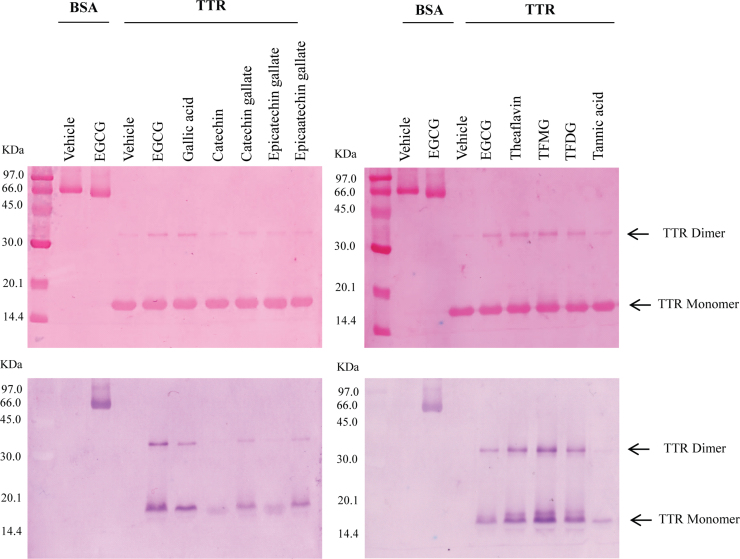
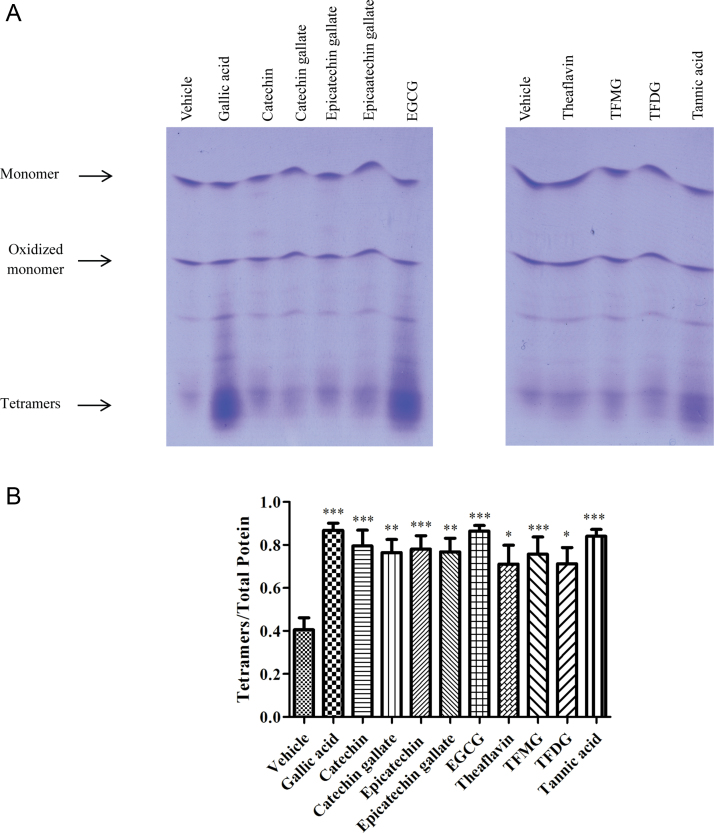
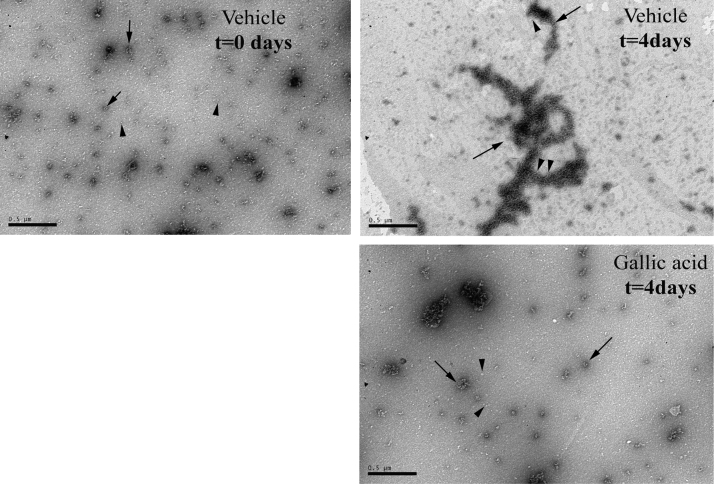
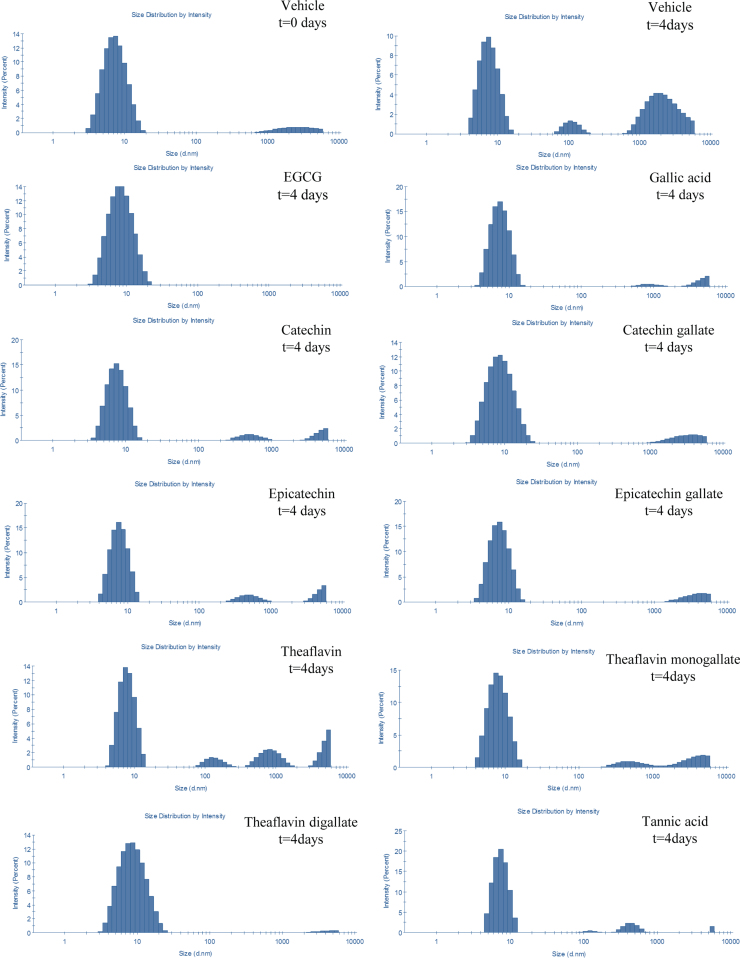
Interaction of flavonoids with TTR and effect on TTR stability were assessed through binding assays and isoelectric focusing in polyacrylamide gel. TTR aggregation was studied, in vitro, by dynamic light scattering (DLS), transmission electron microscopy (TEM) and in cell culture, through cytotoxicity assays.
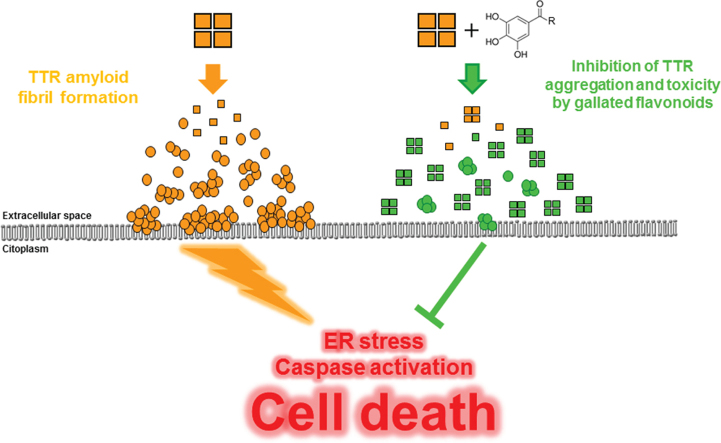
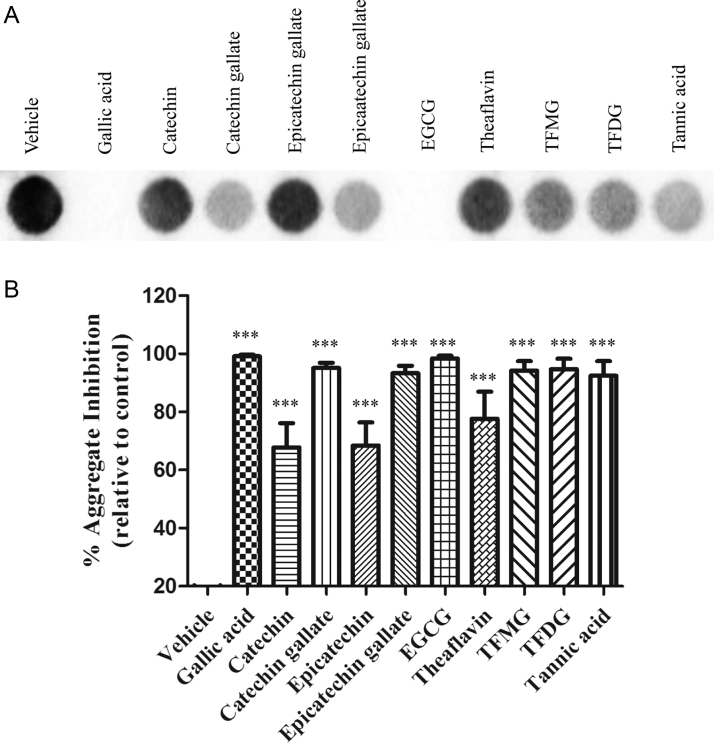
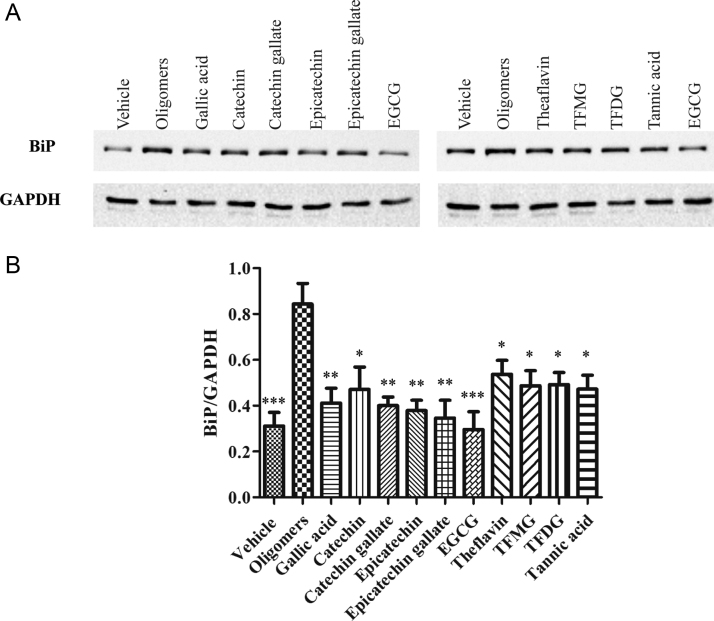
Tested flavonoids bound to TTR and stabilized the TTR tetramer, with different potencies. The flavonoids also inhibited in vitro formation of TTR small oligomeric species and in cell culture inhibited pathways involving caspase-3 activation and ER stress that are induced by TTR oligomers. In all assays performed the galloyl esters presented higher potency to inhibit aggregation than the non-gallated flavonoids tested.
Our results highlight the presence of gallate ester moiety as key structural feature of flavonoids in chemical chaperoning of TTR aggregation. Upon binding to the native tetramer, gallated flavonoids redirect the TTR amyloidogenic pathway into unstructured nontoxic aggregation assemblies more efficiently than their non-gallated forms.
Our findings suggest that galloyl moieties greatly enhance flavonoid anti-amyloid chaperone activity and this should be taken into consideration in therapeutic candidate drug discovery.
许多多酚类物质被认为是淀粉样蛋白形成的广谱抑制剂。为了研究黄酮类化合物与转甲状腺素蛋白(TTR)(与家族性淀粉样多神经病(FAP)相关的蛋白质)相互作用的构效关系,我们比较了主要茶儿茶素及其较大聚合物茶黄素对TTR淀粉样蛋白形成过程的影响。
通过结合试验和聚丙烯酰胺凝胶等电聚焦评估黄酮类化合物与TTR的相互作用及其对TTR稳定性的影响。通过动态光散射(DLS)、透射电子显微镜(TEM)在体外研究TTR聚集,并通过细胞毒性试验在细胞培养中进行研究。
测试的黄酮类化合物与TTR结合并稳定TTR四聚体,效力不同。黄酮类化合物还抑制了TTR小寡聚体在体外的形成,并且在细胞培养中抑制了由TTR寡聚体诱导的涉及半胱天冬酶-3激活和内质网应激的途径。在所有进行的试验中,没食子酰酯比测试的非没食子酰化黄酮类化合物表现出更高的抑制聚集的效力。
我们的结果突出了没食子酸酯部分作为黄酮类化合物在TTR聚集化学伴侣作用中的关键结构特征。与天然四聚体结合后,没食子酰化黄酮类化合物比其非没食子酰化形式更有效地将TTR淀粉样蛋白生成途径重定向为无结构的无毒聚集组装体。
我们的研究结果表明,没食子酰部分极大地增强了黄酮类化合物的抗淀粉样蛋白伴侣活性,这在治疗候选药物发现中应予以考虑。