Khambhati Khushal, Patel Jaykumar, Saxena Vijaylaxmi, A Parvathy, Jain Neha
Department of Bioscience and Bioengineering, Indian Institute of Technology Jodhpur NH 65, Nagaur Road, Karwar, Rajasthan 342037, India.
Pathogens. 2021 Apr 19;10(4):490. doi: 10.3390/pathogens10040490.
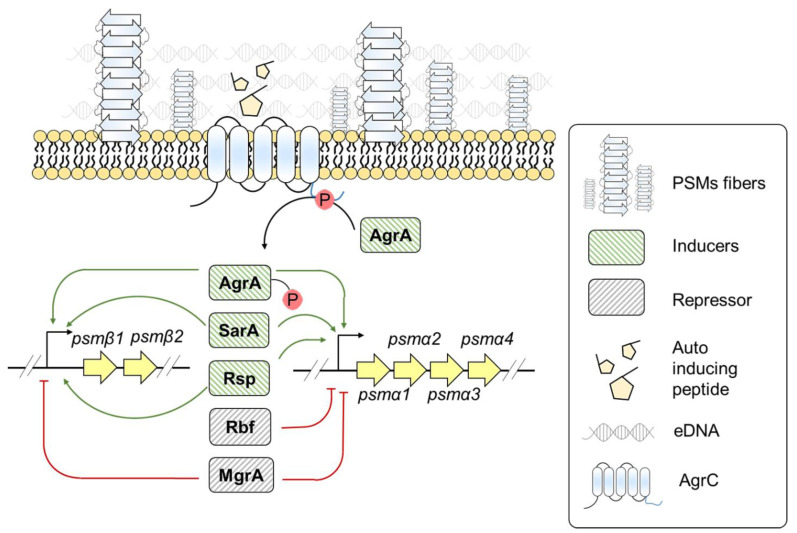
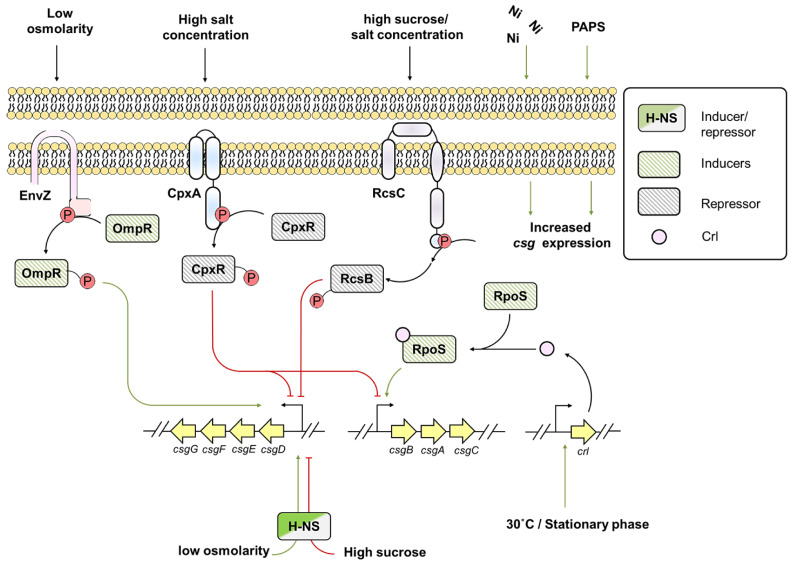
Biofilms are bacterial communities encased in a rigid yet dynamic extracellular matrix. The sociobiology of bacterial communities within a biofilm is astonishing, with environmental factors playing a crucial role in determining the switch from planktonic to a sessile form of life. The mechanism of biofilm biogenesis is an intriguingly complex phenomenon governed by the tight regulation of expression of various biofilm-matrix components. One of the major constituents of the biofilm matrix is proteinaceous polymers called amyloids. Since the discovery, the significance of biofilm-associated amyloids in adhesion, aggregation, protection, and infection development has been much appreciated. The amyloid expression and assembly is regulated spatio-temporarily within the bacterial cells to perform a diverse function. This review provides a comprehensive account of the genetic regulation associated with the expression of amyloids in bacteria. The stringent control ensures optimal utilization of amyloid scaffold during biofilm biogenesis. We conclude the review by summarizing environmental factors influencing the expression and regulation of amyloids.
生物膜是包裹在坚硬但动态的细胞外基质中的细菌群落。生物膜内细菌群落的社会生物学令人惊讶,环境因素在决定从浮游生活形式转变为固着生活形式方面起着关键作用。生物膜生物发生的机制是一个极其复杂的现象,受各种生物膜基质成分表达的严格调控。生物膜基质的主要成分之一是称为淀粉样蛋白的蛋白质聚合物。自发现以来,生物膜相关淀粉样蛋白在黏附、聚集、保护和感染发展中的重要性已得到广泛认可。淀粉样蛋白的表达和组装在细菌细胞内受到时空调节,以执行多种功能。本综述全面阐述了与细菌中淀粉样蛋白表达相关的遗传调控。严格的控制确保了生物膜生物发生过程中淀粉样蛋白支架的最佳利用。我们通过总结影响淀粉样蛋白表达和调控的环境因素来结束本综述。