Division of Rheumatology, Immunology and Allergy, Department of Medicine, Georgetown University, Washington, District of Columbia, United States of America.
Sci Rep. 2017 Nov 10;7(1):15338. doi: 10.1038/s41598-017-15383-9.
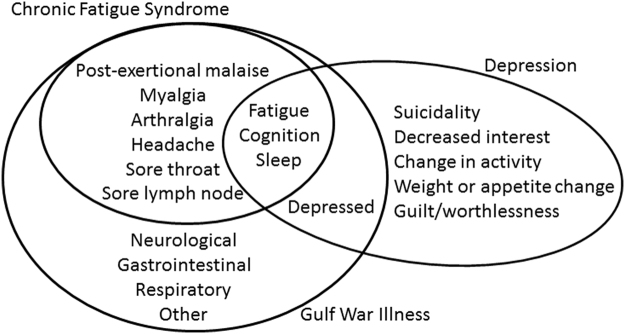
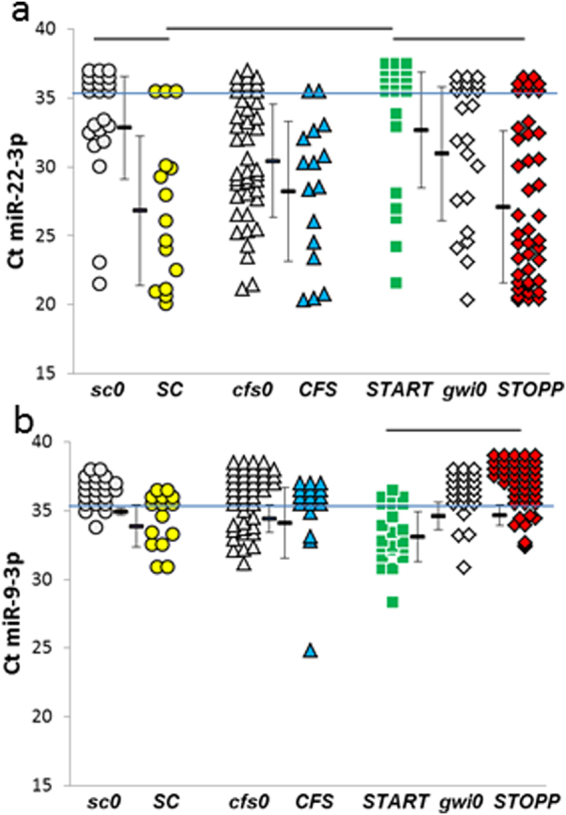
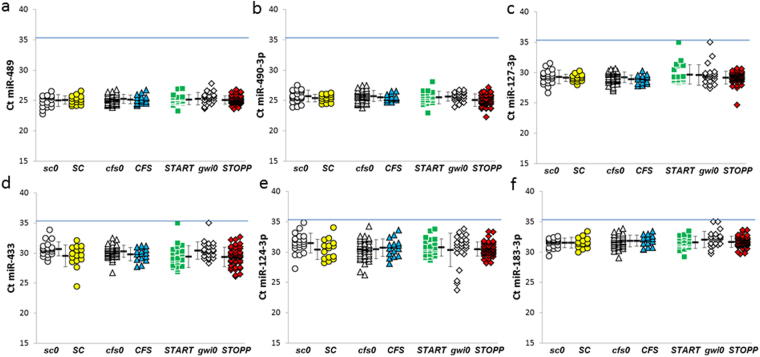
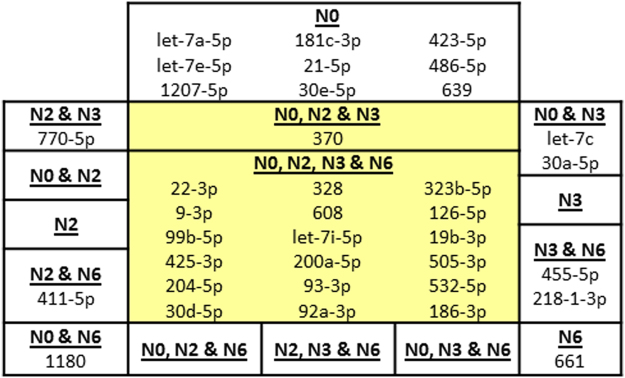
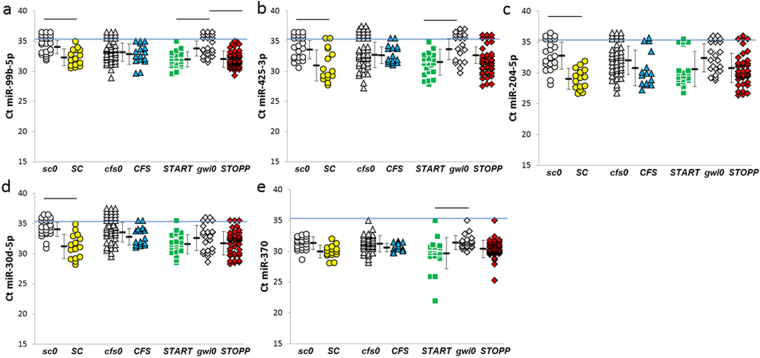
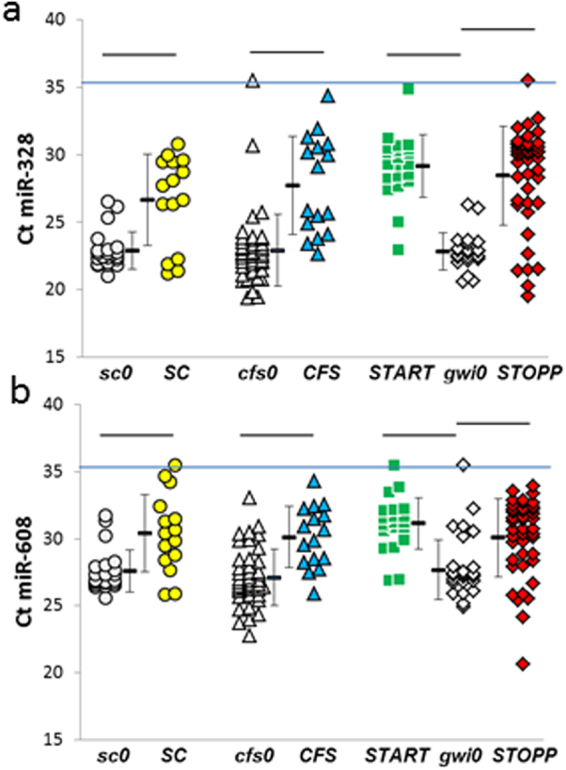
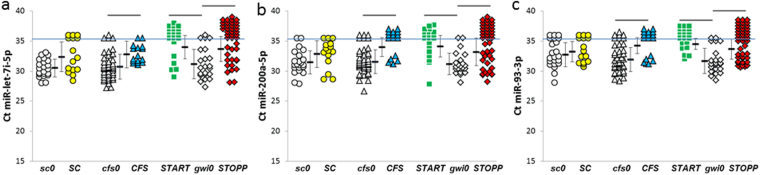
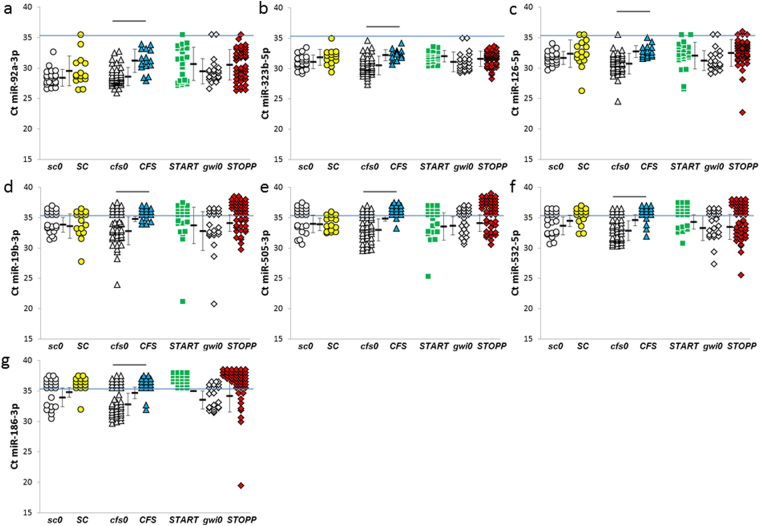
Gulf War Illness (GWI) and Chronic Fatigue Syndrome (CFS) have similar profiles of pain, fatigue, cognitive dysfunction and exertional exhaustion. Post-exertional malaise suggests exercise alters central nervous system functions. Lumbar punctures were performed in GWI, CFS and control subjects after (i) overnight rest (nonexercise) or (ii) submaximal bicycle exercise. Exercise induced postural tachycardia in one third of GWI subjects (Stress Test Activated Reversible Tachycardia, START). The remainder were Stress Test Originated Phantom Perception (STOPP) subjects. MicroRNAs (miRNA) in cerebrospinal fluid were amplified by quantitative PCR. Levels were equivalent between nonexercise GWI (n = 22), CFS (n = 43) and control (n = 22) groups. After exercise, START (n = 22) had significantly lower miR-22-3p than control (n = 15) and STOPP (n = 42), but higher miR-9-3p than STOPP. All post-exercise groups had significantly reduced miR-328 and miR-608 compared to nonexercise groups; these may be markers of exercise effects on the brain. Six miRNAs were significantly elevated and 12 diminished in post-exercise START, STOPP and control compared to nonexercise groups. CFS had 12 diminished miRNAs after exercise. Despite symptom overlap of CFS, GWI and other illnesses in their differential diagnosis, exercise-induced miRNA patterns in cerebrospinal fluid indicated distinct mechanisms for post-exertional malaise in CFS and START and STOPP phenotypes of GWI.
海湾战争病(GWI)和慢性疲劳综合征(CFS)在疼痛、疲劳、认知功能障碍和运动性疲劳方面具有相似的特征。运动后不适表明运动改变了中枢神经系统的功能。在 GWI、CFS 和对照受试者中,在(i)过夜休息(非运动)或(ii)次最大自行车运动后进行腰椎穿刺。三分之一的 GWI 受试者(应激试验激活可逆性心动过速,START)出现运动诱导的直立性心动过速。其余的是应激试验起源的幻觉(STOPP)受试者。通过定量 PCR 扩增脑脊液中的 microRNAs (miRNA)。非运动性 GWI(n=22)、CFS(n=43)和对照组(n=22)之间的水平相当。运动后,START(n=22)的 miR-22-3p 水平明显低于对照组(n=15)和 STOPP(n=42),但 miR-9-3p 水平高于 STOPP。与非运动组相比,所有运动后组的 miR-328 和 miR-608 水平均显著降低;这些可能是运动对大脑影响的标志物。与非运动组相比,运动后 START、STOPP 和对照组中有 6 个 miRNA 显著升高,12 个 miRNA 降低。CFS 在运动后有 12 个 miRNA 降低。尽管 CFS、GWI 和其他疾病在其鉴别诊断中存在症状重叠,但脑脊液中运动诱导的 miRNA 模式表明,CFS 和 GWI 的 START 和 STOPP 表型的运动后不适具有不同的机制。