Lawan Ahmed, Bennett Anton M
Department of Pharmacology, Yale University, New Haven, CT 06520, USA.
Department of Pharmacology, Yale University, New Haven, CT 06520, USA; Program in Integrative Cell Signaling and Neurobiology of Metabolism, Yale University, New Haven, CT 06520, USA.
Trends Endocrinol Metab. 2017 Dec;28(12):868-878. doi: 10.1016/j.tem.2017.10.007. Epub 2017 Nov 8.
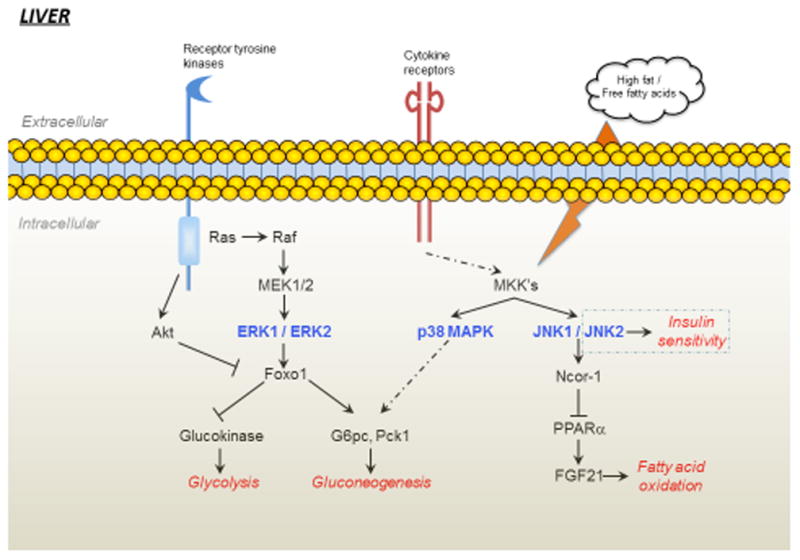
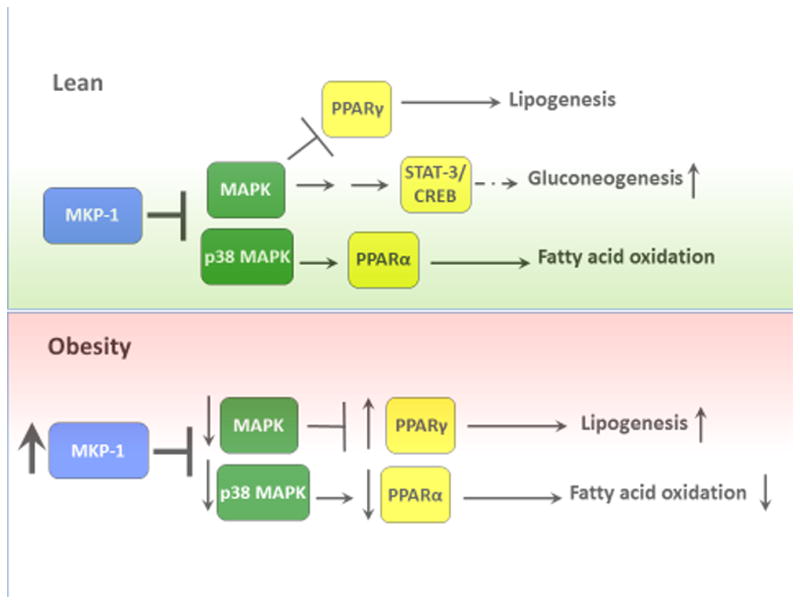
The mitogen-activated protein kinases (MAPKs) participate in a multitude of processes that control hepatic metabolism. The liver regulates glucose and lipid metabolism, and under pathophysiological conditions such as obesity, type 2 diabetes mellitus (T2DM), and non-alcoholic fatty liver disease (NAFLD) these processes become dysfunctional. Stress responses activate the hepatic MAPKs, and this is thought to impair insulin action and lipid metabolism. The MAPKs also activate the MAPK phosphatases (MKPs) which oppose their actions. How the MAPK/MKP balance is controlled in liver metabolism and how perturbations in these activities contribute to metabolic disease remains unclear. Discussion of recent insights into the MAPK/MKP signaling role in hepatic metabolic function and disease will be the focus of this review.
丝裂原活化蛋白激酶(MAPK)参与多种控制肝脏代谢的过程。肝脏调节葡萄糖和脂质代谢,在肥胖、2型糖尿病(T2DM)和非酒精性脂肪性肝病(NAFLD)等病理生理条件下,这些过程会出现功能障碍。应激反应会激活肝脏中的MAPK,这被认为会损害胰岛素作用和脂质代谢。MAPK还会激活与其作用相反的MAPK磷酸酶(MKP)。MAPK/MKP平衡在肝脏代谢中是如何被控制的,以及这些活动的紊乱如何导致代谢性疾病,目前尚不清楚。本文综述将聚焦于近期对MAPK/MKP信号在肝脏代谢功能和疾病中的作用的见解。