St John's Institute of Dermatology, Faculty of Life Sciences and Medicine, King's College London, London, U.K.
Institute of Pharmaceutical Science, Faculty of Life Sciences and Medicine, King's College London, London, U.K.
Br J Dermatol. 2018 Jun;178(6):1353-1363. doi: 10.1111/bjd.16125. Epub 2018 Mar 25.
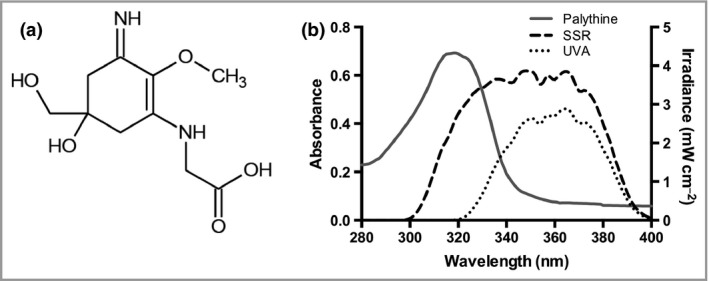
Solar ultraviolet radiation (UVR) induces molecular and genetic changes in the skin, which result in skin cancer, photoageing and photosensitivity disorders. The use of sunscreens is advocated to prevent such photodamage; however, most formulations contain organic and inorganic UVR filters that are nonbiodegradable and can damage fragile marine ecosystems. Mycosporine-like amino acids (MAAs) are natural UVR-absorbing compounds that have evolved in marine species for protection against chronic UVR exposure in shallow-water habitats.
To determine if palythine, a photostable model MAA, could offer protection against a range of UVR-induced damage biomarkers that are important in skin cancer and photoageing.
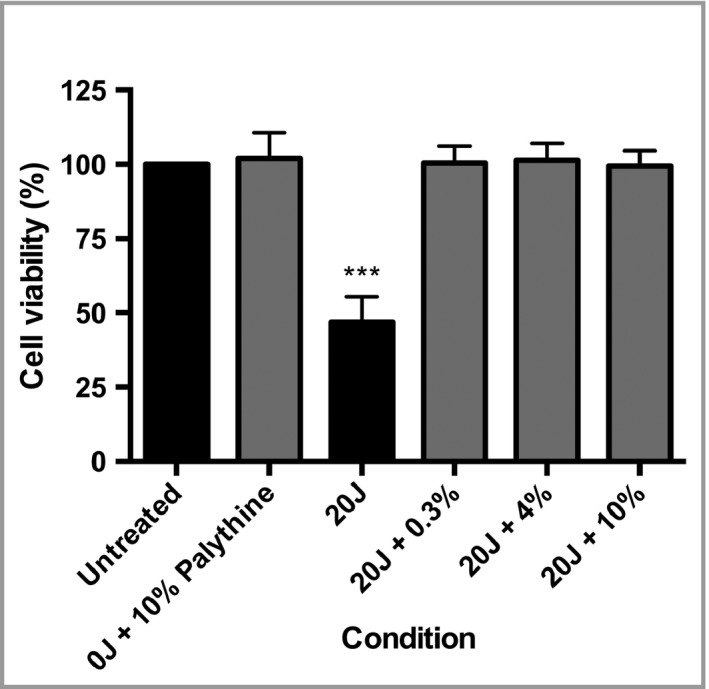
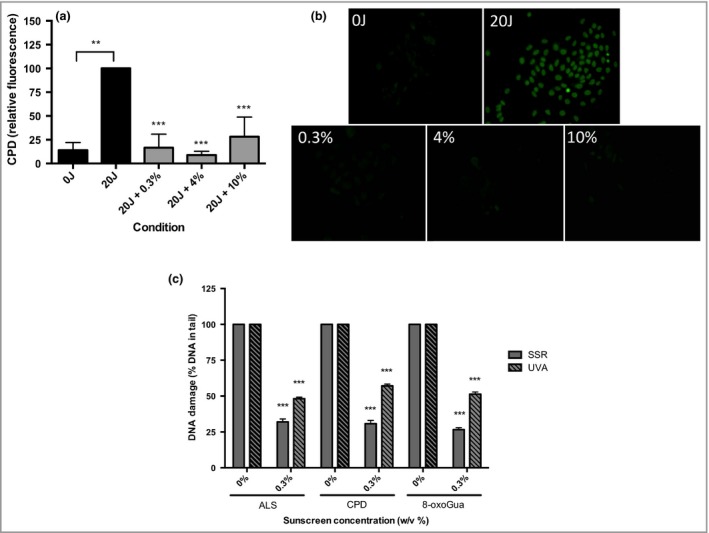
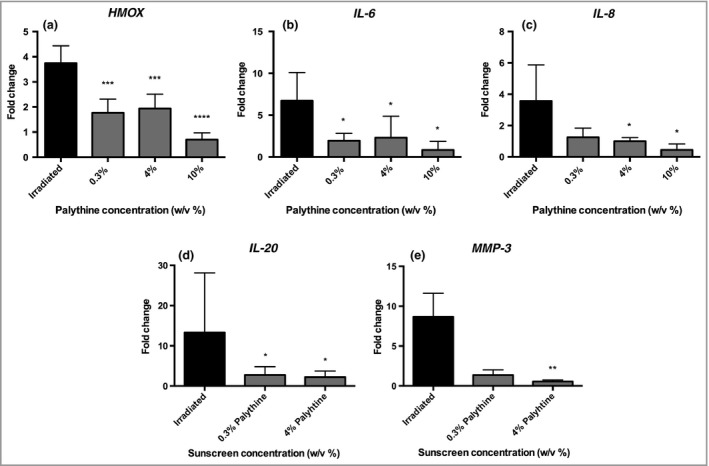
HaCaT human keratinocytes were used to assess the photoprotective potential of palythine using a number of end points including cell viability, DNA damage (nonspecific, cyclobutane pyrimidine dimers and oxidatively generated damage), gene expression changes (linked to inflammation, photoageing and oxidative stress) and oxidative stress. The antioxidant mechanism was investigated using chemical quenching and Nrf2 pathway activation assays.
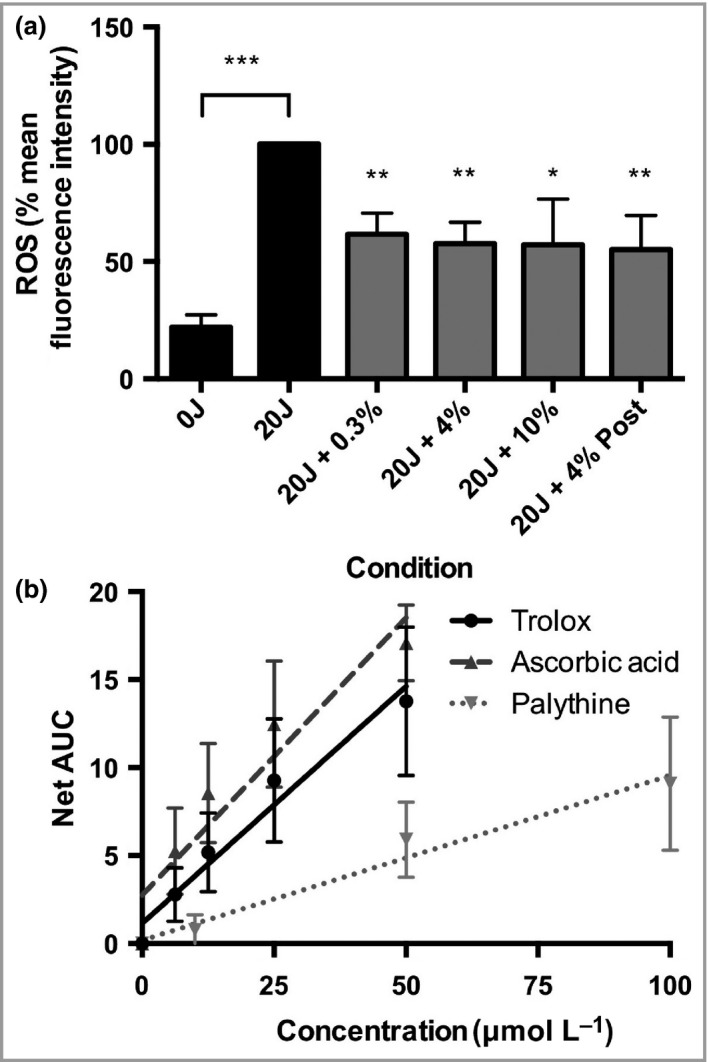
Palythine offered statistically significant protection (P < 0·005) against all end points tested even at extremely low concentrations (0·3% w/v). Additionally, palythine was found to be a potent antioxidant, reducing oxidatively generated stress, even when added after exposure.
Palythine is an extremely effective multifunctional photoprotective molecule in vitro that has potential to be developed as a natural and biocompatible alternative to currently approved UVR filters.
太阳紫外线辐射(UVR)会导致皮肤中的分子和遗传变化,从而导致皮肤癌、光老化和光敏感障碍。提倡使用防晒霜来预防这种光损伤;然而,大多数配方都含有不可生物降解的有机和无机 UVR 过滤器,可能会破坏脆弱的海洋生态系统。 菌氨酸类似物(MAAs)是天然的 UVR 吸收化合物,在海洋物种中进化而来,以防止在浅水区栖息地受到慢性 UVR 暴露的伤害。
确定 palythine(一种光稳定的模型 MAA)是否可以为一系列与皮肤癌和光老化有关的 UVR 诱导损伤生物标志物提供保护。
使用多种终点(包括细胞活力、DNA 损伤(非特异性、环丁烷嘧啶二聚体和氧化产生的损伤)、基因表达变化(与炎症、光老化和氧化应激有关)和氧化应激),使用 HaCaT 人角质形成细胞评估 palythine 的光保护潜力。使用化学猝灭和 Nrf2 途径激活测定法研究抗氧化机制。
即使在极低浓度(0.3%w/v)下,palythine 也能为所有测试终点提供统计学上显著的保护(P < 0.005)。此外,发现 palythine 是一种有效的抗氧化剂,即使在暴露后添加,也能减少氧化应激。
palythine 是一种非常有效的体外多功能光保护分子,具有作为目前批准的 UVR 过滤器的天然和生物相容替代品的潜力。