Laboratory for Proteolytic Neuroscience, RIKEN Brain Science Institute, Saitama, 351-0198, Japan.
Department of Functional Anatomy and Neuroscience, Nagoya University, Graduate School of Medicine, 65 Tsurumaicho, Showa-ku, Nagoya, 466-8550, Japan.
Acta Neuropathol Commun. 2017 Nov 13;5(1):83. doi: 10.1186/s40478-017-0486-9.
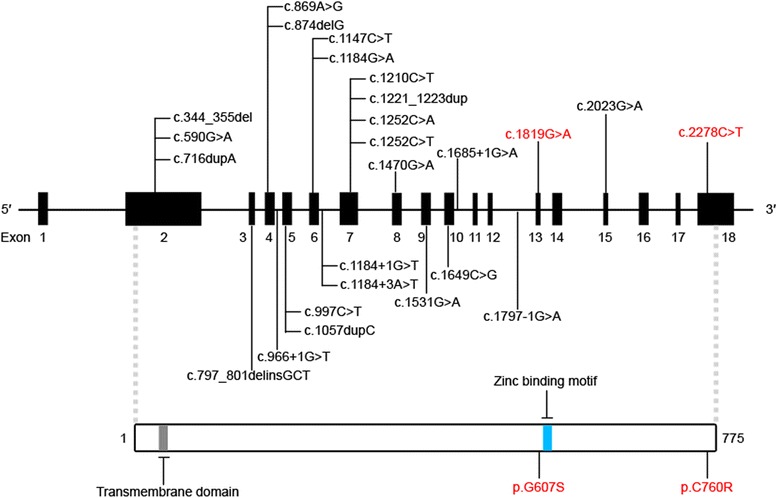
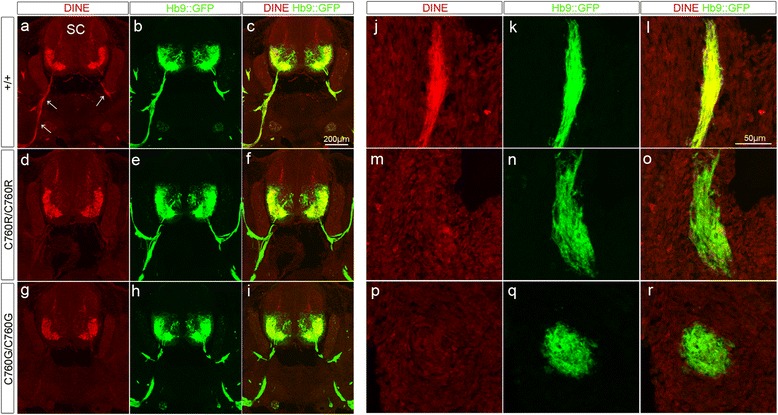
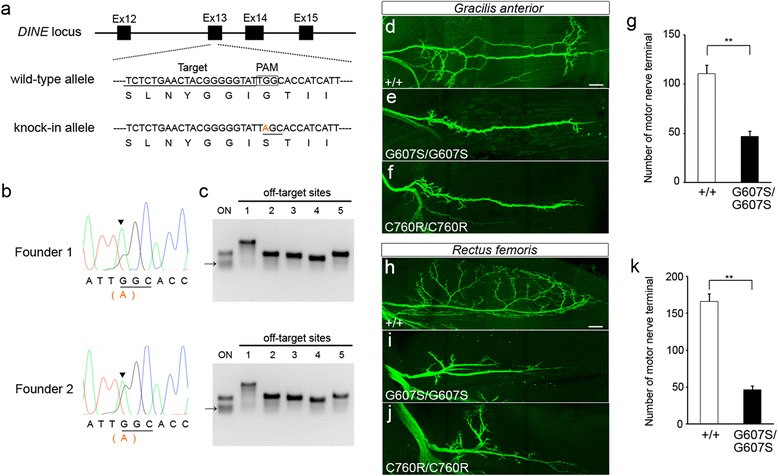
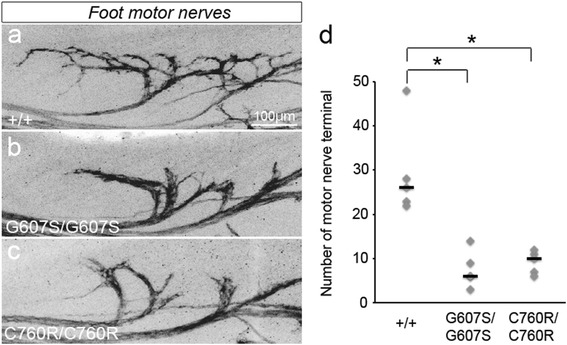
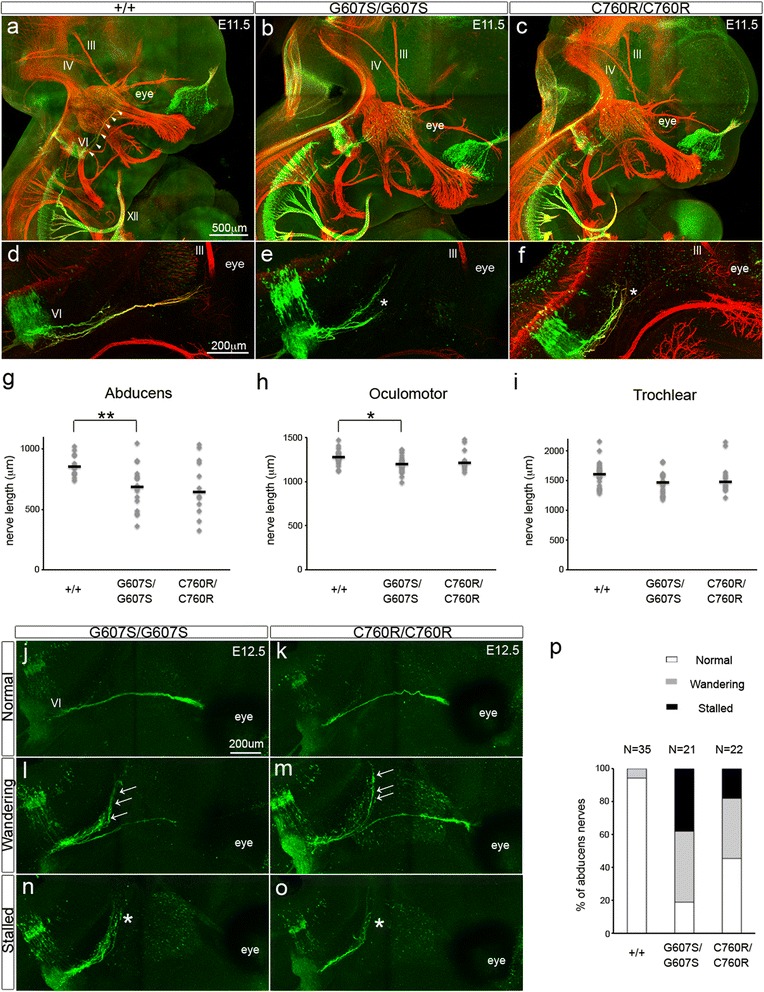
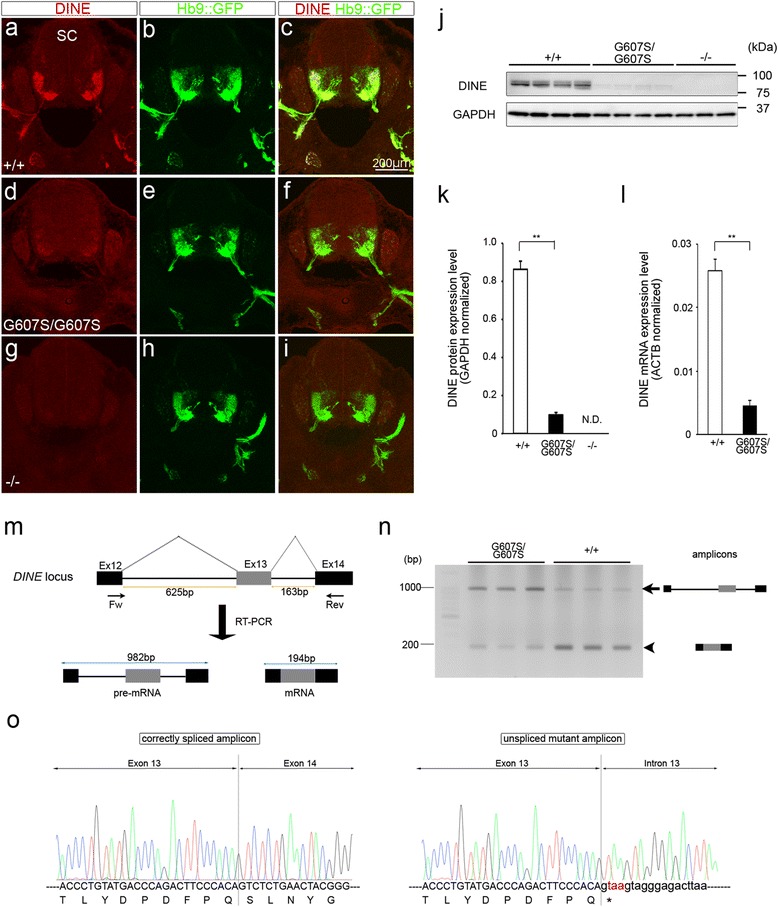
Endothelin-converting enzyme-like 1 (ECEL1, also termed DINE in rodents), a membrane-bound metalloprotease, has been identified as a gene responsible for distal arthrogryposis (DA). ECEL1-mutated DA is generally characterized by ocular phenotypes in addition to the congenital limb contractures that are common to all DA subtypes. Until now, the consequences of the identified pathogenic mutations have remained incompletely understood because of a lack of detailed phenotypic analyses in relevant mouse models. In this study, we generated a new knock-in mouse strain that carries an ECEL1/DINE pathogenic G607S missense mutation, based on a previous study reporting atypical DA hindlimb phenotypes in two siblings with the mutation. We compared the morphological phenotypes of G607S knock-in mice with C760R knock-in mice that we previously established. Both C760R and G607S knock-in mouse embryos showed similar axonal arborization defects with normal trajectory patterns from the spinal cord to the target hindlimb muscles, as well as axon guidance defects of the abducens nerves. Intriguingly, distinct phenotypes in DINE protein localization and mRNA expression were identified in these knock-in mouse lines. For G607S, DINE mRNA and protein expression was decreased or almost absent in motor neurons. In the C760R mutant mice DINE was expressed and localized in the somata of motor neurons but not in axons. Our mutant mouse data suggest that ECEL1/DINE G607S and C760R mutations both lead to motor innervation defects as primary causes in ECEL1-mutated congenital contracture disorders. However, the functional consequences of the two mutations are distinct, with loss of axonal transport of ECEL1/DINE in C760R mutants and mRNA expression deficits in G607S mutants.
内皮素转化酶样 1(ECEL1,在啮齿动物中也称为 DINE)是一种膜结合金属蛋白酶,已被确定为导致远端关节挛缩症(DA)的基因。除了所有 DA 亚型都具有的先天性肢体挛缩外,ECEL1 突变型 DA 通常还具有眼部表型。到目前为止,由于缺乏相关小鼠模型中的详细表型分析,已鉴定出的致病性突变的后果仍不完全清楚。在这项研究中,我们基于先前报道的携带该突变的两名兄弟姐妹具有非典型 DA 后肢表型的研究,生成了一种携带 ECEL1/DINE 致病 G607S 错义突变的新型 knock-in 小鼠品系。我们比较了 G607S knock-in 小鼠与我们之前建立的 C760R knock-in 小鼠的形态表型。C760R 和 G607S knock-in 胚胎都表现出类似的轴突分支缺陷,具有从脊髓到目标后肢肌肉的正常轨迹模式,以及外展神经的轴突导向缺陷。有趣的是,在这些 knock-in 小鼠系中发现了 DINE 蛋白定位和 mRNA 表达的不同表型。对于 G607S,DINE mRNA 和蛋白表达在运动神经元中减少或几乎不存在。在 C760R 突变小鼠中,DINE 在运动神经元的体中表达和定位,但不在轴突中。我们的突变小鼠数据表明,ECEL1/DINE G607S 和 C760R 突变均导致运动神经支配缺陷,作为 ECEL1 突变性先天性挛缩障碍的主要原因。然而,这两种突变的功能后果是不同的,C760R 突变体中 ECEL1/DINE 的轴突运输丧失,而 G607S 突变体中存在 mRNA 表达缺陷。