Das Anubhav, Pereira Verima, Saxena Shruti, Ghosh Tarini Shankar, Anbumani D, Bag Satyabrata, Das Bhabatosh, Nair G Balakrish, Abraham Philip, Mande Sharmila S
Bio-Sciences R&D Division, TCS Research, Tata Consultancy Serviced Ltd., 54-B Hadapsar Industrial Estate, Pune, 411013, Maharashtra, India.
Division of Gastroenterology, P D Hinduja Hospital, Mumbai, 400016, India.
Sci Rep. 2017 Nov 13;7(1):15438. doi: 10.1038/s41598-017-15510-6.
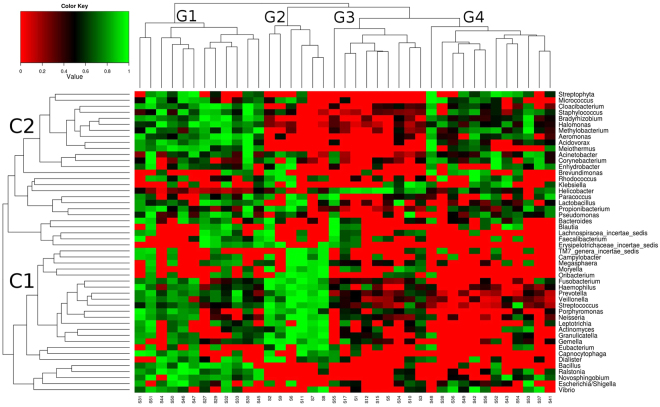
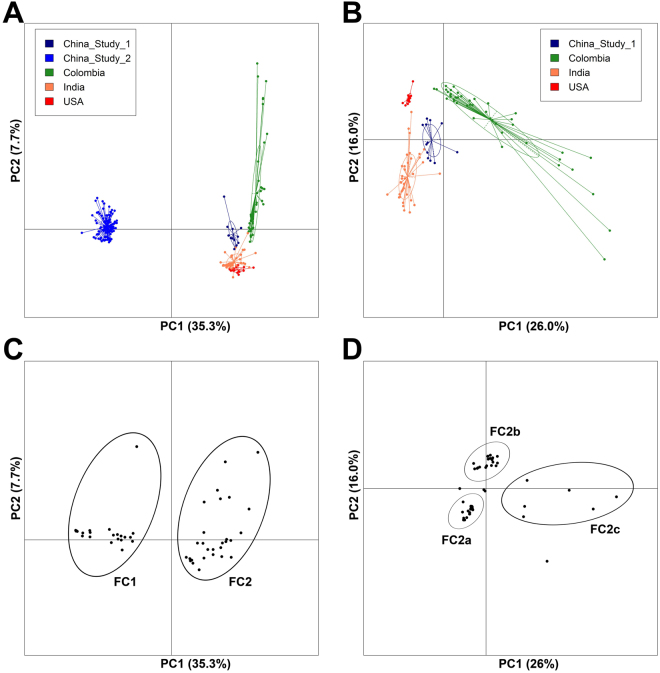
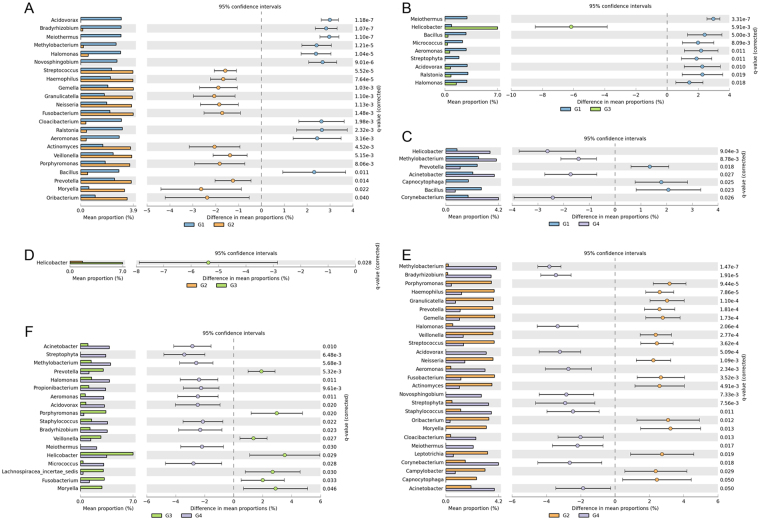
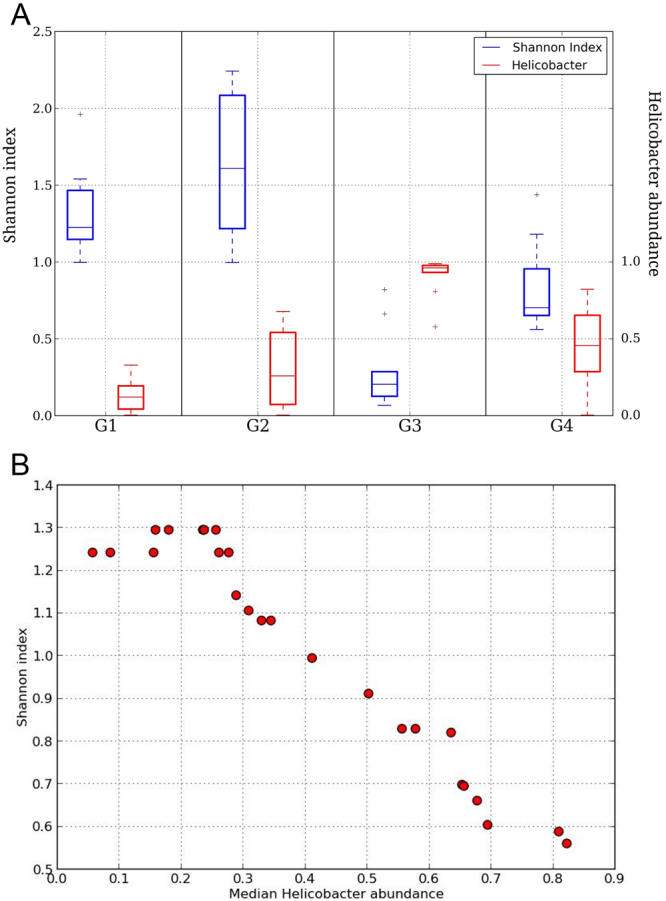
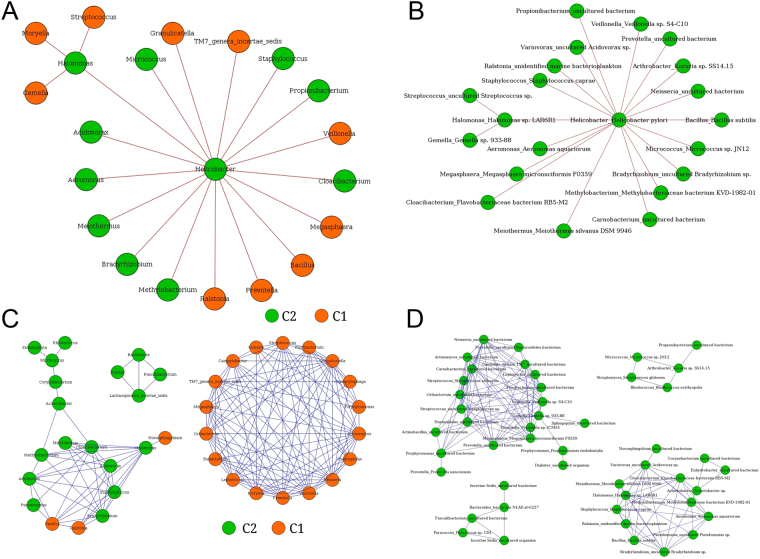
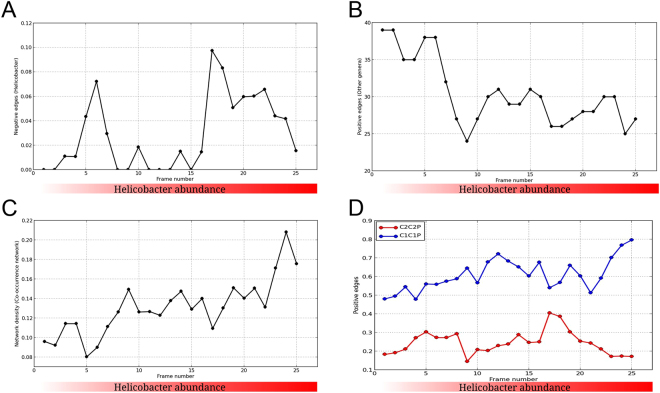
The gastric microbiome is suspected to have a role in the causation of diseases by Helicobacter pylori. Reports on their relative abundance vis-à-vis H. pylori are available from various ethnic and geographic groups, but little is known about their interaction patterns. Endoscopic mucosal biopsy samples from the gastric antrum and corpus of 39 patients with suspected H. pylori infection were collected and microbiomes were analyzed by 16S rDNA profiling. Four groups of samples were identified, which harbored Helicobacter as well as a diverse group of bacteria including Lactobacillus, Halomonas and Prevotella. There was a negative association between the microbiome diversity and Helicobacter abundance. Network analyses showed that Helicobacter had negative interactions with members of the gastric microbiome, while other microbes interacted positively with each other, showing a higher tendency towards intra-cluster co-occurrence/co-operation. Cross-geographic comparisons suggested the presence of region-specific microbial abundance profiles. We report the microbial diversity, abundance variation and interaction patterns of the gastric microbiota of Indian patients with H. pylori infection and present a comparison of the same with the gastric microbial ecology in samples from different geographic regions. Such microbial abundance profiles and microbial interactions can help in understanding the pathophysiology of gastric ailments and can thus help in development of new strategies to curb it.
胃微生物群被怀疑在幽门螺杆菌致病过程中发挥作用。关于不同种族和地理群体中胃微生物群相对于幽门螺杆菌的相对丰度已有报道,但对它们的相互作用模式却知之甚少。收集了39例疑似幽门螺杆菌感染患者胃窦和胃体的内镜黏膜活检样本,并通过16S rDNA分析对微生物群进行了分析。鉴定出四组样本,其中既有幽门螺杆菌,也有包括乳酸杆菌、嗜盐单胞菌和普雷沃氏菌在内的多种细菌。微生物群多样性与幽门螺杆菌丰度之间呈负相关。网络分析表明,幽门螺杆菌与胃微生物群成员之间存在负相互作用,而其他微生物之间则呈正相互作用,显示出更高的簇内共现/合作倾向。跨地理比较表明存在区域特异性微生物丰度谱。我们报告了印度幽门螺杆菌感染患者胃微生物群的微生物多样性、丰度变化和相互作用模式,并将其与来自不同地理区域样本中的胃微生物生态学进行了比较。这种微生物丰度谱和微生物相互作用有助于理解胃部疾病的病理生理学,从而有助于制定新的防治策略。