Díaz-Castillo Carlos
Irvine, CA, USA.
PeerJ. 2017 Nov 6;5:e4004. doi: 10.7717/peerj.4004. eCollection 2017.
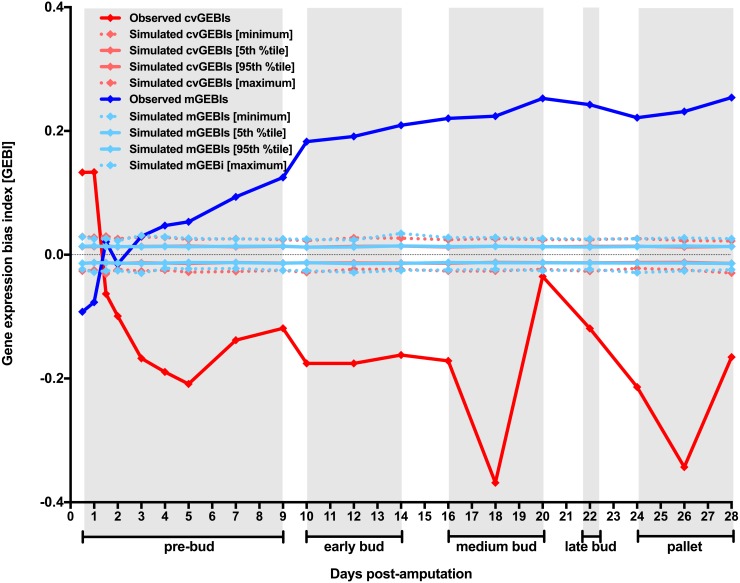
Although in recent years the study of gene expression variation in the absence of genetic or environmental cues or gene expression heterogeneity has intensified considerably, many basic and applied biological fields still remain unaware of how useful the study of gene expression heterogeneity patterns might be for the characterization of biological systems and/or processes. Largely based on the modulator effect chromatin compaction has for gene expression heterogeneity and the extensive changes in chromatin compaction known to occur for specialized cells that are naturally or artificially induced to revert to less specialized states or dedifferentiate, I recently hypothesized that processes that concur with cell dedifferentiation would show an extensive reduction in gene expression heterogeneity. The confirmation of the existence of such trend could be of wide interest because of the biomedical and biotechnological relevance of cell dedifferentiation-based processes, i.e., regenerative development, cancer, human induced pluripotent stem cells, or plant somatic embryogenesis. Here, I report the first empirical evidence consistent with the existence of an extensive reduction in gene expression heterogeneity for processes that concur with cell dedifferentiation by analyzing transcriptome dynamics along forearm regenerative development in or axolotl. Also, I briefly discuss on the utility of the study of gene expression heterogeneity dynamics might have for the characterization of cell dedifferentiation-based processes, and the engineering of tools that afforded better monitoring and modulating such processes. Finally, I reflect on how a transitional reduction in gene expression heterogeneity for dedifferentiated cells can promote a long-term increase in phenotypic heterogeneity following cell dedifferentiation with potential adverse effects for biomedical and biotechnological applications.
尽管近年来,在没有遗传或环境线索的情况下对基因表达变异或基因表达异质性的研究已大大加强,但许多基础生物学和应用生物学领域仍未意识到基因表达异质性模式的研究对于生物系统和/或过程的表征可能有多大用处。很大程度上基于染色质压缩对基因表达异质性的调节作用,以及已知在自然或人工诱导恢复到低分化状态或去分化的特化细胞中发生的染色质压缩的广泛变化,我最近推测,与细胞去分化同时发生的过程将显示基因表达异质性的大幅降低。由于基于细胞去分化的过程(即再生发育、癌症、人类诱导多能干细胞或植物体细胞胚胎发生)在生物医学和生物技术方面具有相关性,证实这种趋势的存在可能会引起广泛关注。在这里,我通过分析蝾螈前臂再生发育过程中的转录组动态,报告了第一个与细胞去分化过程中基因表达异质性大幅降低的存在相一致的实证证据。此外,我简要讨论了基因表达异质性动态研究对于基于细胞去分化的过程的表征以及能够更好地监测和调节此类过程的工具工程可能具有的效用。最后,我思考了去分化细胞基因表达异质性的过渡性降低如何能在细胞去分化后促进表型异质性的长期增加,这对生物医学和生物技术应用可能产生不利影响。