Department of Pharmacology, University of Cambridge, Cambridge, CB2 1PD, UK.
Cactus Communications Pvt Ltd, 510 Shalimar Morya Park, Andheri (West), Mumbai, 400053, India.
Nat Commun. 2017 Nov 15;8(1):1505. doi: 10.1038/s41467-017-01644-8.
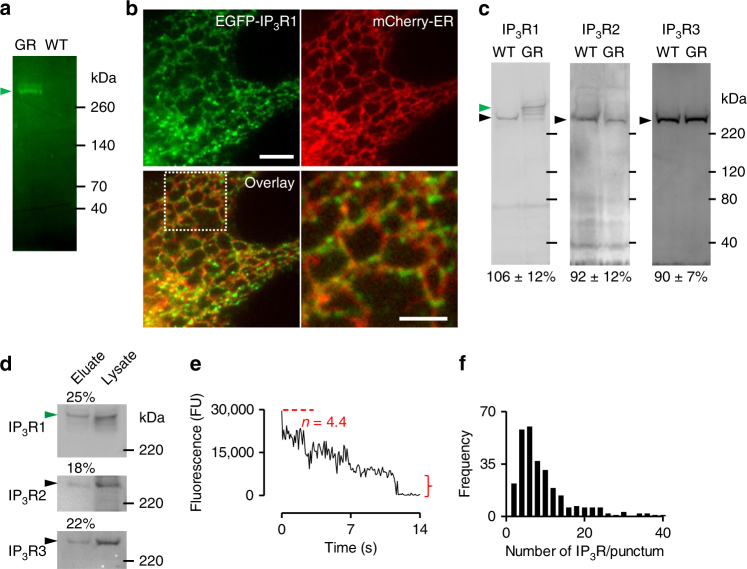
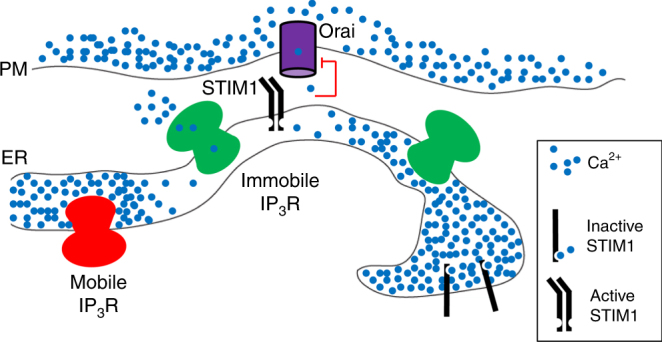
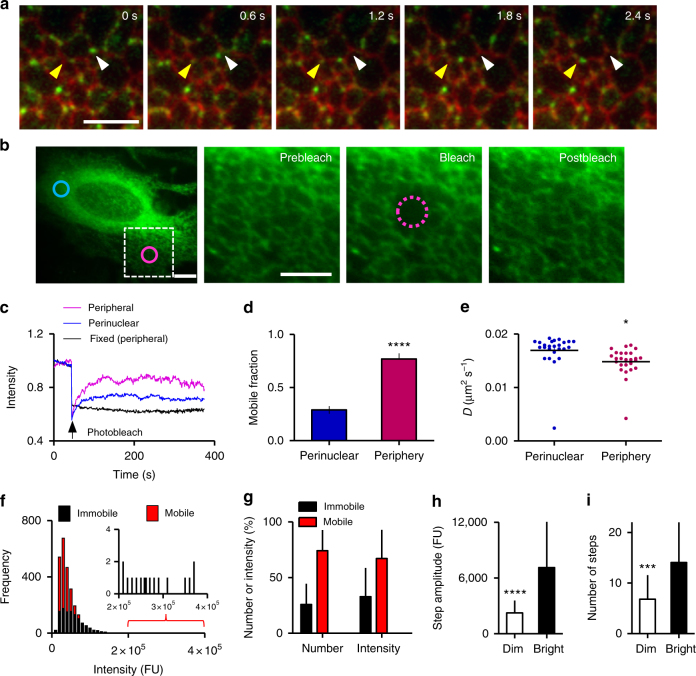
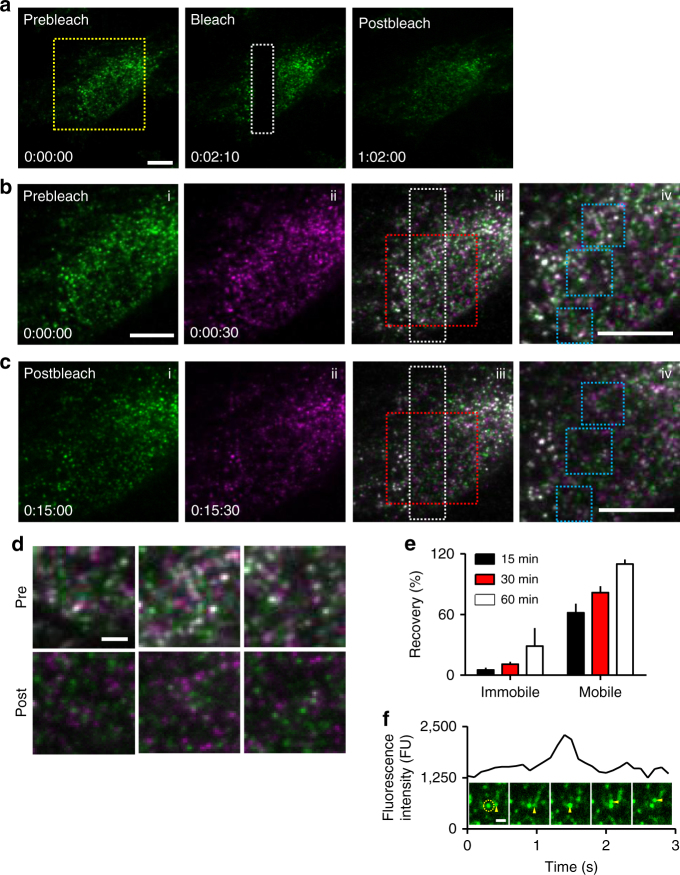
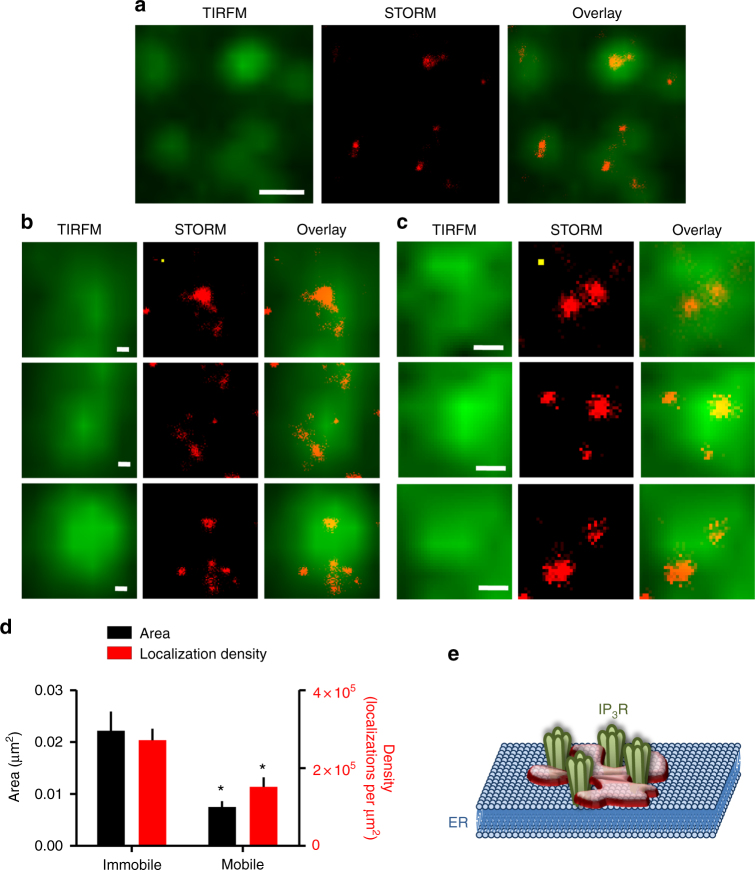
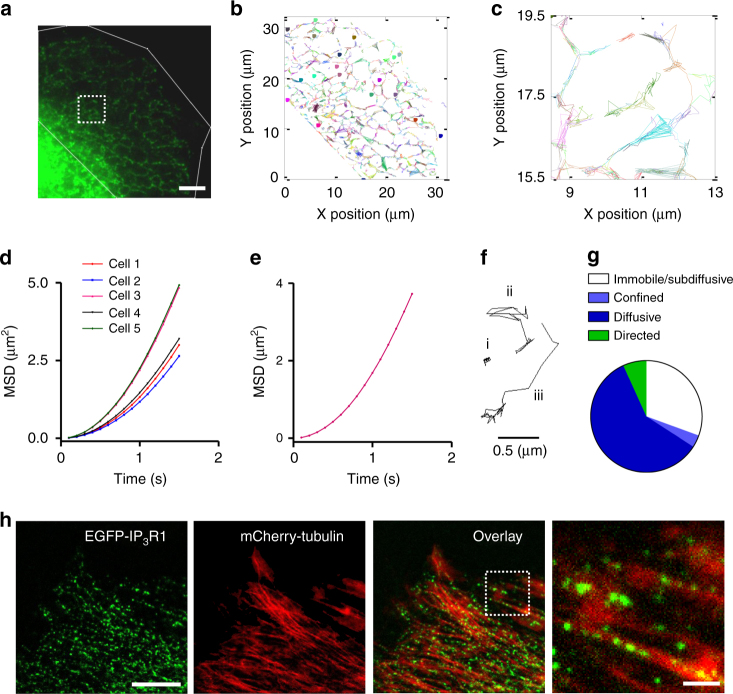
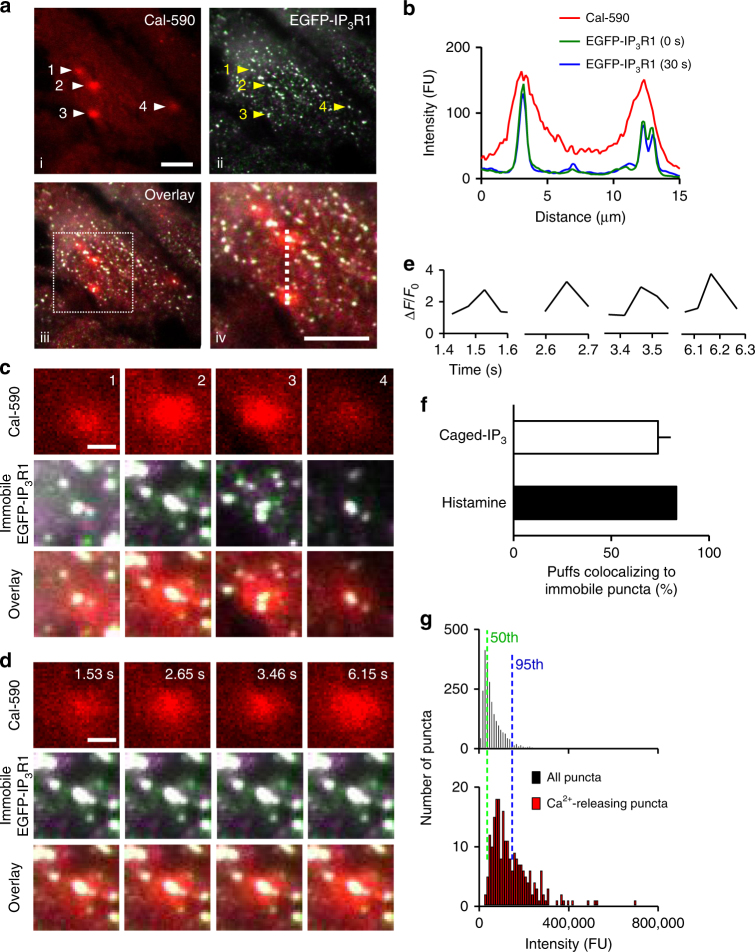
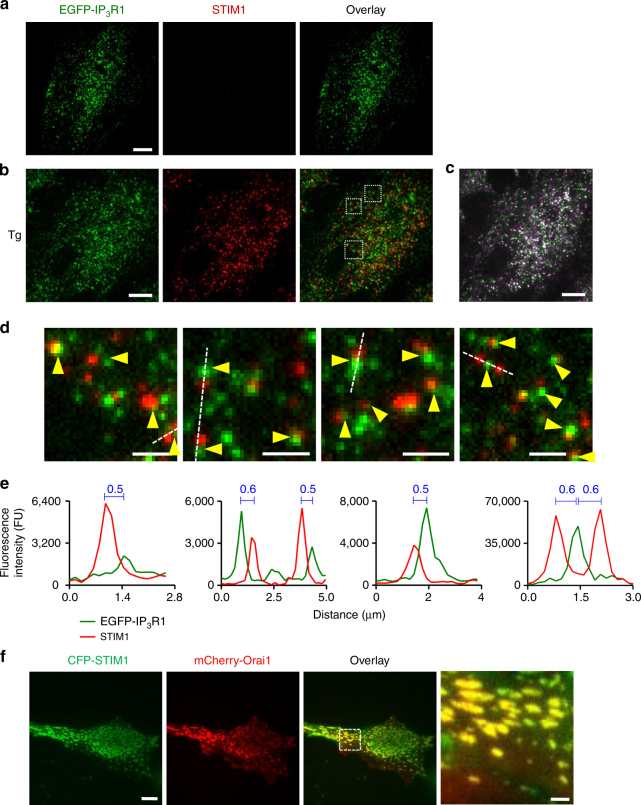
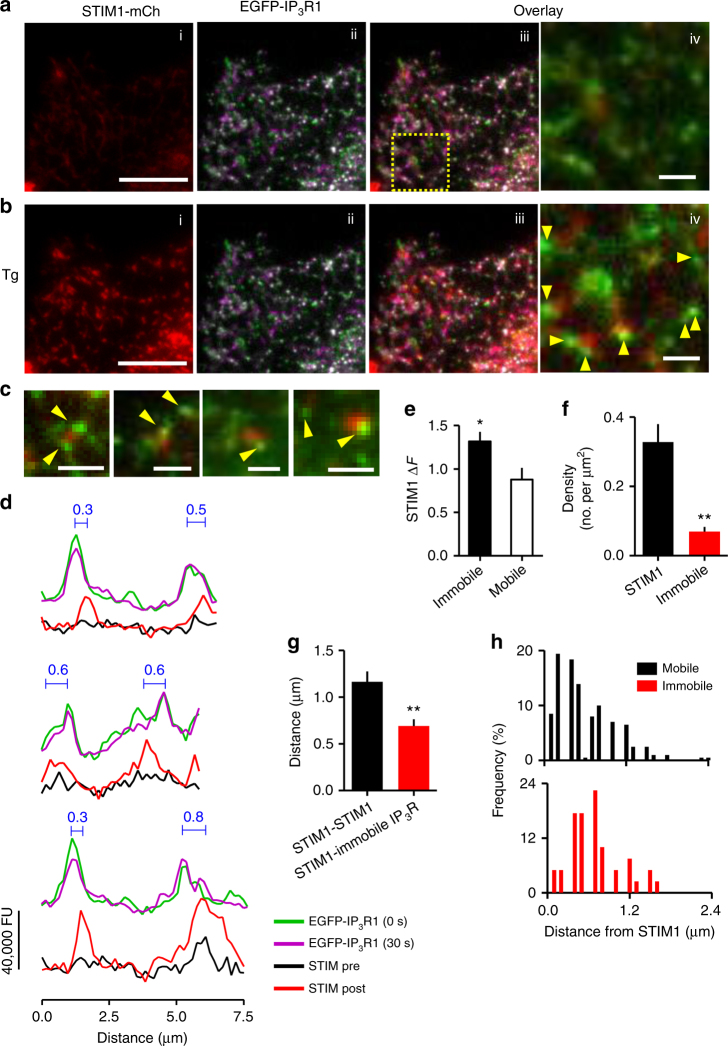
IP receptors (IPRs) release Ca from the ER when they bind IP and Ca. The spatial organization of IPRs determines both the propagation of Ca signals between IPRs and the selective regulation of cellular responses. Here we use gene editing to fluorescently tag endogenous IPRs, and super-resolution microscopy to determine the geography of IPRs and Ca signals within living cells. We show that native IPRs cluster within ER membranes. Most IPR clusters are mobile, moved by diffusion and microtubule motors. Ca signals are generated by a small population of immobile IPRs. These IPRs are licensed to respond, but they do not readily mix with mobile IPRs. The licensed IPRs reside alongside ER-plasma membrane junctions where STIM1, which regulates store-operated Ca entry, accumulates after depletion of Ca stores. IPRs tethered close to ER-plasma membrane junctions are licensed to respond and optimally placed to be activated by endogenous IP and to regulate Ca entry.
IP 受体 (IPRs) 在与 IP 和 Ca 结合时从 ER 中释放 Ca。IPRs 的空间组织决定了 IPR 之间 Ca 信号的传播以及细胞反应的选择性调节。在这里,我们使用基因编辑技术对内源性 IPR 进行荧光标记,并使用超分辨率显微镜来确定活细胞内 IPR 和 Ca 信号的位置。我们表明,天然的 IPR 在 ER 膜内聚集。大多数 IPR 簇是可移动的,通过扩散和微管马达移动。Ca 信号是由一小部分不可移动的 IPR 产生的。这些 IPR 被授权响应,但它们不容易与移动的 IPR 混合。有许可的 IPR 位于 ER-质膜连接处,在 Ca 储存耗尽后,调节储存操作 Ca 进入的 STIM1 在此处积累。靠近 ER-质膜连接处的 IPR 被授权响应,并且被最佳定位以通过内源性 IP 激活并调节 Ca 进入。