Mekonnen Alemayehu B, Alhawassi Tariq M, McLachlan Andrew J, Brien Jo-Anne E
Faculty of Pharmacy, University of Sydney, S114, Pharmacy Building A15, Sydney, NSW, 2006, Australia.
School of Pharmacy, University of Gondar, Gondar, Ethiopia.
Drugs Real World Outcomes. 2018 Mar;5(1):1-24. doi: 10.1007/s40801-017-0125-6.
Medication errors and adverse drug events are universal problems contributing to patient harm but the magnitude of these problems in Africa remains unclear.
The objective of this study was to systematically investigate the literature on the extent of medication errors and adverse drug events, and the factors contributing to medication errors in African hospitals.
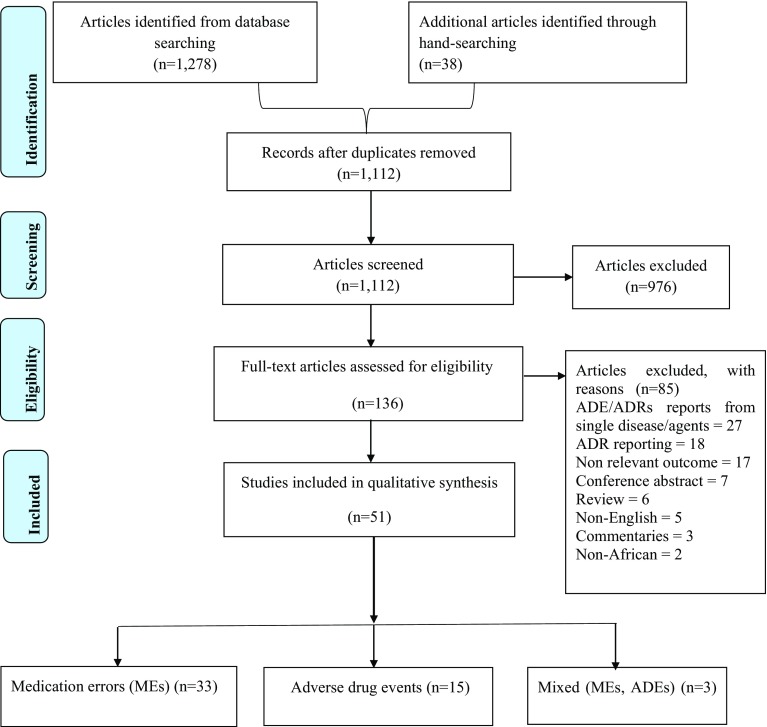
We searched PubMed, MEDLINE, EMBASE, Web of Science and Global Health databases from inception to 31 August, 2017 and hand searched the reference lists of included studies. Original research studies of any design published in English that investigated adverse drug events and/or medication errors in any patient population in the hospital setting in Africa were included. Descriptive statistics including median and interquartile range were presented.
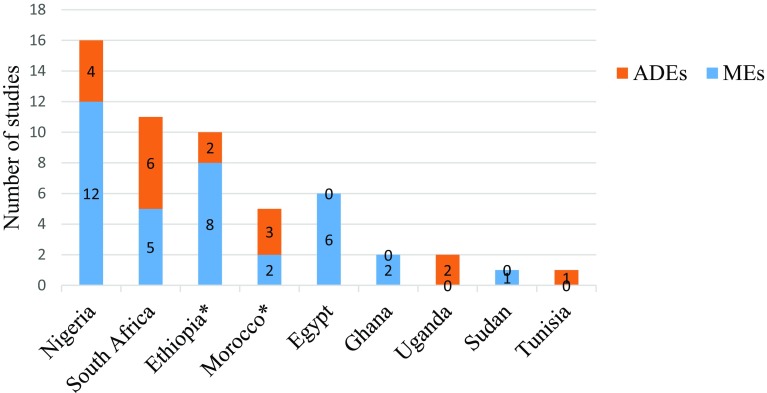
Fifty-one studies were included; of these, 33 focused on medication errors, 15 on adverse drug events, and three studies focused on medication errors and adverse drug events. These studies were conducted in nine (of the 54) African countries. In any patient population, the median (interquartile range) percentage of patients reported to have experienced any suspected adverse drug event at hospital admission was 8.4% (4.5-20.1%), while adverse drug events causing admission were reported in 2.8% (0.7-6.4%) of patients but it was reported that a median of 43.5% (20.0-47.0%) of the adverse drug events were deemed preventable. Similarly, the median mortality rate attributed to adverse drug events was reported to be 0.1% (interquartile range 0.0-0.3%). The most commonly reported types of medication errors were prescribing errors, occurring in a median of 57.4% (interquartile range 22.8-72.8%) of all prescriptions and a median of 15.5% (interquartile range 7.5-50.6%) of the prescriptions evaluated had dosing problems. Major contributing factors for medication errors reported in these studies were individual practitioner factors (e.g. fatigue and inadequate knowledge/training) and environmental factors, such as workplace distraction and high workload.
Medication errors in the African healthcare setting are relatively common, and the impact of adverse drug events is substantial but many are preventable. This review supports the design and implementation of preventative strategies targeting the most likely contributing factors.
用药错误和药物不良事件是导致患者伤害的普遍问题,但这些问题在非洲的严重程度仍不明确。
本研究的目的是系统地调查有关非洲医院用药错误和药物不良事件的发生率以及导致用药错误的因素的文献。
我们检索了从数据库建立至2017年8月31日的PubMed、MEDLINE、EMBASE、科学引文索引和全球健康数据库,并人工检索了纳入研究的参考文献列表。纳入了以英文发表的、对非洲医院环境中任何患者群体的药物不良事件和/或用药错误进行调查的任何设计的原始研究。呈现了包括中位数和四分位距在内的描述性统计数据。
纳入了51项研究;其中,33项关注用药错误,15项关注药物不良事件,3项研究同时关注用药错误和药物不良事件。这些研究在9个(共54个)非洲国家进行。在任何患者群体中,据报告在入院时经历过任何疑似药物不良事件的患者的中位数(四分位距)百分比为8.4%(4.5 - 20.1%),而因药物不良事件导致入院的患者报告为2.8%(0.7 - 6.4%),但据报告,中位数为43.5%(20.0 - 47.0%)的药物不良事件被认为是可预防的。同样,据报告归因于药物不良事件的中位数死亡率为0.1%(四分位距0.0 - 0.3%)。最常报告的用药错误类型是处方错误,在所有处方中的中位数发生率为57.4%(四分位距22.8 - 72.8%),在评估的处方中,剂量问题的中位数发生率为15.5%(四分位距7.5 - 50.6%)。这些研究中报告的导致用药错误的主要因素是个体从业者因素(如疲劳和知识/培训不足)以及环境因素,如工作场所干扰和工作量大。
非洲医疗环境中的用药错误相对常见,药物不良事件的影响很大,但许多是可预防的。本综述支持针对最可能的促成因素设计和实施预防策略。