Levinson Cheri A, Brosof Leigh C, Ma Jackie, Fewell Laura, Lenze Eric J
University of Louisville, Department of Psychological & Brain Sciences, United States.
University of Louisville, Department of Psychological & Brain Sciences, United States.
Eat Behav. 2017 Dec;27:45-51. doi: 10.1016/j.eatbeh.2017.11.004. Epub 2017 Nov 9.
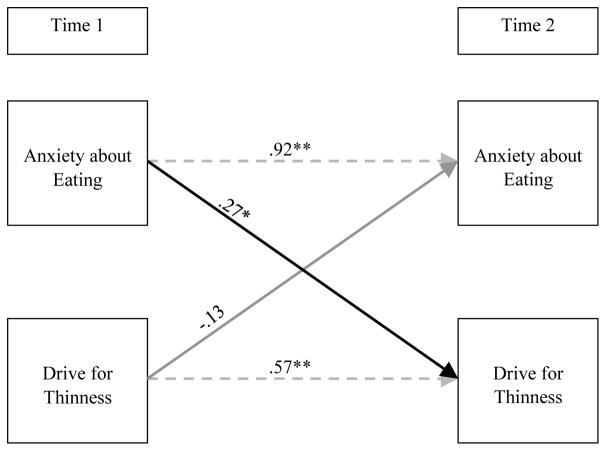
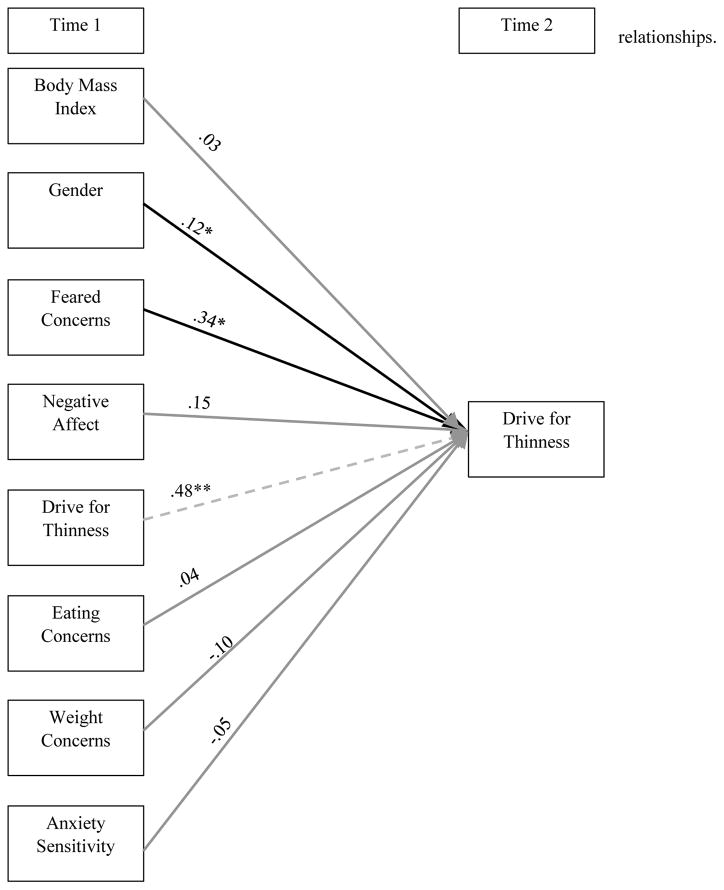
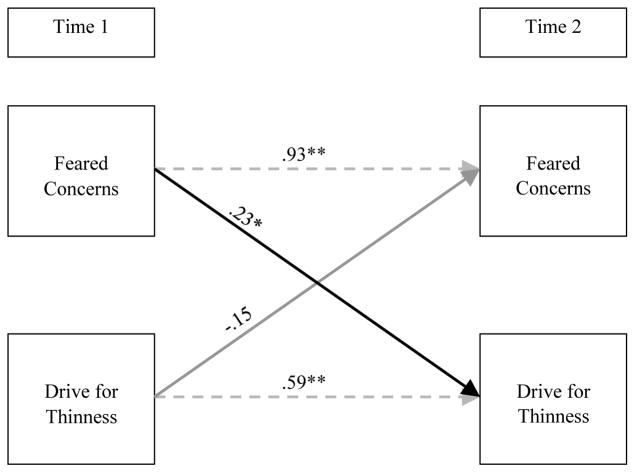
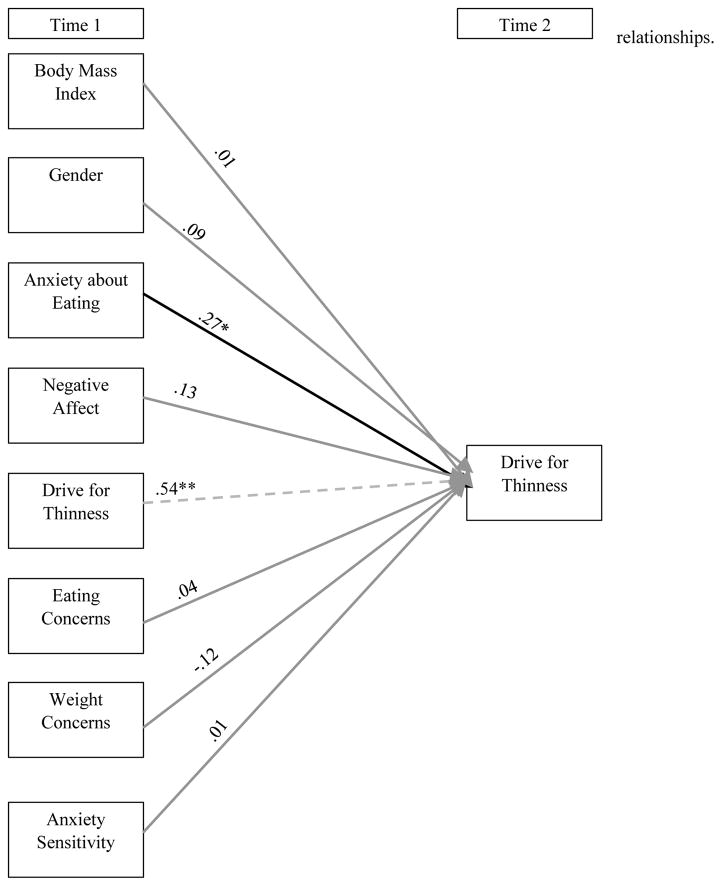
Fears of food are common in individuals with eating disorders and contribute to the high relapse rates. However, it is unknown how fears of food contribute to eating disorder symptoms across time, potentially contributing to an increased likelihood of relapse. Participants diagnosed with an eating disorder (N=168) who had recently completed intensive treatment were assessed after discharge and one month later regarding fear of food, eating disorder symptoms, anxiety sensitivity, and negative affect. Cross lagged path analysis was utilized to determine if fear of food predicted subsequent eating disorder symptoms one month later. Fear of food-specifically, anxiety about eating and feared concerns about eating-predicted drive for thinness, a core symptom domain of eating disorders. These relationships held while accounting for anxiety sensitivity and negative affect. There is a specific, direct relationship between anxiety about eating and feared concerns about eating and drive for thinness. Future research should test if interventions designed to target fear of food can decrease drive for thinness and thereby prevent relapse.
对食物的恐惧在饮食失调个体中很常见,并且导致了高复发率。然而,目前尚不清楚对食物的恐惧如何随时间推移导致饮食失调症状,这可能会增加复发的可能性。对168名近期完成强化治疗的饮食失调患者在出院时和出院后一个月进行了评估,内容包括对食物的恐惧、饮食失调症状、焦虑敏感性和负面情绪。采用交叉滞后路径分析来确定一个月后对食物的恐惧是否能预测随后的饮食失调症状。对食物的恐惧——具体而言,对进食的焦虑以及对饮食的恐惧担忧——预测了追求瘦身,这是饮食失调的一个核心症状领域。在考虑焦虑敏感性和负面情绪的情况下,这些关系依然成立。对进食的焦虑与对饮食的恐惧担忧和追求瘦身之间存在特定的直接关系。未来的研究应该测试旨在针对对食物恐惧的干预措施是否能够降低追求瘦身的动力,从而预防复发。