McCoy Daniel, McManus Margaret A, Kotubetey Keliʻiahonui, Kawelo Angela Hiʻilei, Young Charles, D'Andrea Brandon, Ruttenberg Kathleen C, Alegado Rosanna ʻAnolani
Department of Oceanography, University of Hawai'i Mānoa, Honolulu, Hawai'i, United States of America.
Paepae o He'eia, Kāne'ohe, Hawai'i, United States of America.
PLoS One. 2017 Nov 16;12(11):e0187951. doi: 10.1371/journal.pone.0187951. eCollection 2017.
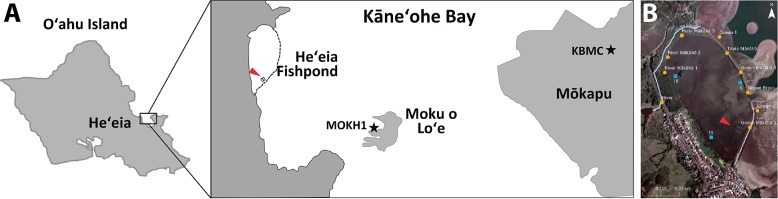
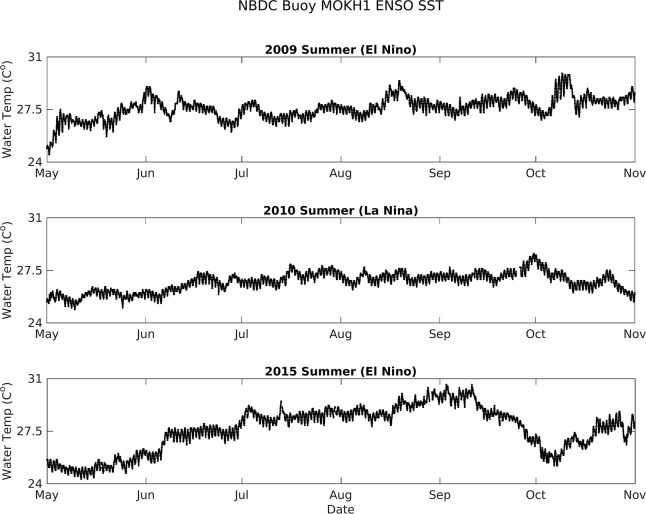
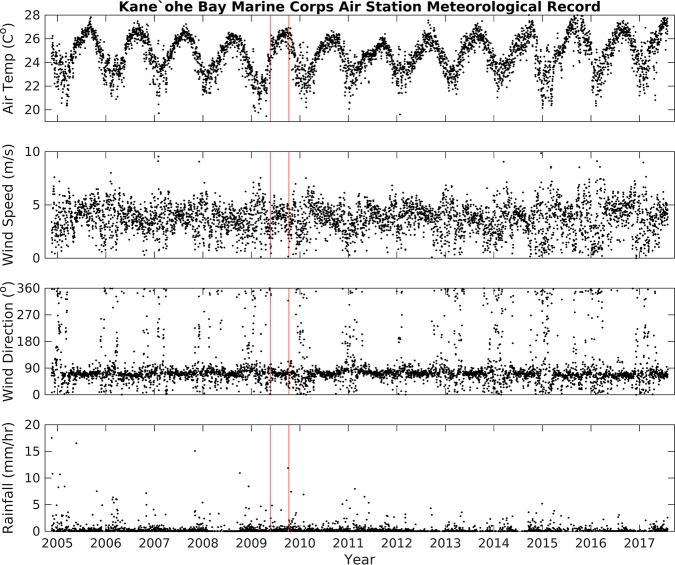
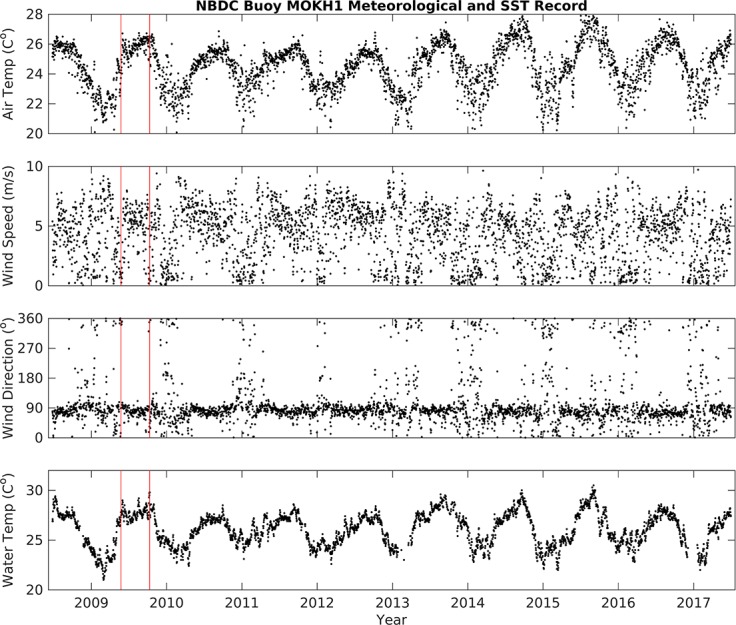
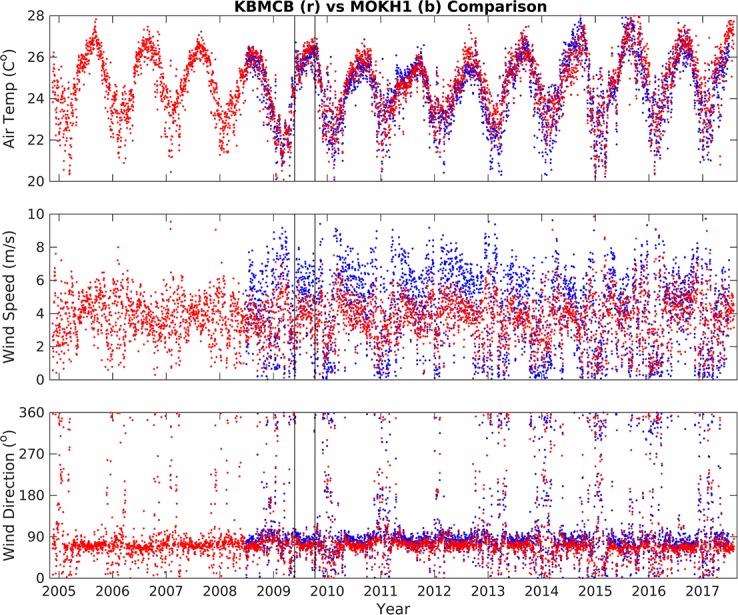
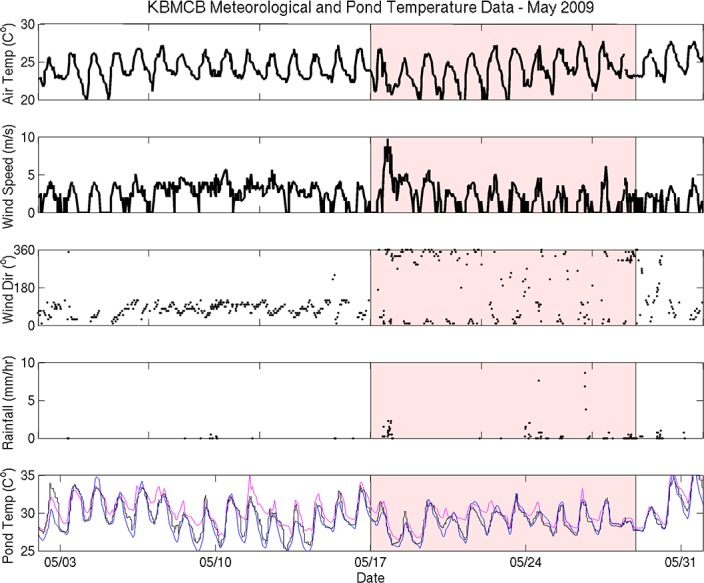
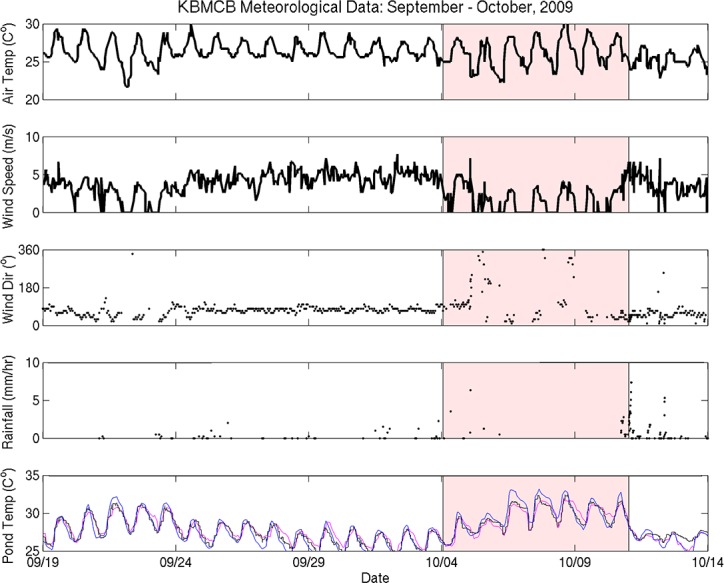
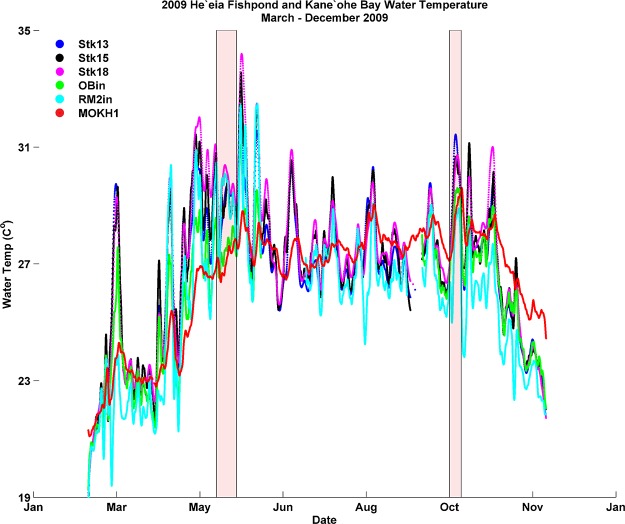
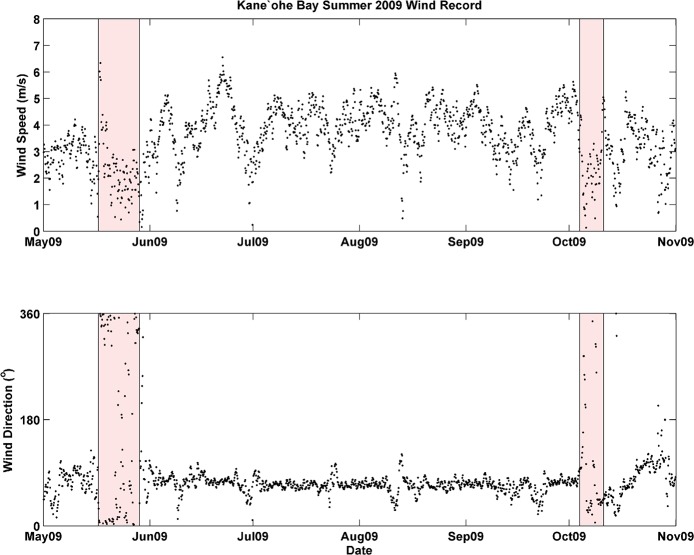
Aquaculture accounts for almost one-half of global fish consumption. Understanding the regional impact of climate fluctuations on aquaculture production thus is critical for the sustainability of this crucial food resource. The objective of this work was to understand the role of climate fluctuations and climate change in subtropical coastal estuarine environments within the context of aquaculture practices in He'eia Fishpond, O'ahu Island, Hawai'i. To the best of our knowledge, this was the first study of climate effects on traditional aquaculture systems in the Hawaiian Islands. Data from adjacent weather stations were analyzed together with in situ water quality instrument deployments spanning a 12-year period (November 2004 -November 2016). We found correlations between two periods with extremely high fish mortality at He'eia Fishpond (May and October 2009) and slackening trade winds in the week preceding each mortality event, as well as surface water temperatures elevated 2-3°C higher than the background periods (March-December 2009). We posit that the lack of trade wind-driven surface water mixing enhanced surface heating and stratification of the water column, leading to hypoxic conditions and stress on fish populations, which had limited ability to move within net pen enclosures. Elevated water temperature and interruption of trade winds previously have been linked to the onset of El Niño in Hawai'i. Our results provide empirical evidence regarding El Niño effects on the coastal ocean, which can inform resource management efforts about potential impact of climate variation on aquaculture production. Finally, we provide recommendations for reducing the impact of warming events on fishponds, as these events are predicted to increase in magnitude and frequency as a consequence of global warming.
水产养殖占全球鱼类消费量的近一半。因此,了解气候波动对水产养殖生产的区域影响对于这一关键食物资源的可持续性至关重要。这项工作的目的是在夏威夷欧胡岛希艾亚鱼塘的水产养殖实践背景下,了解气候波动和气候变化在亚热带沿海河口环境中的作用。据我们所知,这是对夏威夷群岛传统水产养殖系统气候影响的首次研究。分析了来自相邻气象站的数据,并结合了长达12年(2004年11月至2016年11月)的现场水质仪器部署数据。我们发现,希艾亚鱼塘出现极高鱼类死亡率的两个时期(2009年5月和10月)与每次死亡事件前一周信风减弱之间存在相关性,同时地表水温度比背景时期(2009年3月至12月)高出2-3°C。我们认为,缺乏信风驱动的地表水混合加剧了地表水加热和水柱分层,导致缺氧状况以及对鱼类种群的压力,而鱼类在网箱围栏内的活动能力有限。水温升高和信风中断此前已与夏威夷的厄尔尼诺现象爆发相关联。我们的结果提供了关于厄尔尼诺现象对沿海海洋影响的实证证据,可为资源管理工作提供有关气候变化对水产养殖生产潜在影响的信息。最后,我们提供了减少暖化事件对鱼塘影响的建议,因为预计这些事件会因全球变暖而在强度和频率上增加。