Feig Jessica L, Mediero Aranzazu, Corciulo Carmen, Liu Hailing, Zhang Jin, Perez-Aso Miguel, Picard Laura, Wilder Tuere, Cronstein Bruce
Division of Translational Medicine, Department of Medicine, NYU-Langone Medical Center, New York, New York, United States of America.
Bone and Joint Research Unit, IIS-Fundación Jiménez Díaz UAM, Madrid, Spain.
PLoS One. 2017 Nov 16;12(11):e0188135. doi: 10.1371/journal.pone.0188135. eCollection 2017.
Fibrosing diseases are a leading cause of morbidity and mortality worldwide and, therefore, there is a need for safe and effective antifibrotic therapies. Adenosine, generated extracellularly by the dephosphorylation of adenine nucleotides, ligates specific receptors which play a critical role in development of hepatic and dermal fibrosis. Results of recent clinical trials indicate that tenofovir, a widely used antiviral agent, reverses hepatic fibrosis/cirrhosis in patients with chronic hepatitis B infection. Belonging to the class of acyclic nucleoside phosphonates, tenofovir is an analogue of AMP. We tested the hypothesis that tenofovir has direct antifibrotic effects in vivo by interfering with adenosine pathways of fibrosis using two distinct models of adenosine and A2AR-mediated fibrosis.
Thioacetamide (100mg/kg IP)-treated mice were treated with vehicle, or tenofovir (75mg/kg, SubQ) (n = 5-10). Bleomycin (0.25U, SubQ)-treated mice were treated with vehicle or tenofovir (75mg/kg, IP) (n = 5-10). Adenosine levels were determined by HPLC, and ATP release was quantitated as luciferase-dependent bioluminescence. Skin breaking strength was analysed and H&E and picrosirus red-stained slides were imaged. Pannexin-1expression was knocked down following retroviral-mediated expression of of Pannexin-1-specific or scrambled siRNA.
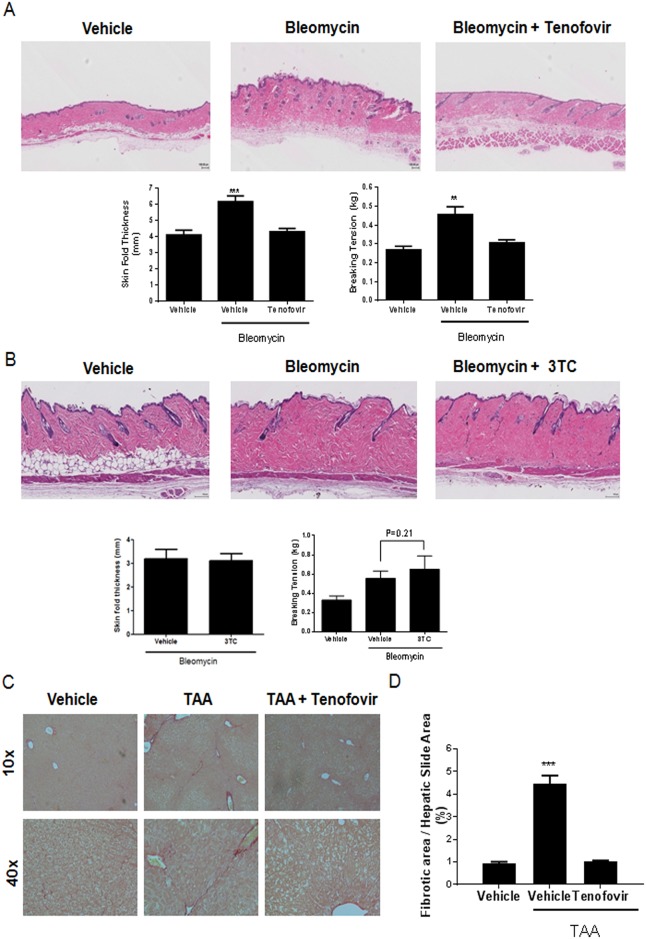
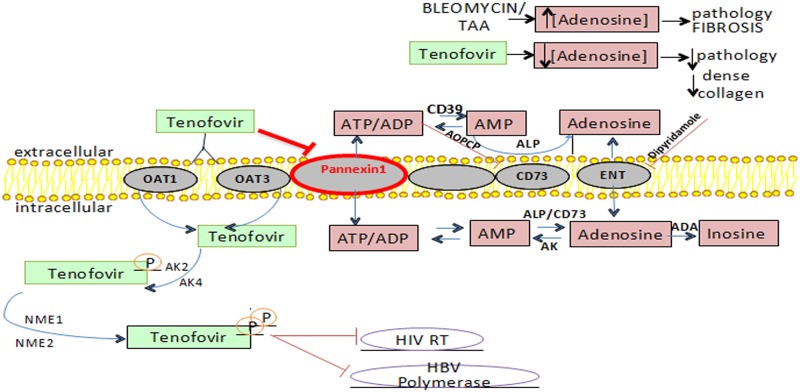
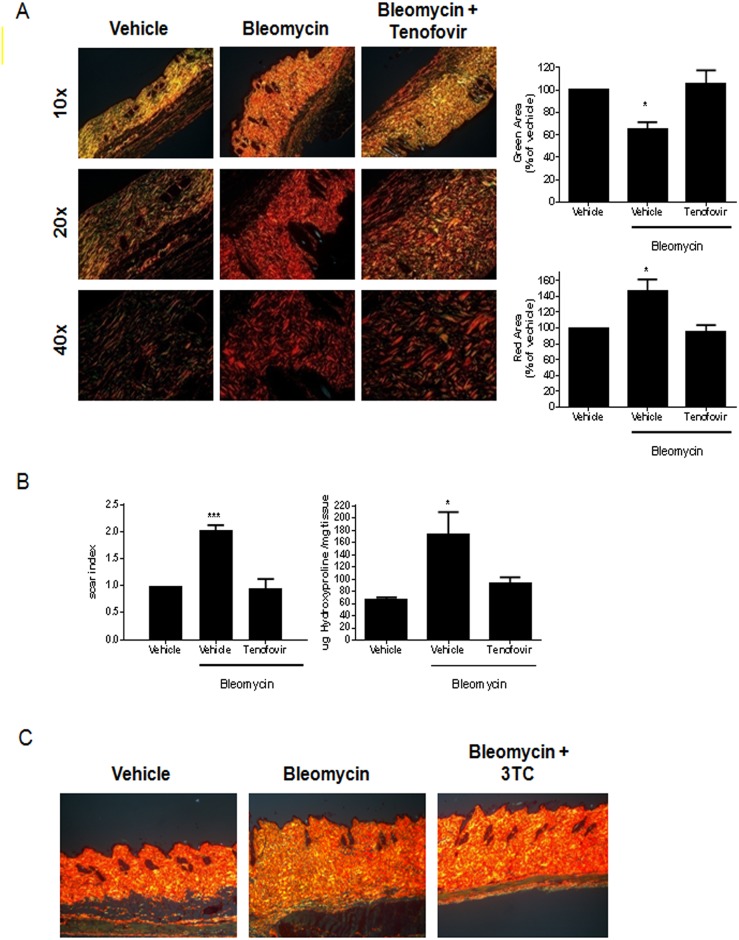
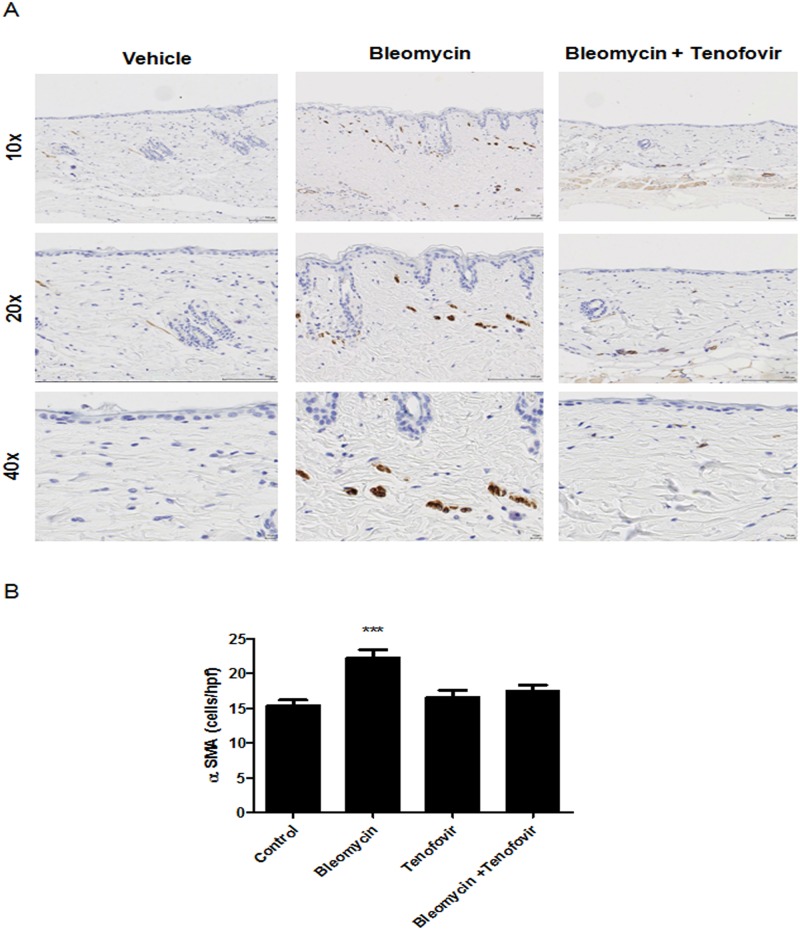
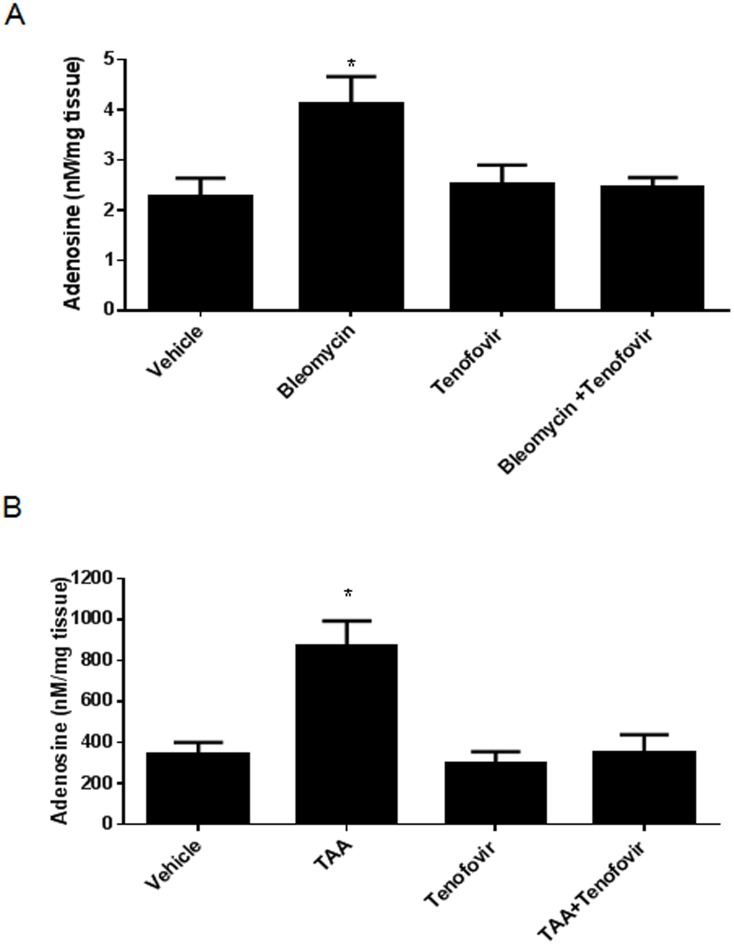
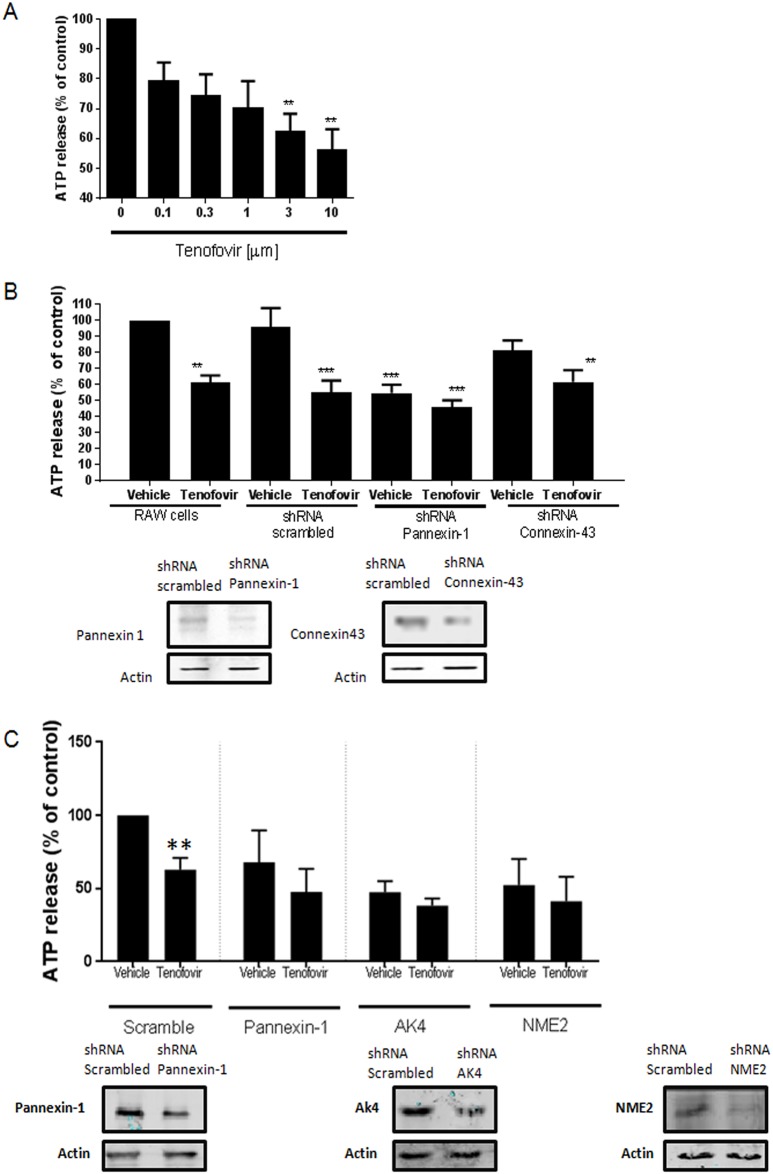
Treatment of mice with tenofovir diminished adenosine release from the skin of bleomycin-treated mice and the liver of thioacetamide-treated mice, models of diffuse skin fibrosis and hepatic cirrhosis, respectively. More importantly, tenofovir treatment diminished skin and liver fibrosis in these models. Tenofovir diminished extracellular adenosine concentrations by inhibiting, in a dose-dependent fashion, cellular ATP release but not in cells lacking Pannexin-1.
These studies suggest that tenofovir, a widely used antiviral agent, could be useful in the treatment of fibrosing diseases.
纤维化疾病是全球发病和死亡的主要原因之一,因此,需要安全有效的抗纤维化疗法。腺嘌呤核苷酸经去磷酸化作用在细胞外生成腺苷,腺苷与特定受体结合,这些受体在肝纤维化和皮肤纤维化的发展过程中起关键作用。近期临床试验结果表明,广泛使用的抗病毒药物替诺福韦可逆转慢性乙型肝炎感染患者的肝纤维化/肝硬化。替诺福韦属于无环核苷膦酸类,是AMP的类似物。我们通过使用两种不同的腺苷和A2AR介导的纤维化模型,干扰纤维化的腺苷途径,来检验替诺福韦在体内具有直接抗纤维化作用这一假设。
用硫代乙酰胺(100mg/kg,腹腔注射)处理的小鼠分别用溶剂或替诺福韦(75mg/kg,皮下注射)处理(n = 5 - 10)。用博来霉素(0.25U,皮下注射)处理的小鼠分别用溶剂或替诺福韦(75mg/kg,腹腔注射)处理(n = 5 - 10)。通过高效液相色谱法测定腺苷水平,以荧光素酶依赖性生物发光法定量ATP释放。分析皮肤抗张强度,并对苏木精-伊红染色和苦味酸天狼星红染色的玻片进行成像。在逆转录病毒介导的Pannexin-1特异性或乱序siRNA表达后,敲低Pannexin-1的表达。
用替诺福韦处理小鼠可减少博来霉素处理小鼠皮肤和硫代乙酰胺处理小鼠肝脏中的腺苷释放,这两种小鼠分别是弥漫性皮肤纤维化和肝硬化模型。更重要的是,替诺福韦处理可减轻这些模型中的皮肤和肝脏纤维化。替诺福韦通过剂量依赖性抑制细胞ATP释放来降低细胞外腺苷浓度,但在缺乏Pannexin-1的细胞中则无此作用。
这些研究表明,广泛使用的抗病毒药物替诺福韦可能对纤维化疾病的治疗有用。