Department of Microbiology & Immunology, College of Medicine, Drexel University, Philadelphia, PA 19129, USA.
Biomolecules. 2022 Apr 26;12(5):634. doi: 10.3390/biom12050634.
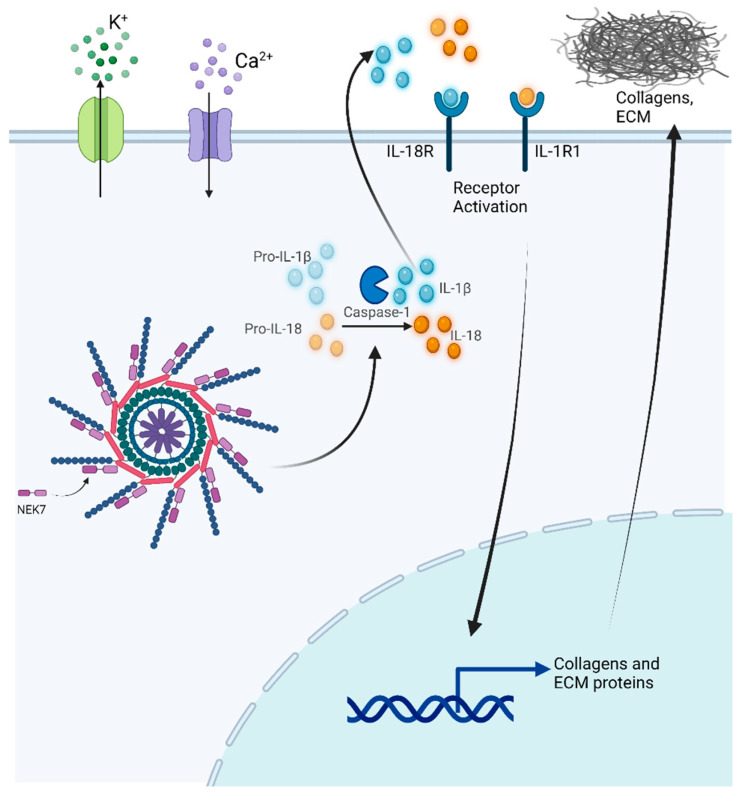
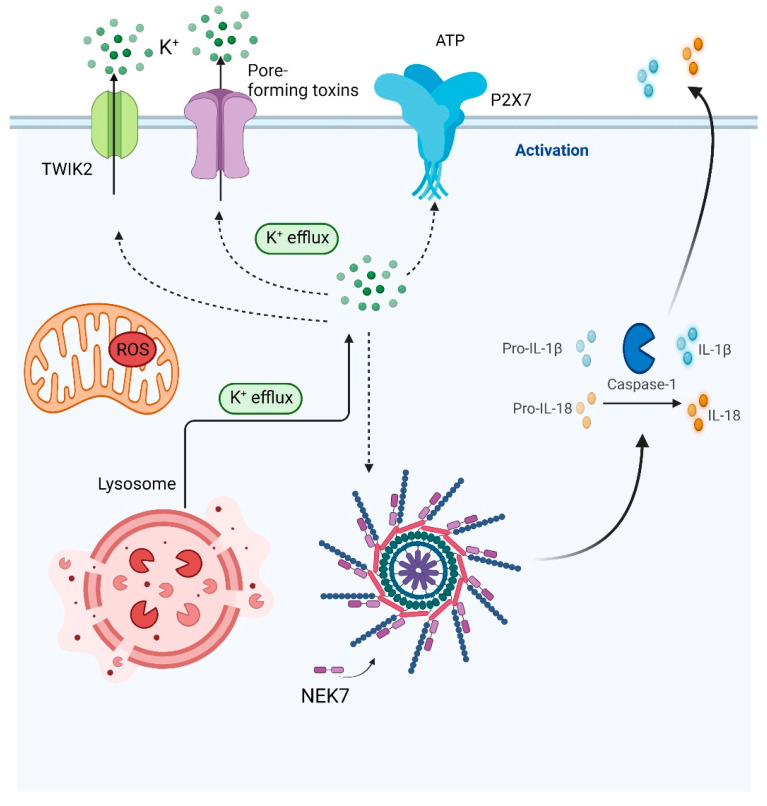
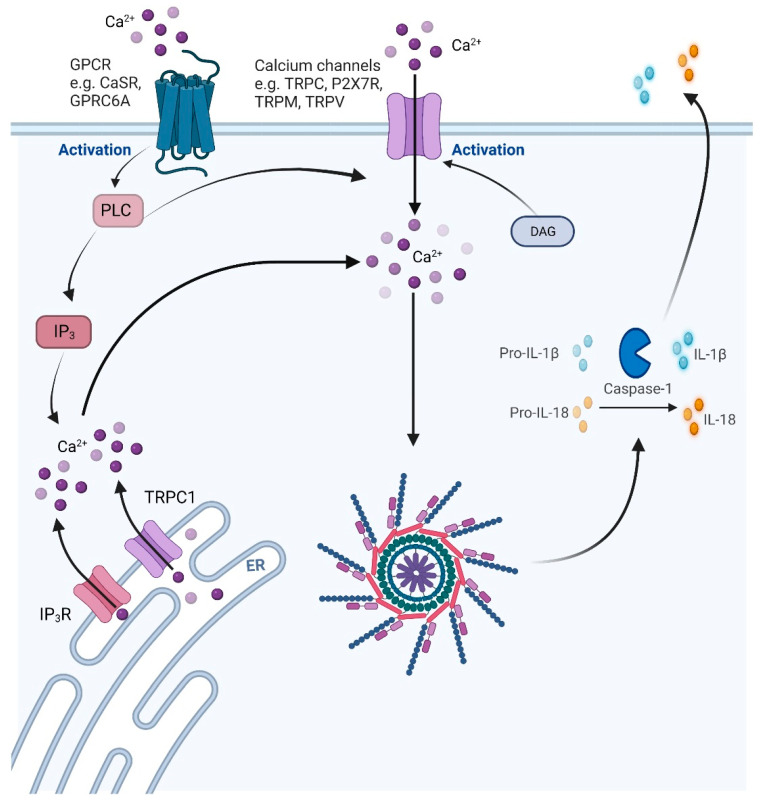
Fibrosis is often the end result of chronic inflammation. It is characterized by the excessive deposition of extracellular matrix. This leads to structural alterations in the tissue, causing permanent damage and organ dysfunction. Depending on the organ it effects, fibrosis can be a serious threat to human life. The molecular mechanism of fibrosis is still not fully understood, but the NLRP3 (NOD-, LRR- and pyrin-domain-containing protein 3) inflammasome appears to play a significant role in the pathogenesis of fibrotic disease. The NLRP3 inflammasome has been the most extensively studied inflammatory pathway to date. It is a crucial component of the innate immune system, and its activation mediates the secretion of interleukin (IL)-1β and IL-18. NLRP3 activation has been strongly linked with fibrosis and drives the differentiation of fibroblasts into myofibroblasts by the chronic upregulation of IL-1β and IL-18 and subsequent autocrine signaling that maintains an activated inflammasome. Both IL-1β and IL-18 are profibrotic, however IL-1β can have antifibrotic capabilities. NLRP3 responds to a plethora of different signals that have a common but unidentified unifying trigger. Even after 20 years of extensive investigation, regulation of the NLRP3 inflammasome is still not completely understood. However, what is known about NLRP3 is that its regulation and activation is complex and not only driven by various activators but controlled by numerous post-translational modifications. More recently, there has been an intensive attempt to discover NLRP3 inhibitors to treat chronic diseases. This review addresses the role of the NLRP3 inflammasome in fibrotic disorders across many different tissues. It discusses the relationships of various NLRP3 activators to fibrosis and covers different therapeutics that have been developed, or are currently in development, that directly target NLRP3 or its downstream products as treatments for fibrotic disorders.
纤维化通常是慢性炎症的最终结果。其特征是细胞外基质的过度沉积。这导致组织结构发生改变,造成永久性损伤和器官功能障碍。根据受影响的器官不同,纤维化可能对人类生命构成严重威胁。纤维化的分子机制尚未完全阐明,但 NLRP3(NOD、LRR 和 pyrin 结构域蛋白 3)炎性小体似乎在纤维化疾病的发病机制中发挥重要作用。NLRP3 炎性小体是迄今为止研究最广泛的炎症途径。它是先天免疫系统的重要组成部分,其激活介导白细胞介素 (IL)-1β 和 IL-18 的分泌。NLRP3 的激活与纤维化密切相关,并通过慢性上调 IL-1β 和 IL-18 以及随后维持激活炎性小体的自分泌信号,驱动成纤维细胞分化为肌成纤维细胞。IL-1β 和 IL-18 均具有促纤维化作用,但 IL-1β 可能具有抗纤维化作用。NLRP3 对大量不同的信号作出反应,这些信号具有共同但未确定的统一触发因素。即使经过 20 年的广泛研究,NLRP3 的调节仍然不完全清楚。然而,已知的是,NLRP3 的调节和激活非常复杂,不仅受各种激活剂驱动,还受到许多翻译后修饰的控制。最近,人们一直在努力寻找 NLRP3 抑制剂来治疗慢性疾病。这篇综述探讨了 NLRP3 炎性小体在多种不同组织的纤维化疾病中的作用。它讨论了各种 NLRP3 激活剂与纤维化的关系,并介绍了已开发或正在开发的针对 NLRP3 或其下游产物的不同治疗方法,作为纤维化疾病的治疗方法。